We’re wrapping up the last few days now and it’s hard
to believe how fast everything has flown by. I’m equally ready to leave, but also
very sad to go. However, Kym invited me to her wedding next December so I won’t
be gone long, that’s for sure! Any who, let’s get to business… Things I
loved, tips and tricks, and things I wish I’d known.
Things I loved. I know it sounds cliché to say, ‘the
people,’ but I’m going to start with that because I don’t know what I’d have
done without Krishnayya Garu, Sailaja, and Durga. Krishnayya Garu was consistently
doing whatever he could for us. He has served as our host, our professor, our
translator, our bargainer, our trip organizer/ tour guide, and filled numerous
other roles that have made this trip so immensely valuable and educational.
Sailaja has diligently put up with our incessant requests to shop, our adventures
to the beauty salon (let me tell you… the ‘saloons’ are wonderfully inexpensive
here), and all our desires when it came to coffee and food. She had our clothes
taken to the tailor upon request and always made sure that we were the most
comfortable we could be. Durga, as I stated in my last post, has gone above and
beyond for us. If Kymberly or I even mentioned a particular food we favored,
maybe we were craving food from the United States, then she would make sure to
have that on our plate the very next day. She was so kind and one of the most
beautiful people with wonderful sons.
On top of the people, I loved being submerged into the
culture. Going to temples, visiting an authentic ashram, seeing real work being
done by real people. It was eye-opening and thought-provoking and wholistic.
Tips and tricks: Take pepto bismol more seriously! After
having had excessive bowel movements for what seemed like a constant three
weeks, I know now to always take a swig when my stomach starts rumbling. Bringing
flip flops was the best decision I made! Shoes that have a lot of straps (like
my chacos) make it more difficult to put on and take off, and it was inconvenient
because we constantly go in and out of people’s houses. Footwear that can be easily
removed and easily slid on are preferable to anything else. Indian Standard Time
is another component of being here that I didn’t realize when we first arrived.
Sometimes Kymberly and I would be ready for a day excursion by 11 am, but we
wouldn’t end up leaving for a multitude of reasons. Whether that was because the
uber driver was late or that Prof. and Krishnayya Garu wanted to take a nap
after lunch, it really just depended. Sometimes it was even us! We may have
even adopted IST ourselves. Another suggestion I have is to bring a large plug
converter extension if possible! Thankfully my mom had one from a few years
before, but it came very much in handy because the outlets at many of the
hotels we stayed in were oddly and sporadically placed around the room. Tip:
don’t expect wifi, even when they advertise wifi because, from my experience at
least, it’s spotty and/or doesn’t work at all. However, we weren’t in a big
city area like New Delhi and that experience was very different from Vizag.
Now onto the things I wish I’d known. I wish I’d known the subtle things. Everyone thinks culture shock isn’t going to happen to them, but it happens to everyone in very different and subtle ways that you may not even expect. Anyways, I wish I’d known how constant the stares were going to be once we arrived because there wasn’t a minute while we were outside that we didn’t have at least five separate pairs of eyes on us at a time. Another thing, the heat feels different here in such a way that you feel constantly sticky, and each shower doesn’t come close to the cleanliness you feel when you’re home. Drinking too much water doesn’t exist here!! Always, always have a water bottle on you. Another thing, I wish I’d known that the standards of cleanliness for the bathrooms are significantly different than the Untied States, and there is also close to no toilet paper anywhere except big tourist cities and big airports. Kymberly and I would carry around tissues when we went on day excursions because in rural places, they may not have even running water (that’s rare, though, but it always helps to be safe than sorry).
Kymberly and I have had such a wonderful adventure
here in Visakhapatnam, but I think at this point we’re ready to make the
venture back home.
Let me tell you, I hold
so much respect for the married women of south India who wear sarees every day.
Along with the excessive tailoring malfunctions that seem to plainly accompany our
being here, particularly with Kymberly and my big stature (which makes
everything so much more difficult in general), we were in for an adventure the
day I tried to dress in my first saree. Until that point, I had solely worn kurtas
(aka tunics) with colored, but matching, leggings, and a scarf to humbly imply modesty.
That type of dress was our day-to-day, and little did I know the lengths we had
to go to master the tying of a saree.
A saree is most commonly
a three-piece set. I say ‘most commonly’ because throughout the trip I’ve
noticed a spectrum of women in sarees. Some women very openly display their comfort
by striding around in an elegant ensemble with added jewelry and scarves, and
some women wear nothing but a simple cloth. A saree begins with one long sheet
of “unstitched” fabric (in quotations because normally sarees will have stitching
along the ends of the fabric to keep it from unraveling and some embroidery at
extra cost) that spans about 4’ x 13’. The second piece of the saree is the
blouse which is personally tailored to fit you. However, I recommend just going
and purchasing a ready-made blouse because my experience with the tailors was chaotic,
to say the least(1). The
third part of saree wearing is the petticoat which essentially holds everything
together once the sheet is tied around the body. The petticoat is necessary because the cloth
is tucked and pinned in place around it, and thankfully Sailaja knew what she
was doing so I didn’t have to spend hours trying to figure it out myself! I don’t
know how women do it without the petticoat!
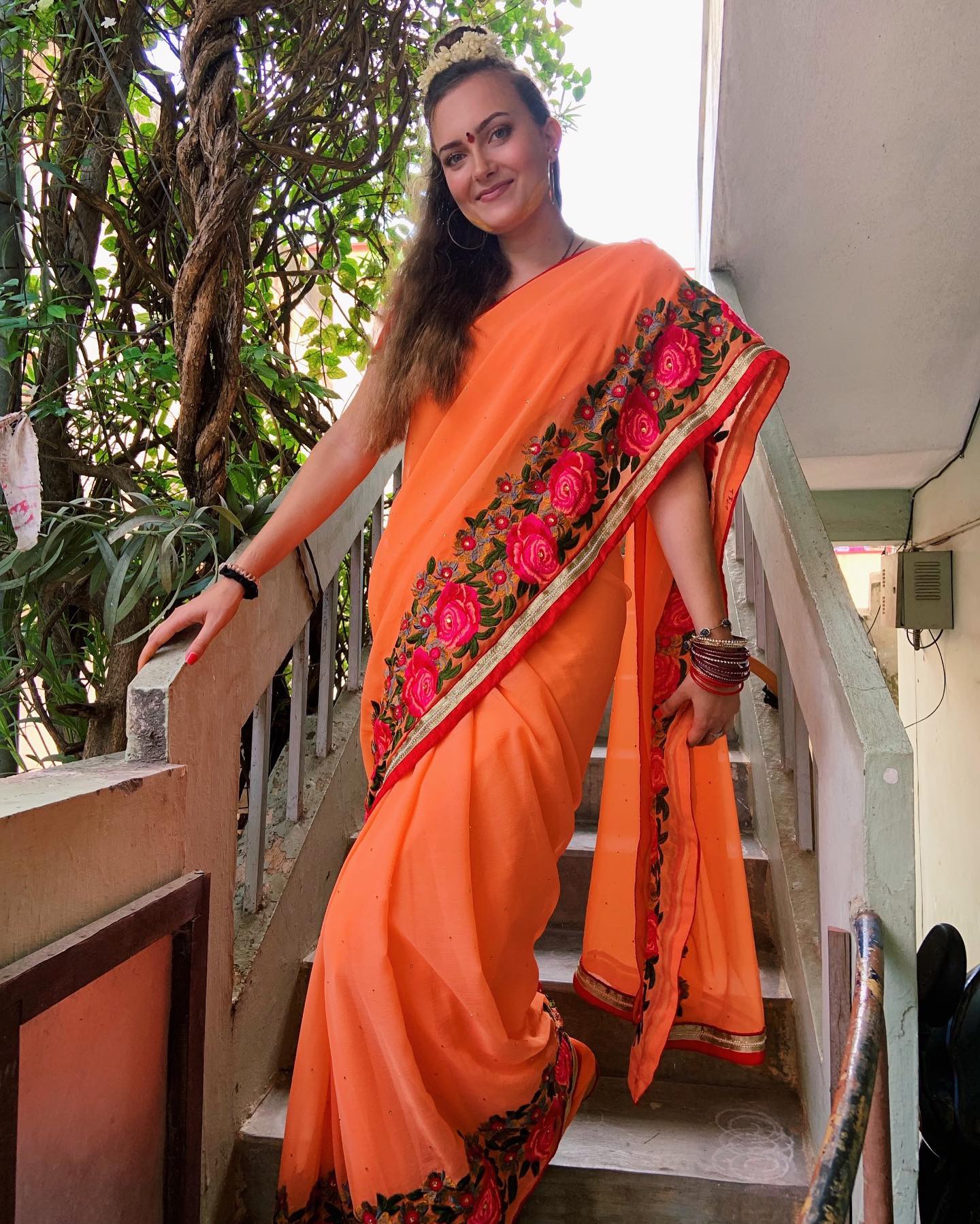
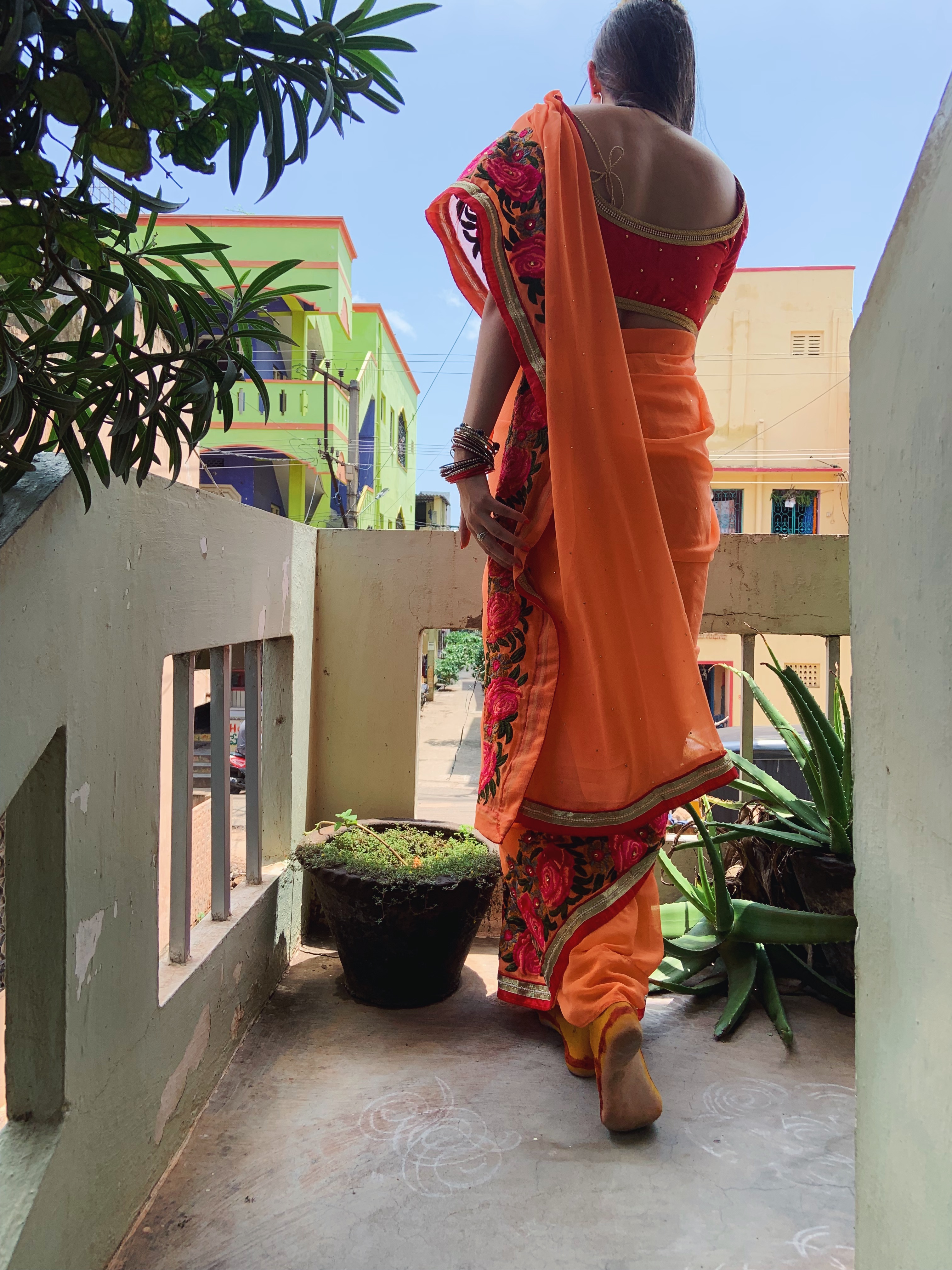
Me after finally getting the saree fitted perfectly! (It takes a lot of trial and error)
Anyways, the day of Varalakshmi
of Vratham is a festival to appease the Goddess Lakshmi, and is a wonderful occasion
to wear a saree. In southern India, it’s common for women to wear sarees every
day, but only after marriage. An unmarried woman, like myself, wear sarees solely
unless it’s a special celebration (like a wedding), or an auspicious holiday deserving
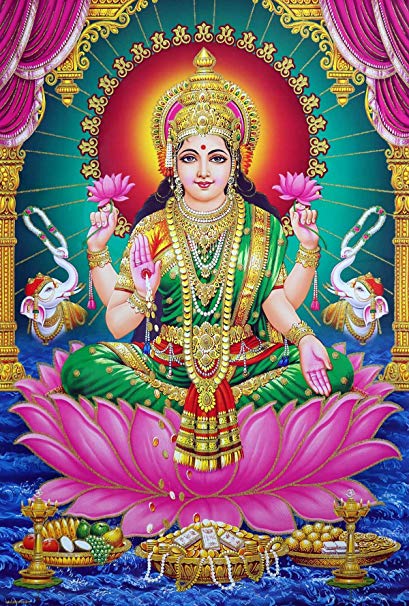
of propitious fashion. Lakshmi is the Hindu goddess of wealth, fortune, and
prosperity, who takes on the role of Lord Vishnu’s wife and energy. To clarify,
Lord Vishnu is one of the three main deities of Hinduism, aka one of the Hindu
trinity. This holiday is celebrated on the second Friday or the Friday before
the full moon in the month of Shravana, which is the fifth month in the Hindu
calendar (according to Gregorian months, it lasts from July to August). Varalakshmi
is performed by women, usually married women, for the well-being of their
family members and their husbands.
The Goddess Lakshmi.
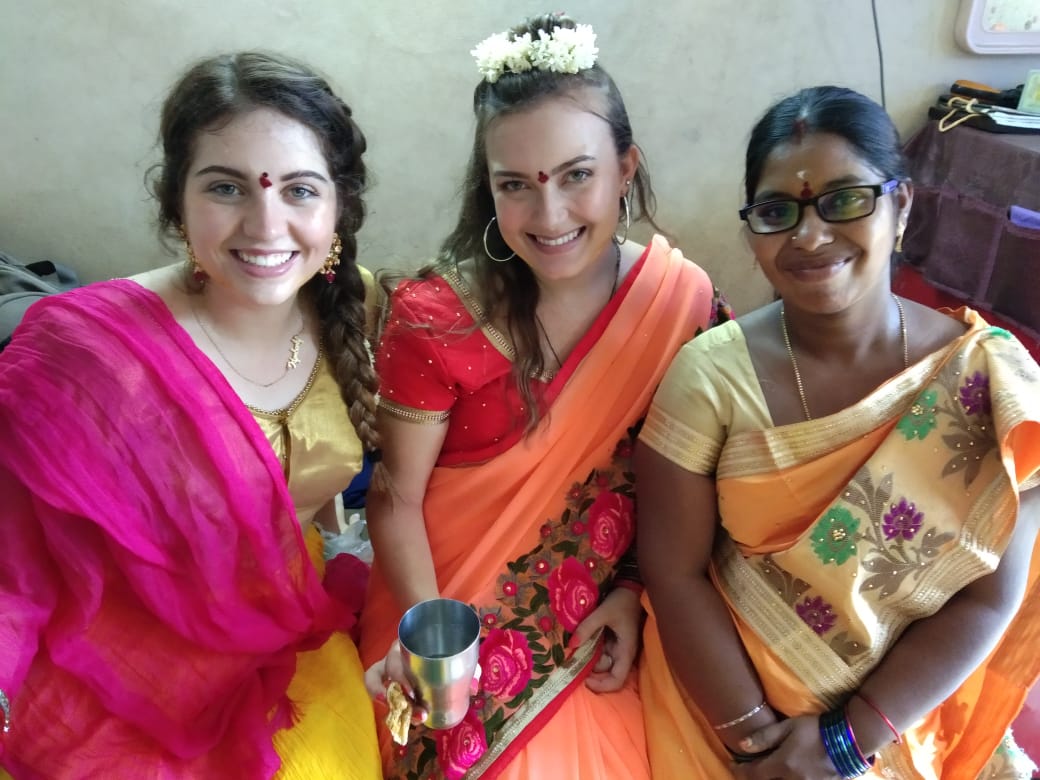
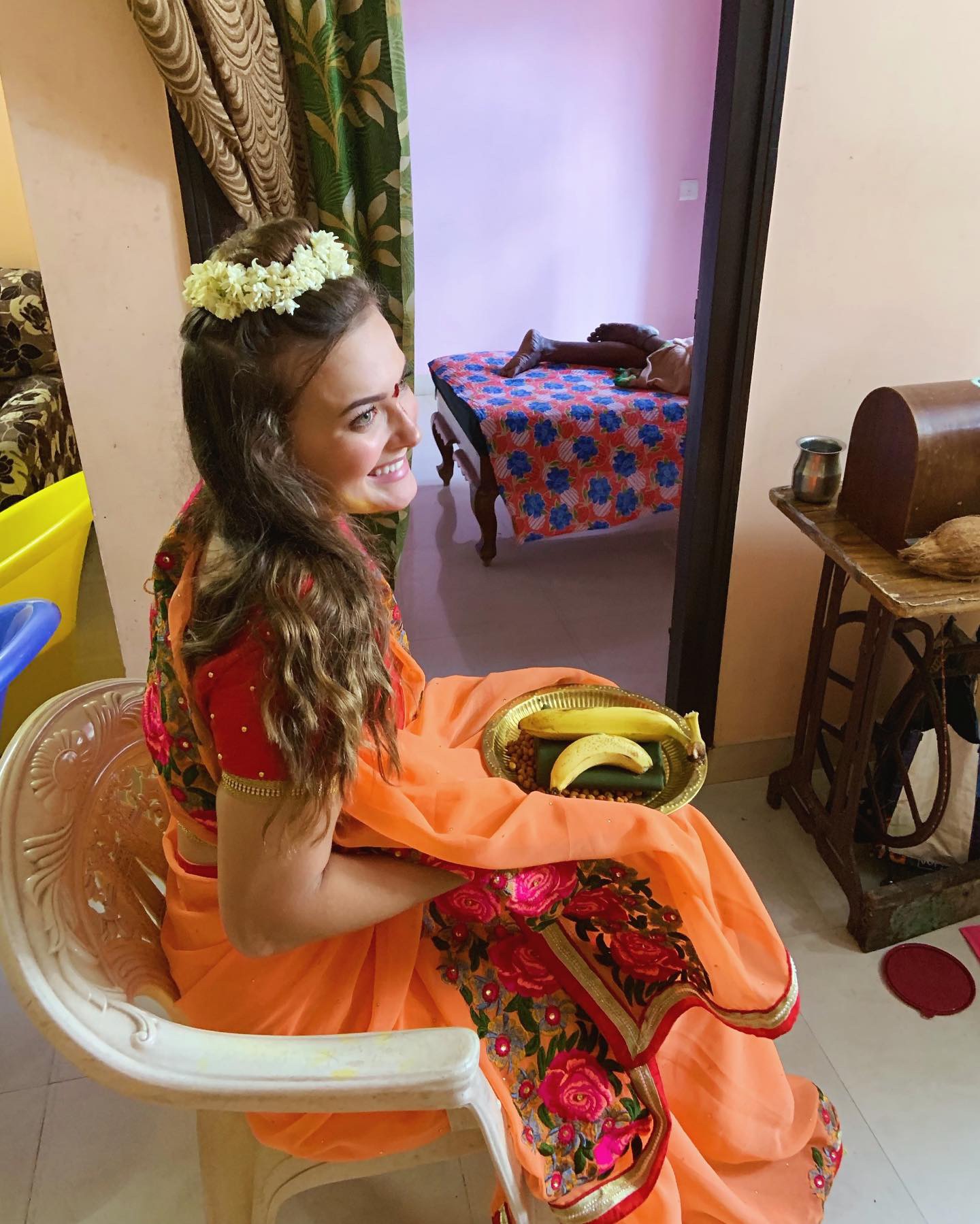
After we successfully tied the saree, Sailaja, Kymberly and I began on our way to visit two different women’s houses for pooja hopping. Pooja is performed by Hindus and is a prayer ritual of religious worship to one or more deities, and in this case to the Goddess Lakshmi. Many women host and honor guests during the ceremony while worshiping Lakshmi. They offer fruits, flowers, chickpeas, sweets and more, which then return to you after they’ve been blessed by the goddess. Anyways, our first destination was to see Durga in her home. Durga is the main chef at KrishnayyaGaru’s house with two sons, Mumu and Sidu, who come to see us after school about once in a blue moon. We once met Durga’s husband as he was picking her up from KrishnayyaGaru’s house when she had finished cooking dinner, and he seemed like a nice man. Anyhow, as we walked to her house, I was shocked. All four of them lived in a room maybe half the size of Kymberly and my hotel room. In that moment I felt completely blessed for what I had in my life, but also so awestruck with their way of life. For four people, they had one bed, a fan above their head, a shrine by their doorway, and only absolutely essentials.
Kymberly, me, and Durga.
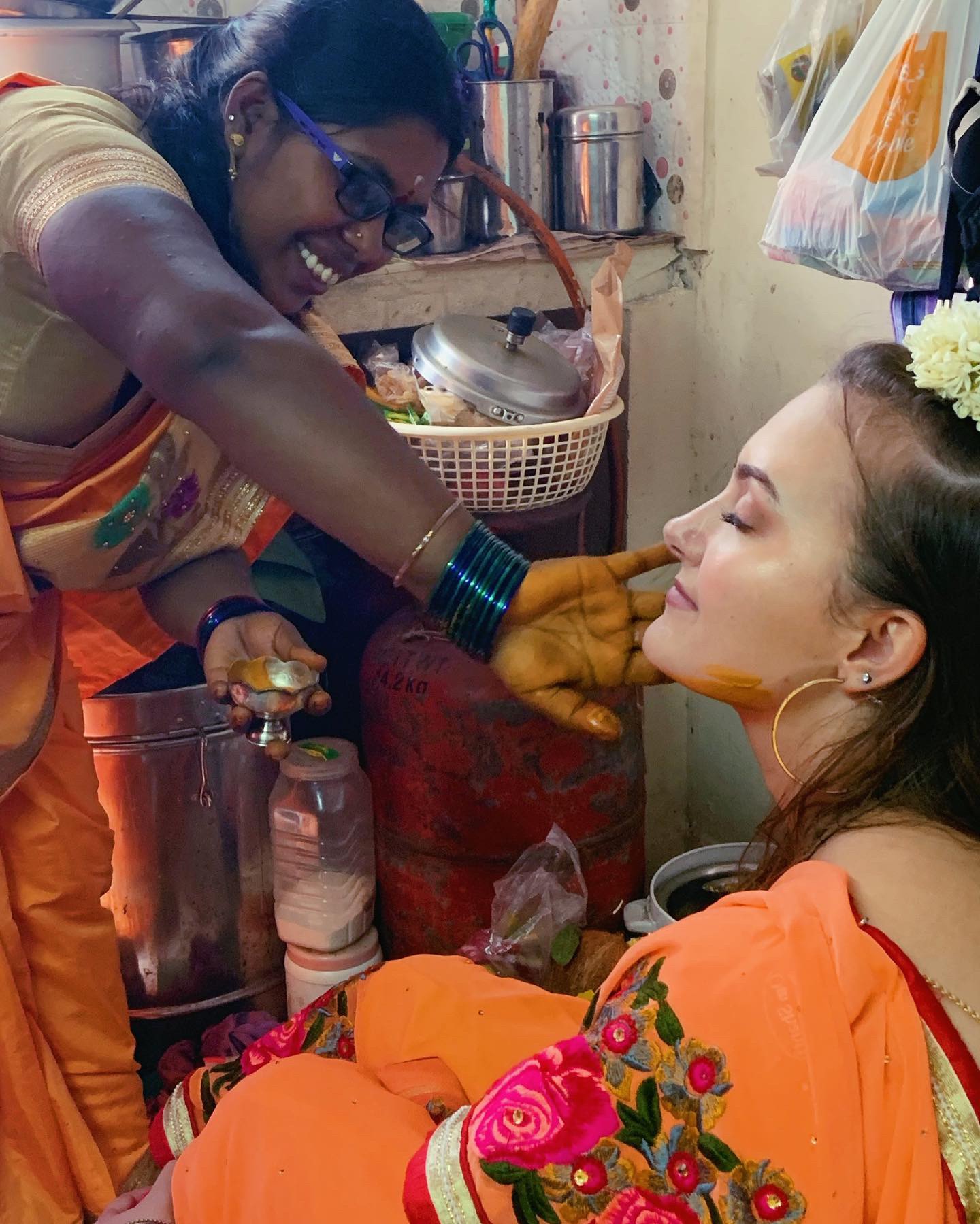
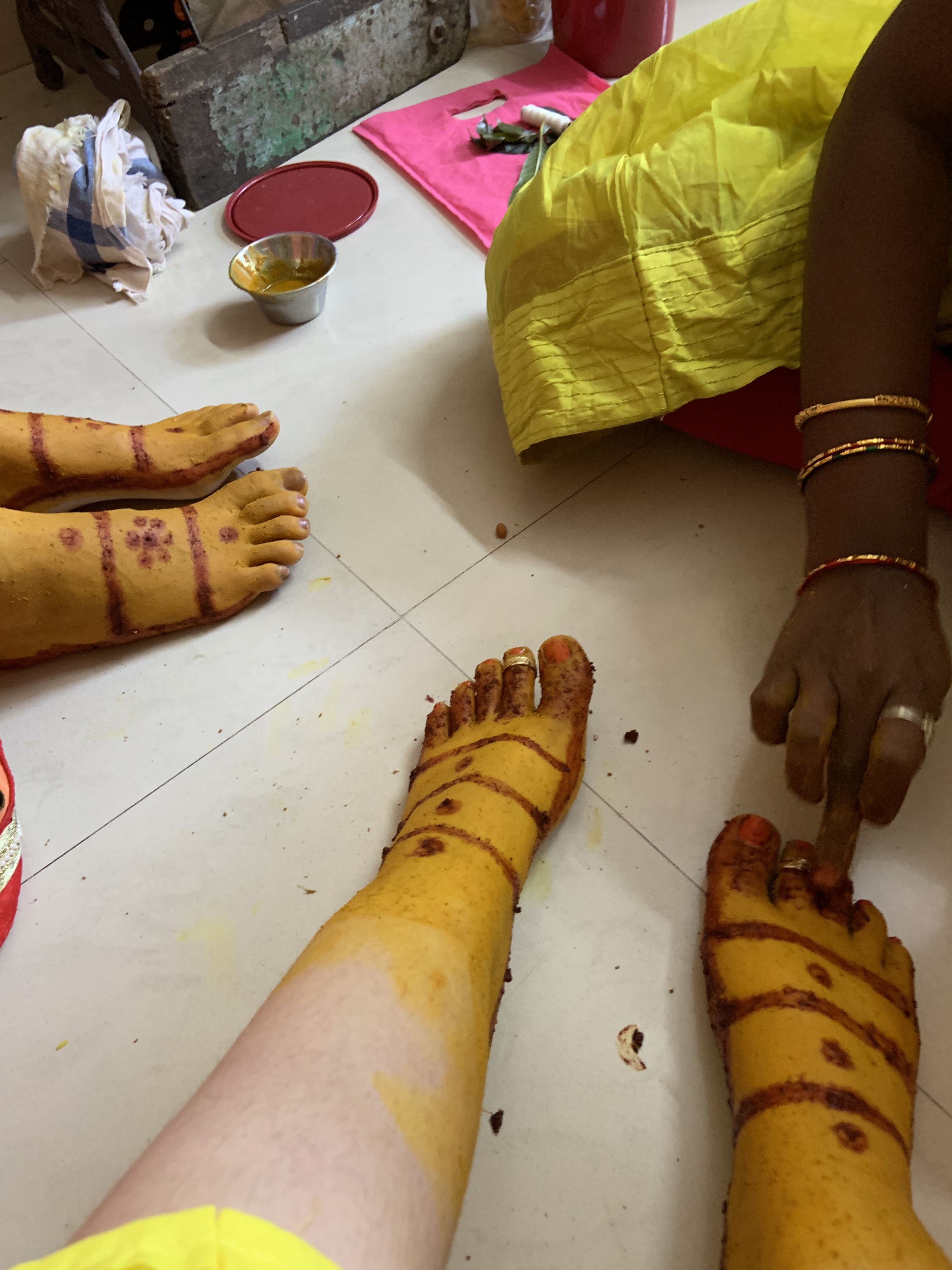
We began the celebration of Lakshmi with smearing turmeric on our feet. Durga had us sit on a small stool in front of her as she applied the mask-like paste from the bottoms of our feet to just above our ankles. Turmeric is considered a sign of purity, prosperity, and fertility, and is also remarkably healthy and high healing. The color yellow is also very sacred and fortunate, and even cloths dyed in turmeric are considered pure. Once she finished smearing the turmeric paste to our feet, she then swiftly wiped a small dollop along the left and right side of our jawline. At this point we were already so thankful for all she had done for us, but on top of that Durga offered us food that had been blessed by her Lakshmi shrine. We gratefully took the gifts, and I felt (and still feel!) complete and utter appreciation for her and her generosity. After accepting the food, we gave thanks and went on our way to the next destination. It was a short visit with Durga that morning, but I truly believe I’ll never forget her utmost kindness. She took time out of her busy day to help us honor Lakshmi properly.
Durga applying turmeric to my face in honor of Lakshmi.
Our next stop was the home of Raja Laxmi who had significantly more comfortable living quarters than Durga and her family’s humble abode. We went through the same process with her. We reapplied turmeric to our feet but this time with designs painted in red. We received blessed foods from Goddess Lakshmi, and we were so very grateful for all she did for us to help us fully immerse in the day of Lakshmi.
Sailaja painting turmeric on our feet at Raja Laxmi’s house.
Recieving blessed foods from the goddess.
I was so grateful to have experienced such a fascinatingly beautiful holiday with such wonderful women. Other than occasionally struggling to walk with the saree, it was surprisingly very comfortable, and both Kymberly and I had a wonderful time!
All the best,
Kari
….
Footnote 1: When I went and had my measurements taken by the local
tailors who, by the way, took extensive
measurements, they must have been blind, sick, or deaf because when I got the
blouse back it was made for a 10-year-old boy. What I find most odd about the
tailors around here is that they are, more often than not, men rather than women.
It’s not uncommon for men to be tailors, but everywhere we went there were only
men dictating the sewing. Time after time the clothes I requested be taken in (which
was everything because we were only given XXLs… I guess we look a lot larger
than we actually are) always came out too loose or too tight. I really think it
might be because women aren’t there to demonstrate what works for their own bodies.
When Kymberly’s female cousin in Gujarat tailored her blouse, it turned out
perfectly!
**Tip: Always request to try something on to see if you like it before buying it. You may feel that the opportunity will not come, and it might be too much to ask. However, if you don’t want to spend money on something you won’t like or will regret, then honestly just request a fitting room! I know this seems like common sense, but in Vizag the thought process is essentially: ‘buy now and get it tailored later if it doesn’t fit’!**
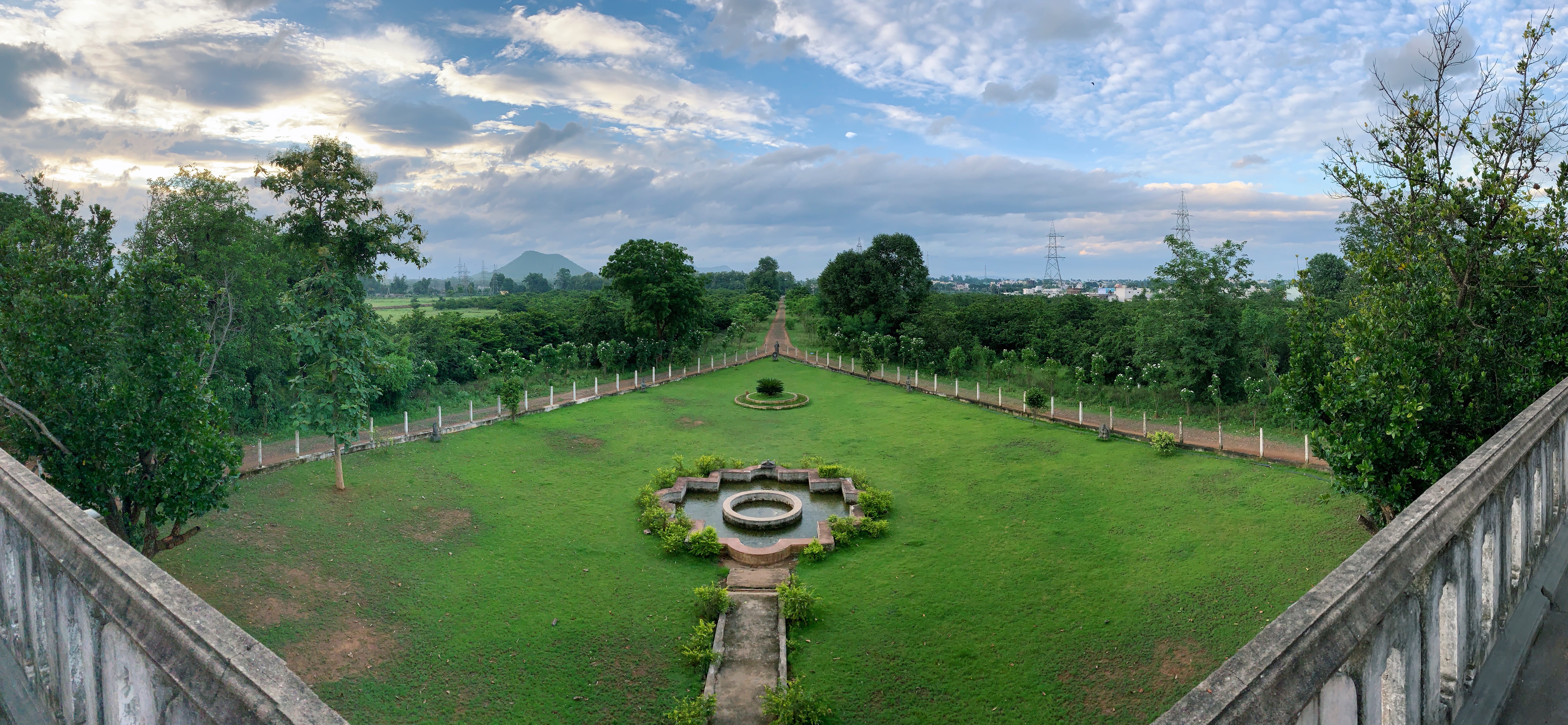
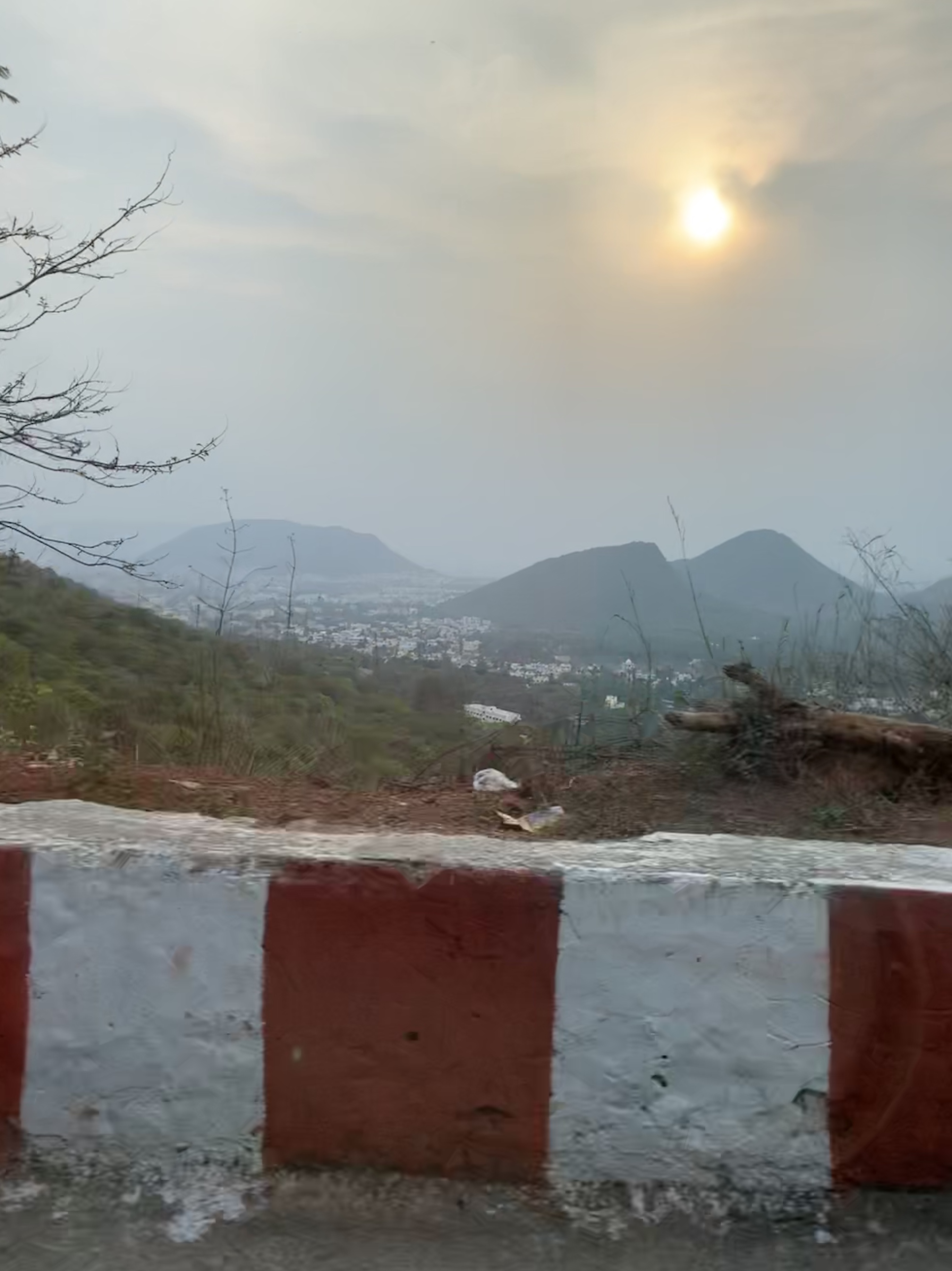
A picturesque moment looking out from KrishnayyaGaru’s balcony area.
Time is really going by fast now. The first few weeks
of jitters have shaken off and now we’re living this day-to-day life in India.
Our routines have changed to something more regular, which generally goes as
follows: wake up around 9 am, then until noon we do homework and/or read, then
we walk to Krishnayya’s for lunch around one, then either go on an excursion or
go back to the hotel to do more homework/nap, then dinner at 8, and then back
to the hotel for relaxation and bed. Throw in the occasional day trip and there
you have it!
We’ve traveled much the past week or so, almost so
much that I can’t even begin to explain nor recall. My senses feel like a
brimmed cup of coffee. Coffee because I’m very energized by the thought of
being here, but also brimmed because we’ve taken in so much at this point that
it feels as if everything new is just flowing over the top; it’s so full that
no more can fit! Don’t get me wrong, though, because what I mean is that trying
to quantify the knowledge and appreciation we could get from being here is
just, simply, not possible; we’re skimming the surface. I don’t think anyone
could really, truly, ever know everything there is to know about living in
India as an outsider because generalizations are so readily available to tack
onto the thought of something that’s different. It happens everywhere, and I
say vice versa for someone coming from India to the United States. For example:
Kymberly and I were walking down the street one day and were asked for a selfie.
We politely declined, but in response (because they were so dumbfounded that we
denied them) they proclaimed, “Taking selfies is your culture!” How horrifying.
We’re a country known for selfie taking? Although, if I’ve seen anything while
being here, the pot is calling the kettle black!
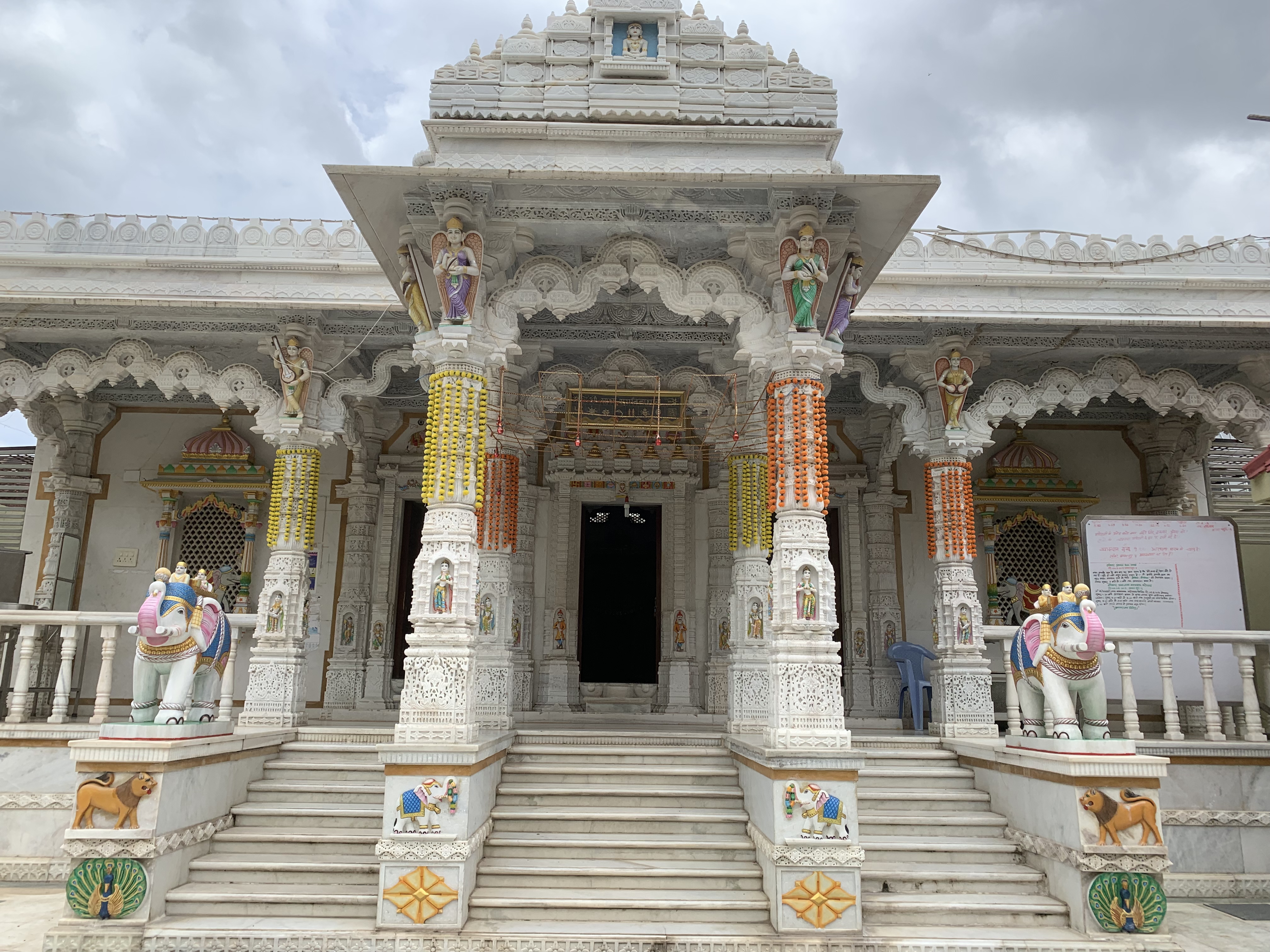
A quick look at a Jain temple we visited one day!
Now to catch you all up on the past week’s events because
there’s been a number of adventures we’ve been on thus far. Bobbili and Vijayanagaram
were two of the cities we found ourselves exploring one day. The significance
of these places themselves were that each city was an abode of palaces and princes.
They each had their own dominion of people and method of ruling and thrived separately
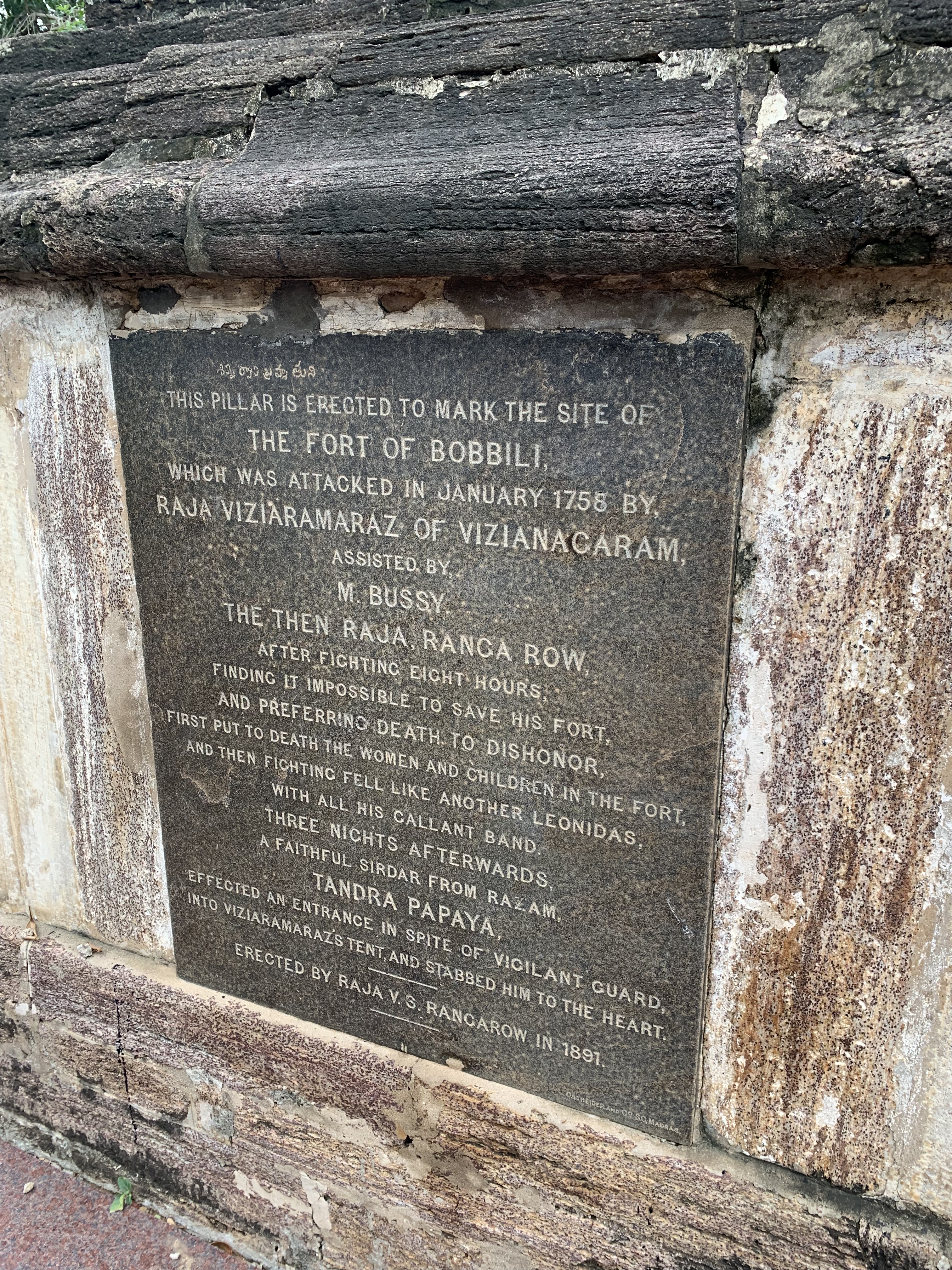
until the war between the Rajas of Vijayanagaram and Bobbili in 1757.
With the help of Dr. Swamy (an astrologist and physician
from the region who took time out of his day to show us around his home town) and
Wikipedia, I’ve gathered the story as follows: Vijayanagaram’s princely state had
conceded to the expanding French activities in the region in the 1750’s;
however, when the governor general of the French colony visited Rajahmundry,
there were differences with Vijayanagaram and Bobbili’s ruler. This sparked the
battle of Bobbili in 1757 where both the French army and the army of Vijayanagaram
marched towards the Bobbili fort. Bobbili was no match for the combined forces marching
towards them, but they put up a brave fight. Once Bobbili’s ruler realized that
his army could not keep the enemy from infiltrating the fort, he sought to protect
the women and children from being at the mercy of the enemy. So with this in
mind, he ordered them all to be sacrificed, and then afterwards his wife
committed suicide. His wife’s brother, Paparayudu, heard of the mass sacrifice
and rushed to the fort only to find his family soaked in a pool of their own
blood. Until that point, he had no idea of the attack since the letter his
sister had sent to him as a warning had been intercepted by the French. Paparayudu
knew he would get his revenge, and while Vijayanagaram’s ruler was basking in
their glory and camping in tents nearby, he found his way in. Paparayudu and a
few comrades snuck into the tent where Vijayanagaram’s ruler was sleeping. It is
said that Paparayudu began chanting the song of their clan “Puli, Puli… Bobbili
Puli” (Tiger, Tiger… The Tiger of Bobbili) while detailing the vicious acts done
to his family and his clan by their army. After his monologue, Paparayudu stabbed
Vijayanagaram’s ruler repeatedly, killing him, and then they killed themselves for
they had no way to escape the entire army that had awaken in the commotion.
The pillar erected at Fort Bobbili.
What a lighthearted and warming story! On top of the
fascinating legend behind the princely clans, we stepped foot in each of the
palaces that have now been turned into museums to commemorate the people who
lived there. Each palace had decorated family trees on display and brilliant portraits,
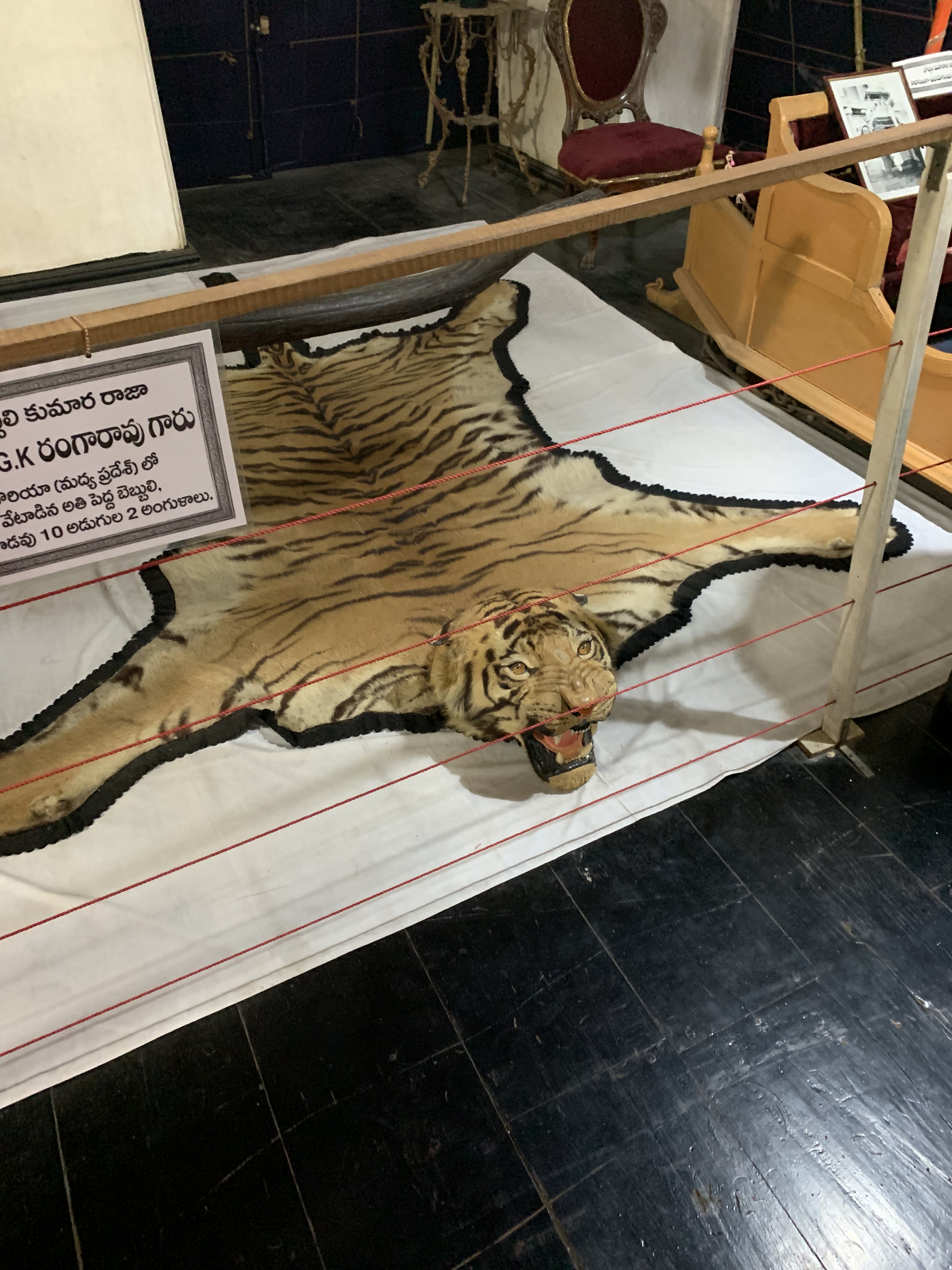
but immediately the thing that caught me off-guard was how much the Bobbili’s exercised
hunting. Bobbili was our second stop, and as we climbed the winding staircase
with boar heads and deer antlers littered along the walls, we were led to a
room completely covered from floor to ceiling with spears, guns, and other such
paraphernalia. If you know anything about Hinduism and being of the Brahmin caste,
it’s considered ludicrous to touch meat, eggs, and sometimes even dairy. Sacrifice
is uncivilized. Even the McDonalds around here have separate kitchens, one for vegetarians
and one for not. I do want to point out, though, that just like any religion,
there are the people who interpret such ideals very strictly and those who do
not!
A tiger skin rug on display within the Bobbili Palace.
Anyways, we had discussed in class last semester that animal
sacrifices and rituals were a part of the Brahmin caste for a time, and only
recently (recently, such as within the last 200 years) had they transitioned to
complete vegetarianism. So, I found this interesting to see in person because
many brahmins probably wouldn’t acknowledge that part of their past. Even Kymberly’s
husband, a Brahmin, didn’t believe it! It was also especially interesting because
one of the family royal decedents had a billboard cutout of himself walking
with a tiger (because Bobbili is a derivative of the name tiger) and on the
sign it read something along the lines of “He shoots not with his gun, but with
his camera.” How cheesy.
The next stop on our list that day was The Bobbili
Guesthouse. This guesthouse was built by the Rajas of Bobbili in the 19th
century, and after World War 2 it was decommissioned. After that, the place became
a historical site in India. The fort complex encompasses 10 acres, and has a
very impressive entrance gate in an Indo-Saracenic architectural style. It is
thought that they built the guesthouse with high domes and mantapas to avoid intensified
involvement by their Islamic occupiers at the time of its erection. The
guesthouse survived many different occupancies and is now a beautiful
historical site which we’re grateful to have had to privilege to step foot in. On
top of that, the weather was absolutely perfect, and Kymberly and I felt the
need to take some pictures, of course.
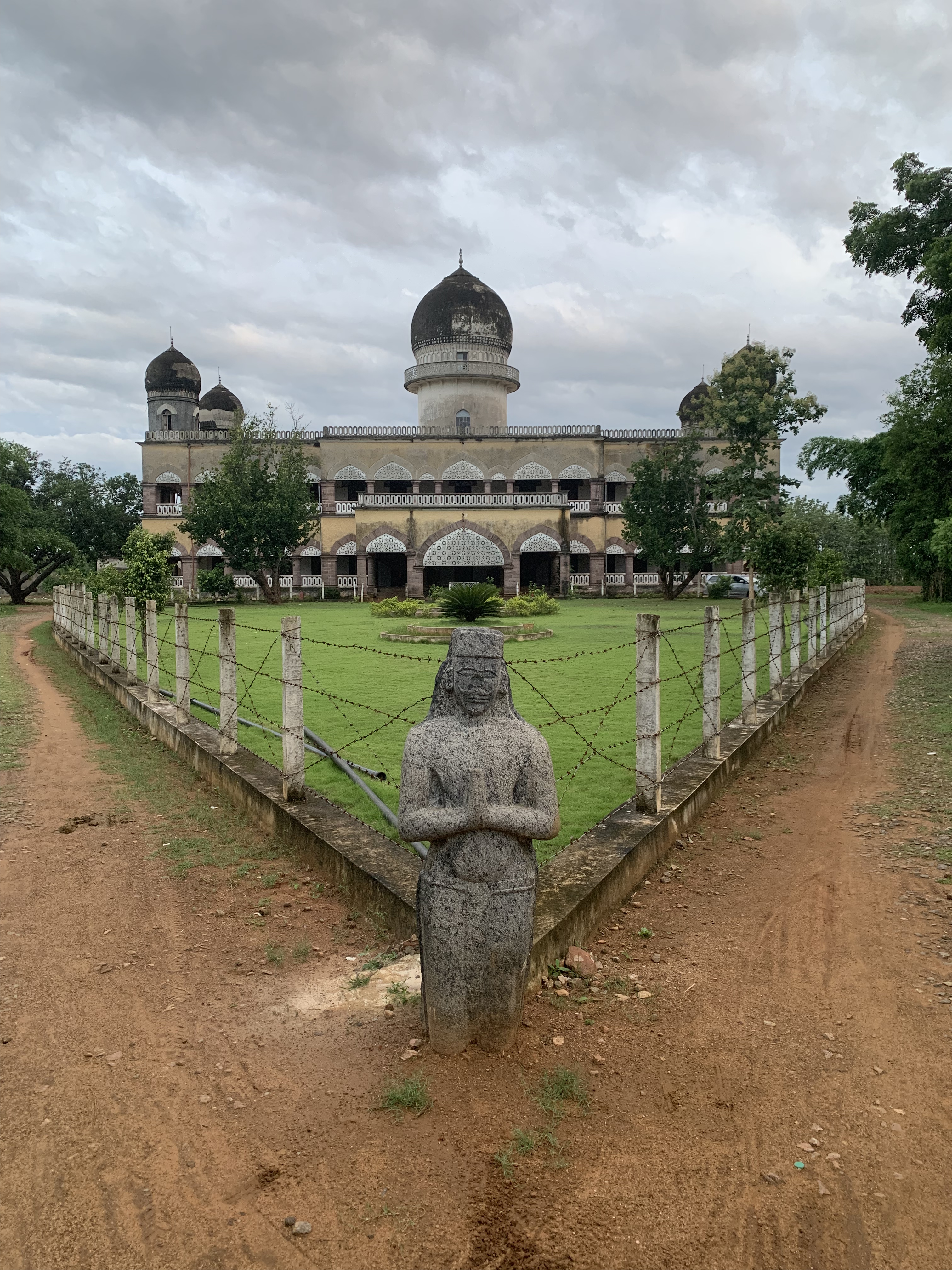
The Guesthouse.
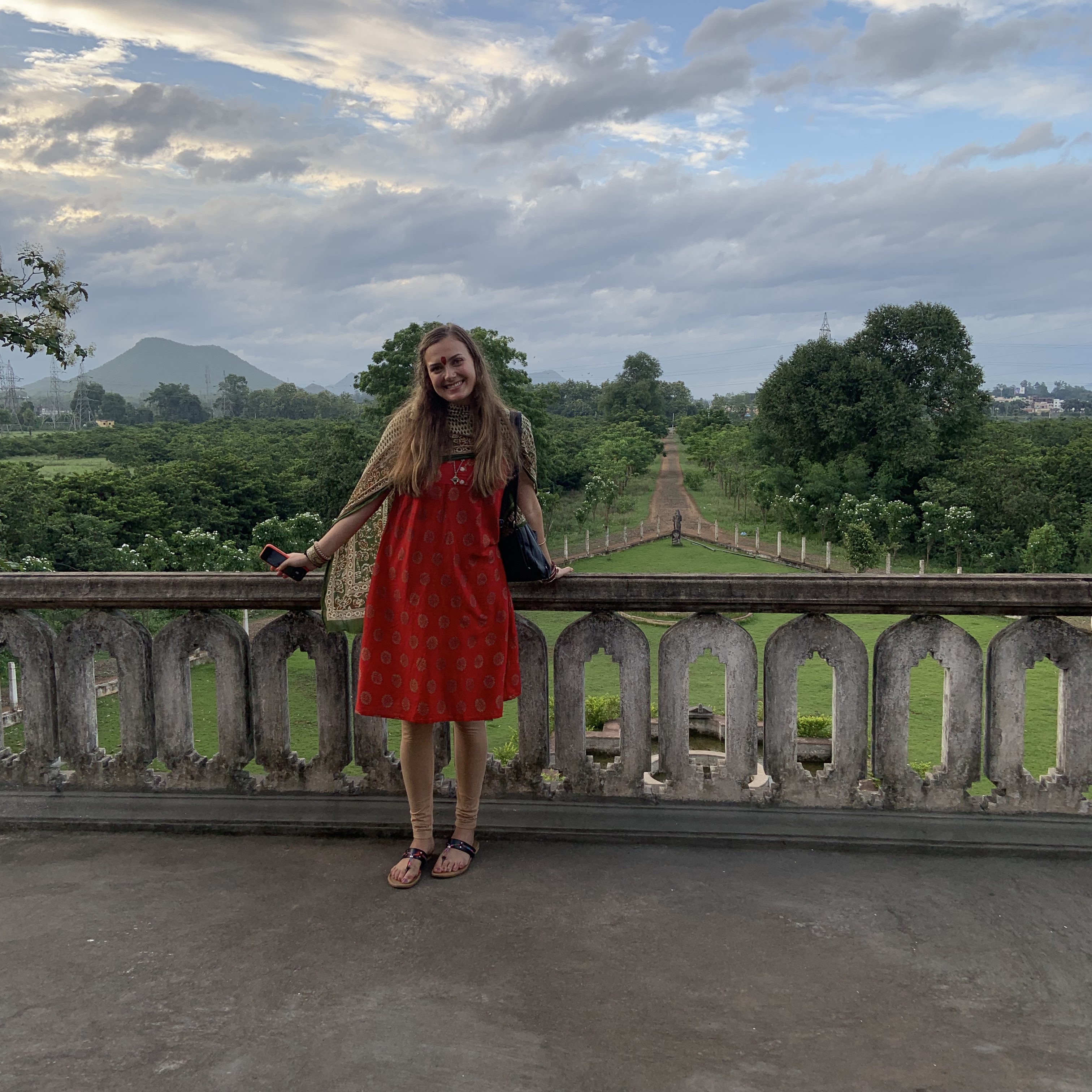
Me pictured outlooking the front of the Guesthouse!
Another capture from the Guesthouse.
The next adventure we went on was a few days later.
Usually after a long trip like the one we had, it takes about a day or two for
us to rejuvenate. I’m pretty sure after every car trip my body aches longer
each time! Once we had the energy to take another long excursion (for four days!),
we boarded a train again to Rajahmundry, but this time with Kymberly and an AC
coach to take us all the way. Following the four-hour train ride into the city,
the very next morning we began another
four-hour trek to Machilipatnam for a daytrip. On the drive from Rajahmundry to
our next destination, we crossed Arthur Cotton’s barrage for the second time.
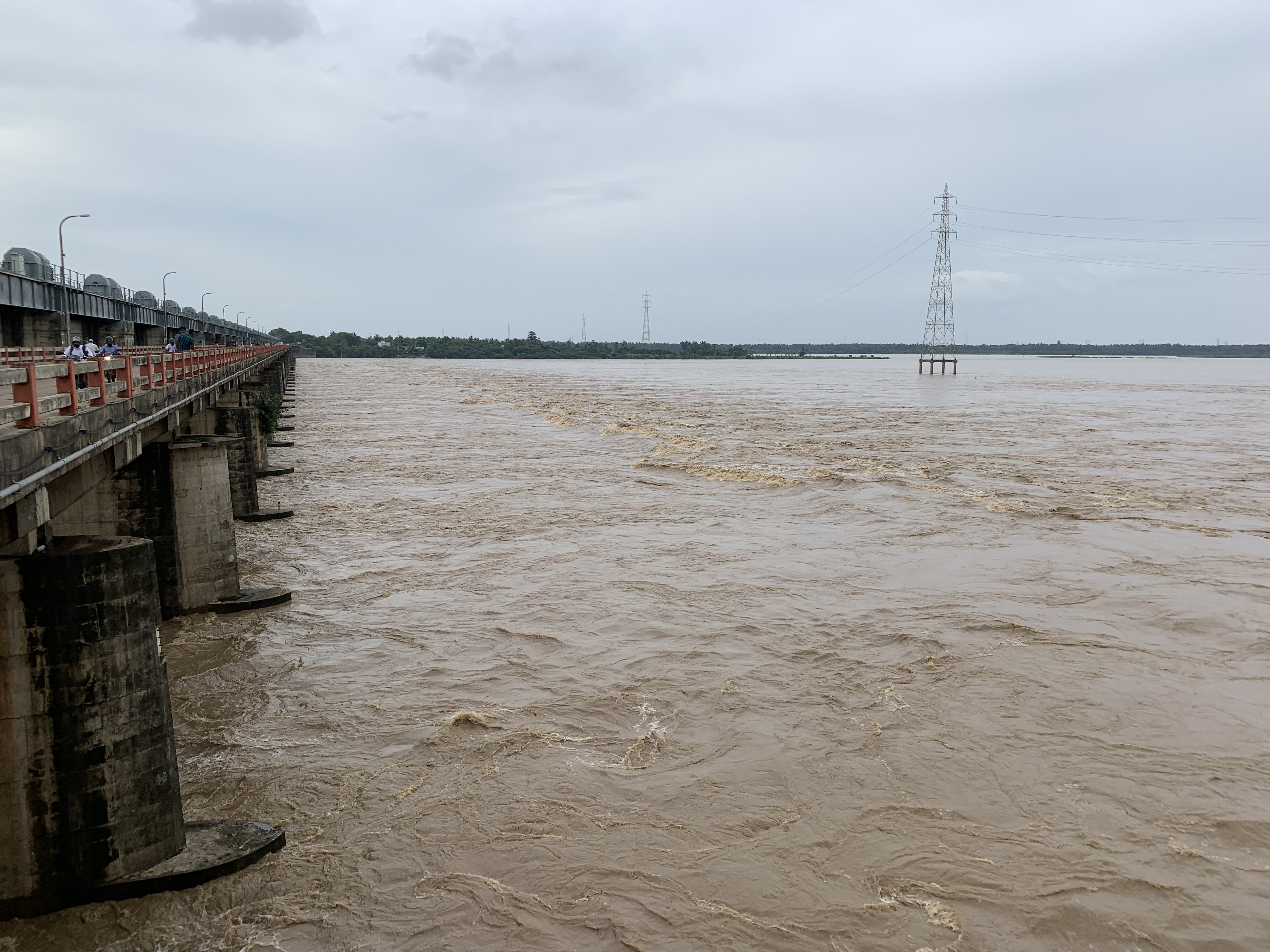
It had drastically changed from before as the monsoon rains had just begun to come
in, and the Godavari River was completely flooded. The river had probably risen
close to, or maybe even above, three feet! It was breathtaking as we watched
the rushing waters carry with it fallen tree trunks and large debris more swiftly
than I could run.
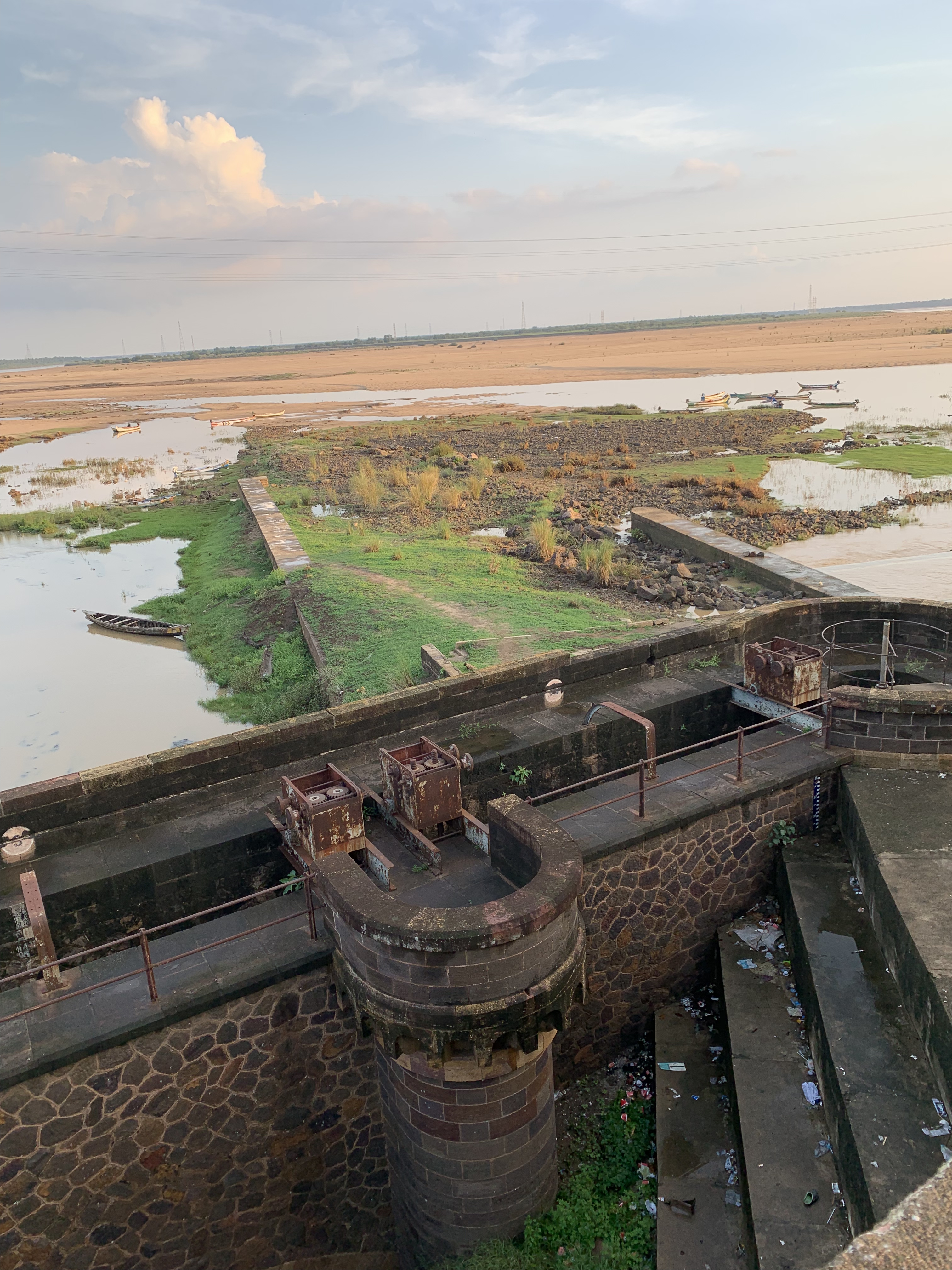
A before picture from our first visit in Rajahmundry looking out from the barrage.
Our second adventure across the barrage. What a difference in water height! What a sight!
Once we arrived in the city, we spent some time in an
old Dutch fortress/ trading post that took reign during the time Machilipatnam
was the most important port on the eastern coast of India. However, during the
European occupation, the port fell to nothing. It once was a place where
merchants from all over the world congregated, even the ancient Greek found it
important enough to write about and map out, but sadly it became desolate after
European colonization. Whether or not its downfall was a direct result of the
Europeans, we might never know, but many argue over its impact on the region. Today
Machilipatnam has only a few remnants of its former glory, such as the Dutch
fort ruins. However, the region is still very well known for their style of Kalamkari
work. This type of work involves vegetable dyed block-painting of material and
textile for which its precision, carefulness and sensitivity echoes throughout
their fabric, and the state of Andhra Pradesh!
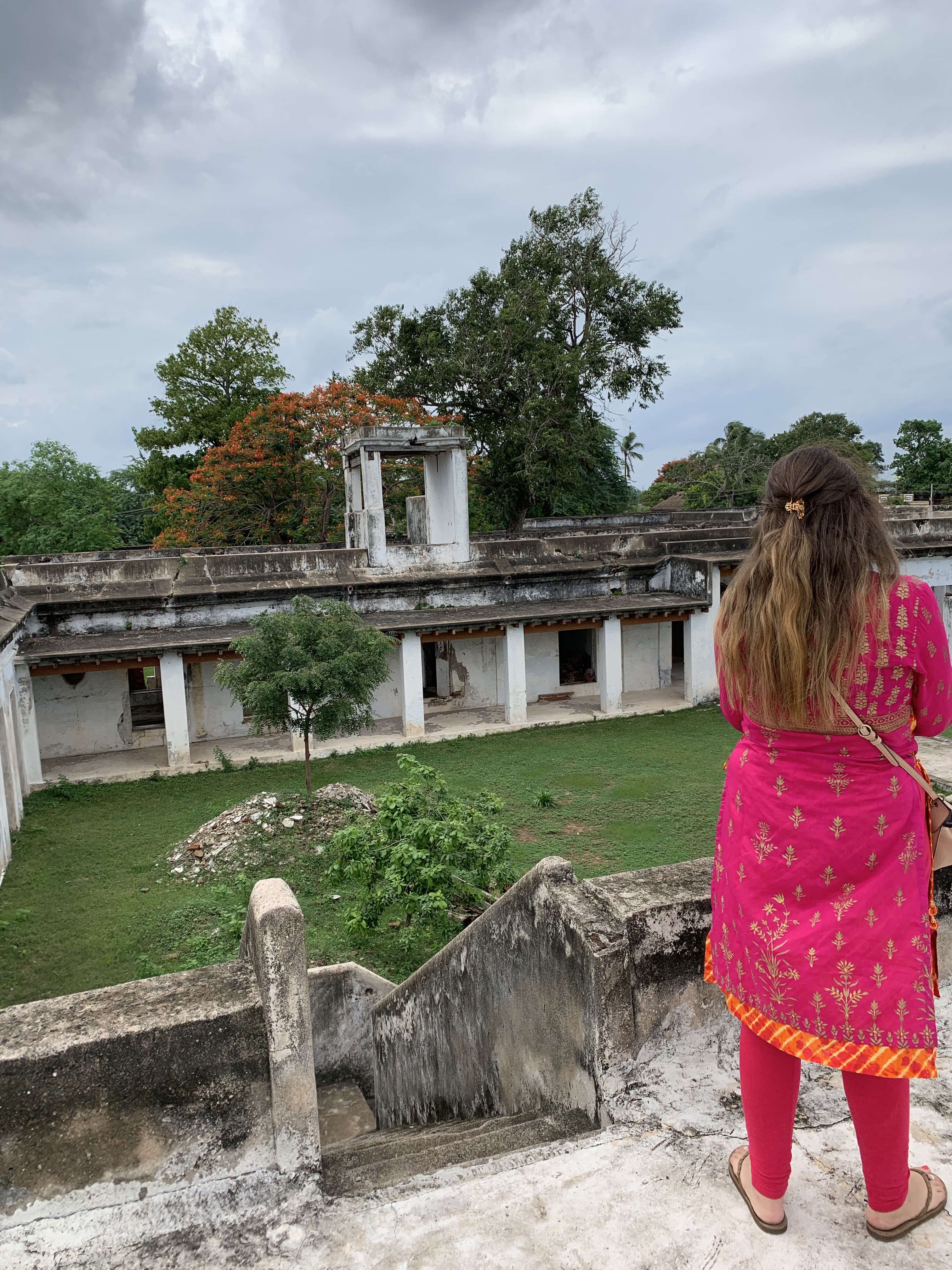
Kymberly and I on the roof of the Dutch fortress, overlooking a courtyard.
We found ourselves beyond deep in textiles that day. Imagine
a water buffalo swimming in a canal after the monsoon rains have just come in,
and their heads are just barely peering above the water as they paddle to shore
to find safe footing. Although, those buffalo are called water buffalo for a reason, and that sole reason is their delight
in being submerged in water. Many times throughout the trip Prof. Schmitthenner
asked us, “Have you ever seen a water buffalo in water?” I hadn’t, but one day
I finally did (as we were driving on one of our day excursions), and something
about the sighting resonated within me because it was obvious they felt pure content-ness.
In that moment, so did I for just having spotted them. So anyways, THAT was Kymberly
and me in textiles that day. We could barely stick our heads above the mounds
of beautiful ornate cloth, and we were loving
it. The four-hour venture was worth the back pain of the drive because Kymberly
and I could have easily spent hours picking out various rugs, clothes, bags, and
napkins. If you thought it, they had it. Prof. and KrishnayyaGaru had to
essentially yank us out from the mounds of materials to get us to leave.
A visual representation of what Kymberly and I looked like in the textile shop in Machilipatnam!
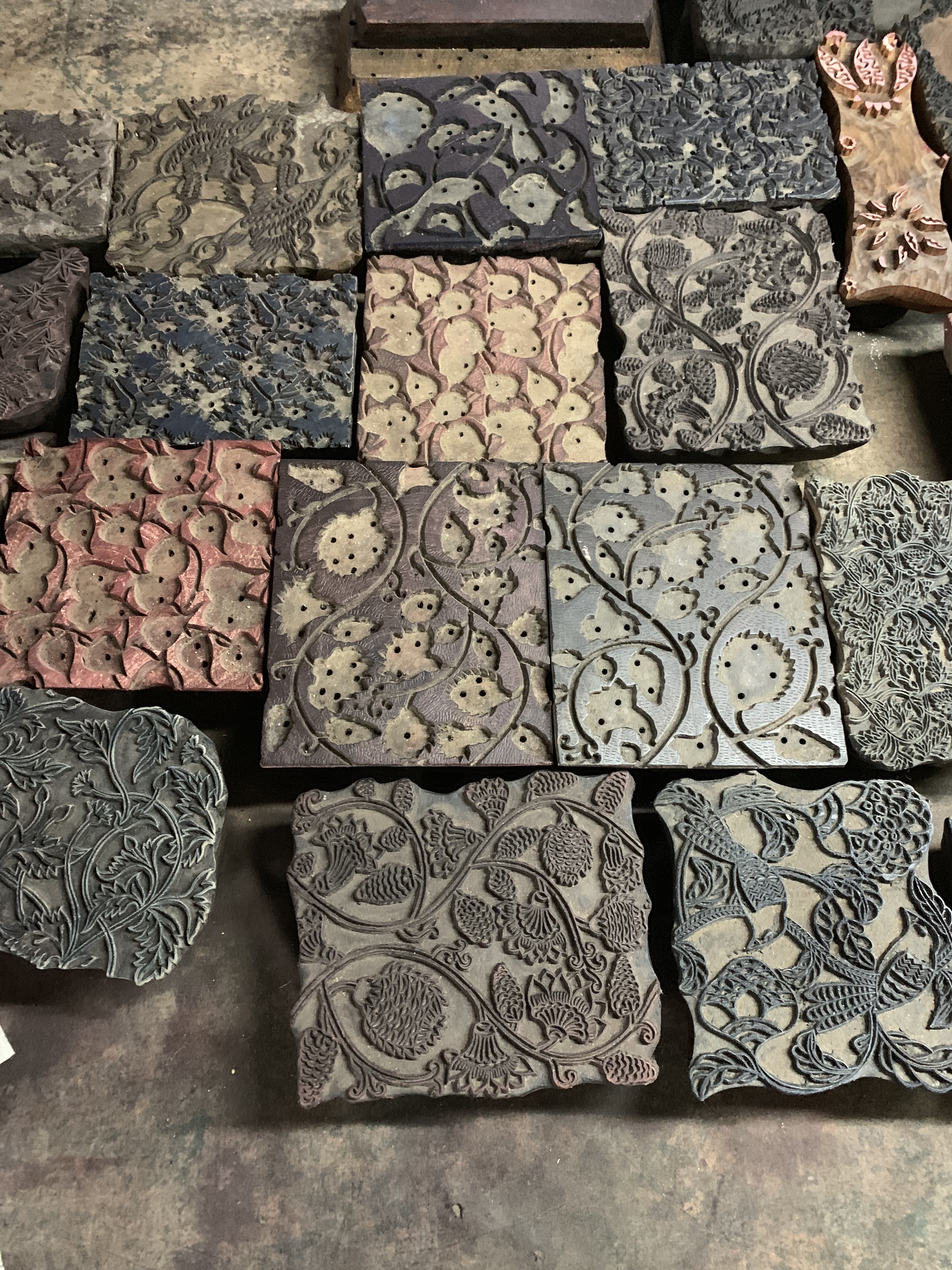
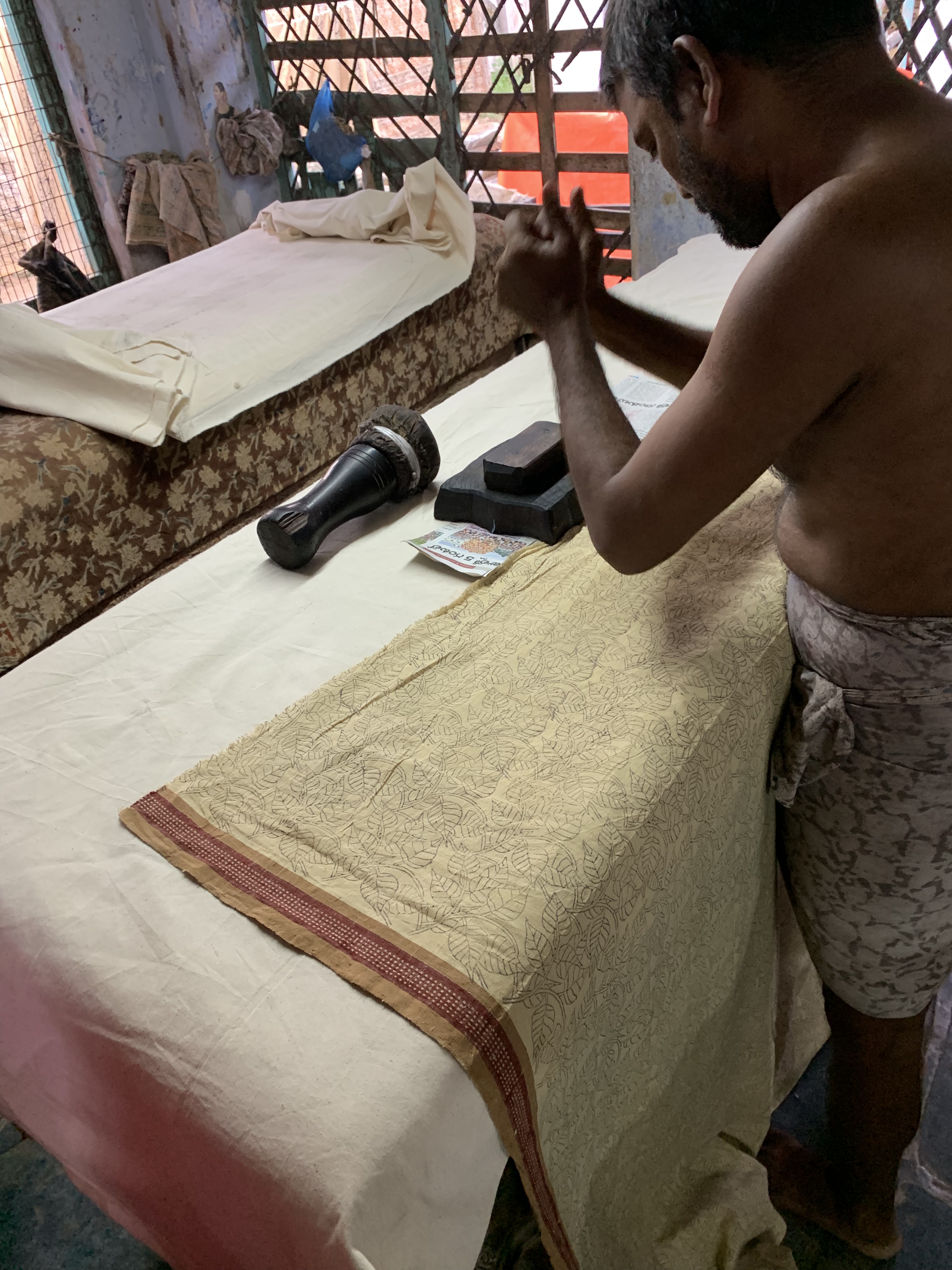
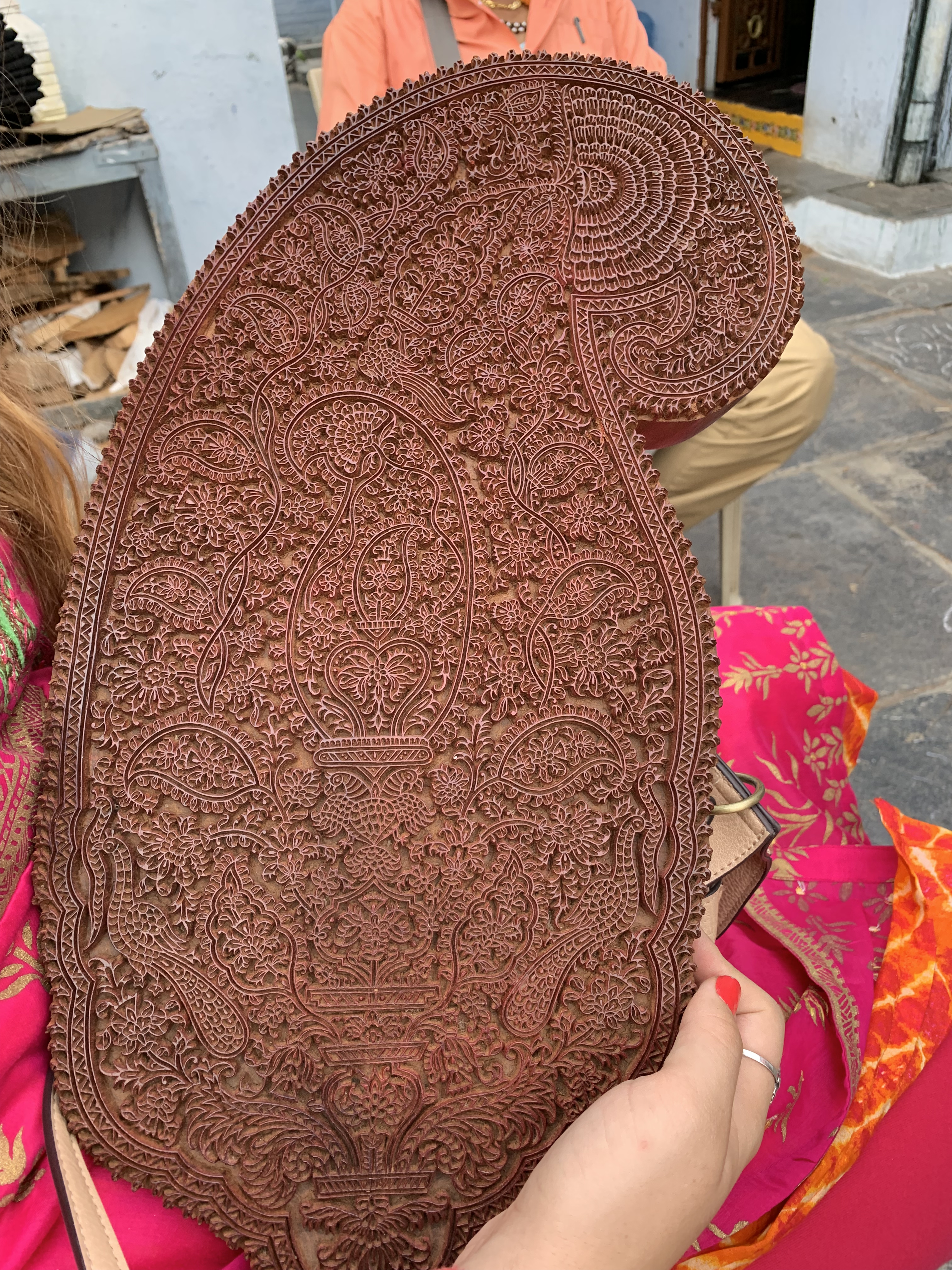
Although, the most captivating part of the trip was seeing the process of making the designs and the ornate cloth first hand. Interestingly enough, the store itself was not even a five-minute walk from where they not only hand carved the wooden blocks used to print the fabric, but it was also incredibly close to where they vegetable dyed them as well. We watched the steady process as a man softly and precisely placed each block (stamped with dye) on the fabric of the saree. Once he was content with its placement, he struck the block to set in the dye with his hands at first, and then with a heavy piece of wood to serve the purpose of a hammer. We then navigated our way to where they hand-carved the block printing. This work was so strikingly detailed that both Kymberly and I couldn’t keep our jaws closed when we saw the sweat, blood and tears that went into its meticulousness. By the end of the day it was clear that nothing in the United States could compare to the beautiful and traditional, hand-painted and block-printed cotton textile artwork we witnessed. What a marvel!
An assortment of hand-crafted block prints.
Printing patterns on a saree.
An award winning handcrafted block print.
Of course, who would I be if I didn’t catch a sickness
on the trip? Because immediately after that excursion I ended up with a four
day long fever of 100.5. However, don’t fret. I’m all better now.
This past week has been nice. We’ve been able to slow
down a bit, and I’m glad we did because the first week after having gone basically
“pedal to the metal” the minute we arrived was a lot to take in. I’m not sure
if it distracted my culture shock or just emphasized it, but then again, I
still don’t feel like I’m having many problems taking things in other than the
occasional worries. I really love it here; the people, the food, the
architecture, the vegetation, the temples… the list goes on. Although, I do
realize that I have a lot of trouble remembering the names of things, like
types of food other than paneer and dosas (my favorites… so it makes sense why
I remember them!).
I have a few worries, though, because I want to make
the best of this trip. I find myself worrying about whether or not I’m being
respectful because the last thing I want to do is make a bad impression on
these people or Krishnayya. I also find myself worrying if I’m cultured enough
to understand how to be respectful, and if, because of that, they feel
embarrassed of me… I mean, before this I hadn’t been outside the United States besides
visiting the Canadian side of Niagara Falls, or even been past Tennessee to the
west. I know they don’t feel that way, but I still worry. I’m young and there’s
much to learn, but it’s hard to ignore the lack of ties I have to this place, unlike
everyone else. Krishnayya lives here, professor was born and raised here,
Kymberly’s husband is Indian (so she’s an in-law to the country), and I’m the
odd one out. I understand that it’s just how it is and that’s totally fine. I’m
not envious nor sad nor frustrated nor angry because of it. It’s just an odd
feeling because I know the least about the culture but still I strive to play a
role and be a part of the conversation while simultaneously feeling that maybe
it’s not my place.
I know, though, when the astrologist came to speak to
us a while back, he essentially said that if we’re here then we were meant to
be here. He emphasized that we were once born in India, and now this is us
coming full circle to be a part of India once again. In a way he said
everything is predestined, and that destiny brought us here together because
we’re all connected. It was welcoming, and there’s nothing wrong with feeling
out of place; it’s natural.
My last post hadn’t yet discussed my experience in the
temples we’ve visited, and temple visiting has been prominent during this trip
so far, so here’s my attempt to sum it up. If I were to try to count how many
we’ve visited in total since we’ve arrived, I’d say about seven or eight. If I
were to try and count how many temples exist in India, imagine the amount of
subways we have in the United States, and multiply it by three (and there will
still most likely be more). I was going to say McDonalds, but apparently Subway
is ranked number one as the most populous fast food chain in the United states,
for which I had no idea. Temples range in size from enormous towering
structures on the tops of mountains to closet-sized places of worship on the
side of the road. The accessibility of these shrines for refuge or clarity or
peace is just simply beautiful. Anyways, the first temple we went to was the
Simhachalam Temple, a beautiful Hindu sanctuary on the top of a mountain dedicated
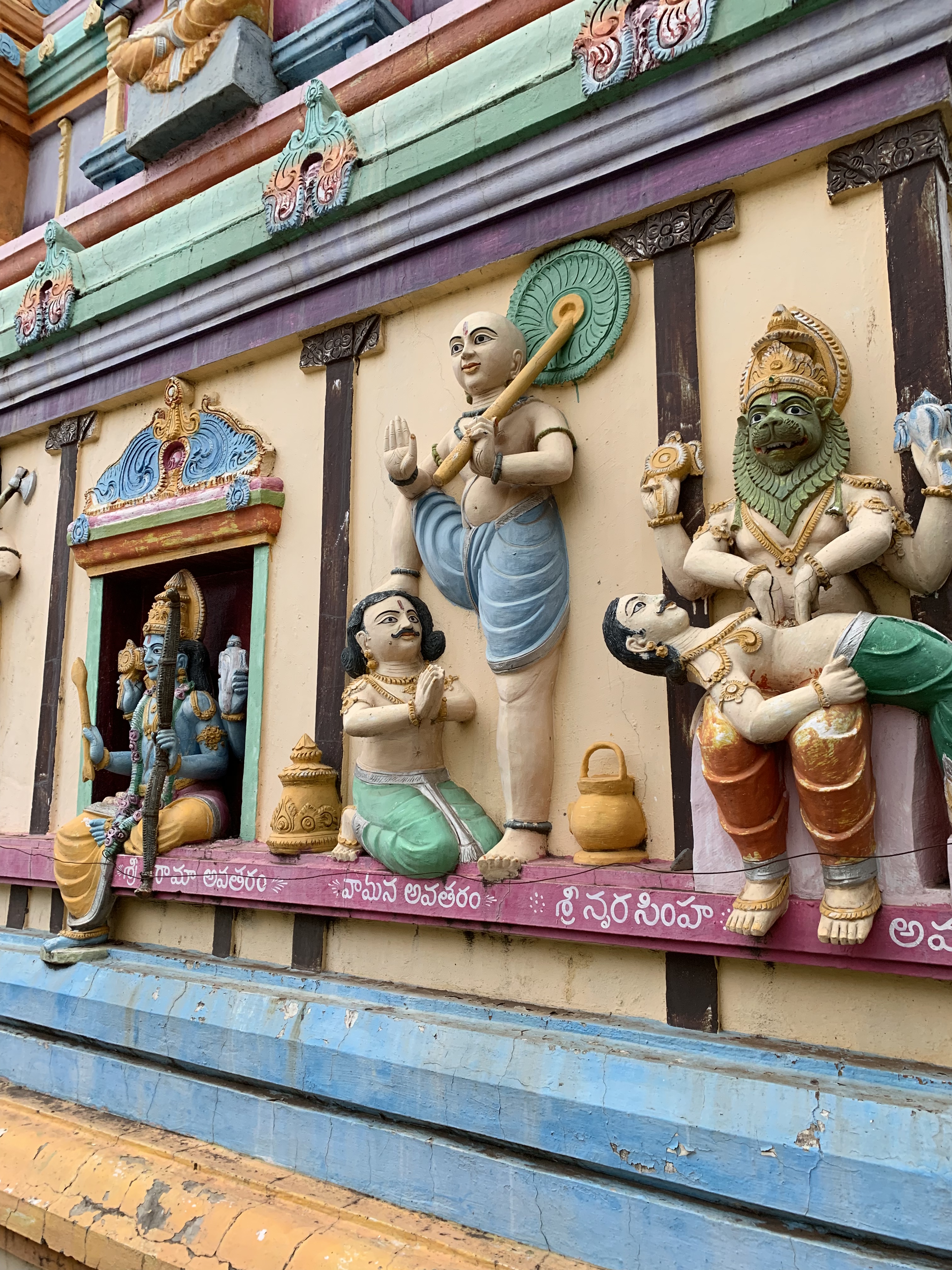
to the deity Vishnu, and is worshipped there in his form as Varaha Narasimha.
Varaha Narasimha is known to have the head of a lion, two hands with claws, and
a human torso, who is typically represented with a demon in his lap whom he is
in the process of killing.
Varaha Narasimha is portrayed on the far right.
To preface this, Lord Vishnu is one of the three
supreme beings in Hinduism and is a preserver god who protects the universe,
keeping it from being destroyed (take this with a grain of salt because I may
understand this wrong). He has come to earth in nine different forms, or
avatars (and has one to come in the future), and Varaha Narasimha is one of his
forms. From what I heard and from what I can find online (so pardon any
misinformation by me) there were two brother demons. One was killed by Vishnu,
and the other demon hated him for it, so that demon gained special powers. He
made sure that he could not be killed day or night, inside or outside, by
weapon, man, or animal. These new powers allowed him to create chaos and he
persecuted all devotees of Vishnu. However, Vishnu understood the power that
the demon held and adopted a new form of a mixed avatar that is neither man nor
animal. This gave him the ability to kill the demon at the junction of day and
night, inside and outside, and so he did. This deity is known to specifically
defend his devotees from evil, and the temple is a very popular sight for the
people nearby.
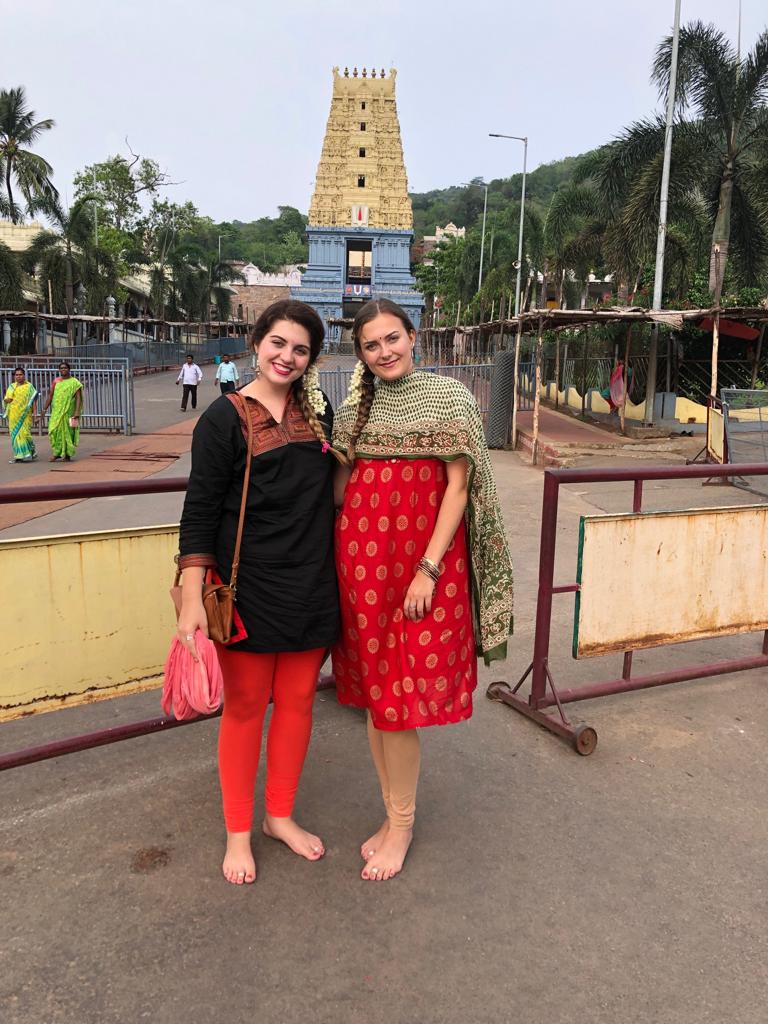
Kymberly and I standing in front of the Simhachalam Temple.
As my first temple, it was a wonderful experience.
Thankfully Krishnayya has friends in high places because he was able to get us special
treatment so we’d be able to skip the line. Some days, they told us, people
will wait all day to see the deity and have their families and loved ones
blessed. It was stunning walking into the temple. There were ornate carvings
littered across the walls of different important deities in a number of relaxed
and posed positions. Krishnayya didn’t hesitate to point out a spot they missed
when they tried to get rid of all the erotic depictions in the temple. He said
he was a dirty man, and I laughed. The deep history I found thoroughly fascinating
and impressive, and I could feel the emotion within the temple walls interlacing
its way around and within me. What a sight. What a feeling.
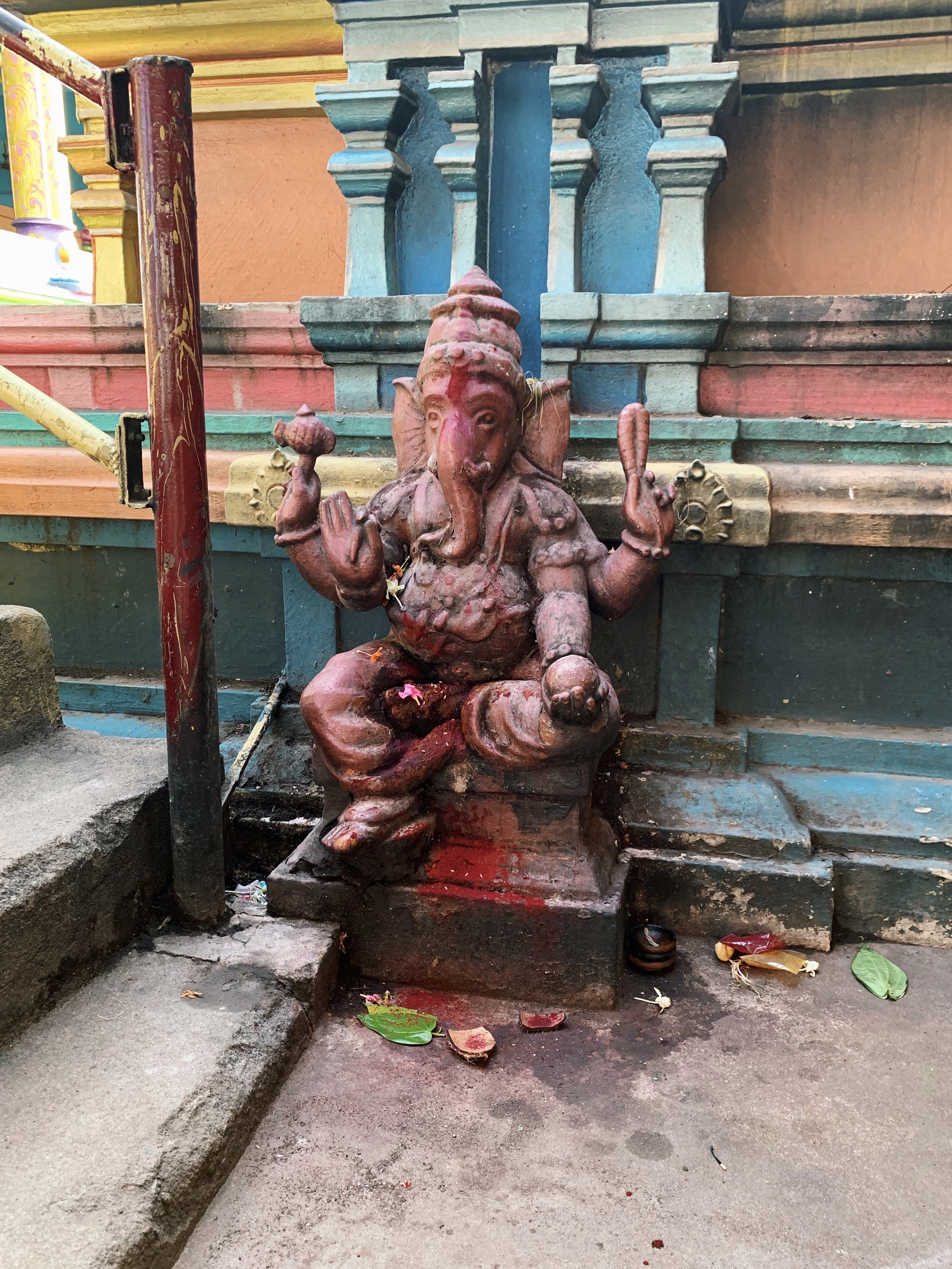
An sculpture of the Hindu god Ganesh outside the shrine.
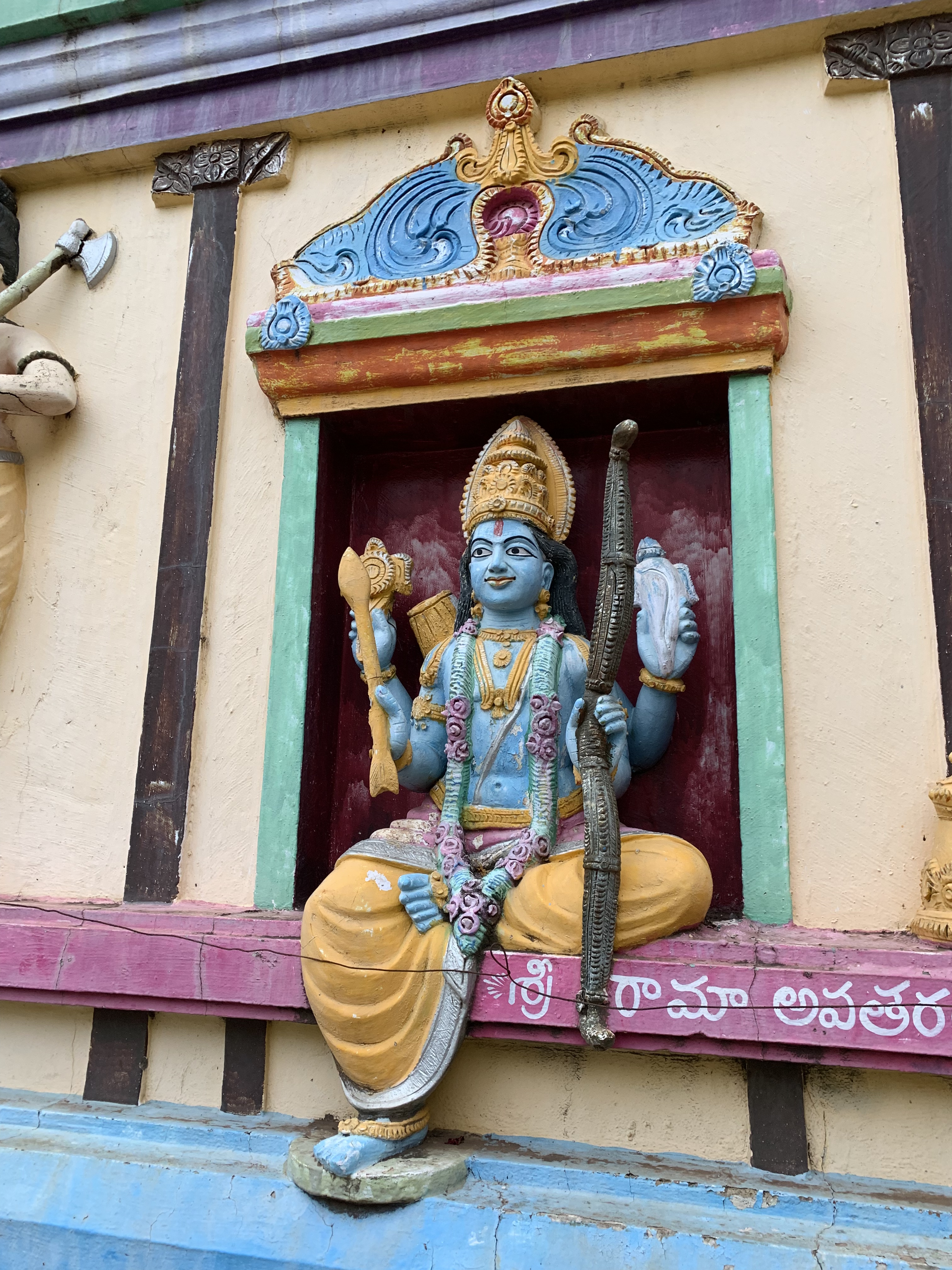
Rama, one of the avators of Lord Vishnu.
After a while I was beginning to get more comfortable
with the prospect of going to temples, knowing what to expect and what to do
once we got to the priests. I’m not a wiz on it all just yet, but after having
ignorantly stood directly in front of the deities (essentially completely
blocking them from sight), I now remember to stand at the side because other
people wish to look upon their gods and pray to them. Considering we had VIP
access, which allowed us to get very close to the gods, and others were closed
off by gate, which only allowed to look from afar, that was very rude of me at
first. However, I didn’t realize I was doing it until they asked me to move to
the side, which I immediately did. This whole process is very different from
anything I was familiar with after having grown up with Lutheran Christian
ties.
Some of the landscape on the way down from the temple!
My most shameful temple moment thus far is as follows.
I knew before I arrived that using my left hand to touch anything, especially
having to do with the gods, was looked down upon (since the left hand is the
one a person wipes their booty with… One must not hand money to someone with
that hand nor eat nor touch someone with that hand because it’s inappropriate
and gross), but I did it anyways by accident. I touched the foods that were to
be blessed by the god with my left dang
hand. I could distinctly see and feel the disgust on their faces. It was really
just this one man who worked in the temple, but I was horrified. Most people understand
that I’m foreign so I’m not used to the customs just yet, but I still felt
terrible. I’m sure most of the people saw the pure horror in my expression as I
realized what I’d done. In my disarray, I immediately apologized to the people
around me and to the god in prayer, if they were there listening. I won’t be
doing that again, now that I’m scarred for life. Here’s to hoping that any bad
voodoo on my plate has been washed away; I would never want to offend a god!
Although since then, my entire family and I have been blessed so many times, maybe
it was forgiven and forgotten. I sure hope so.
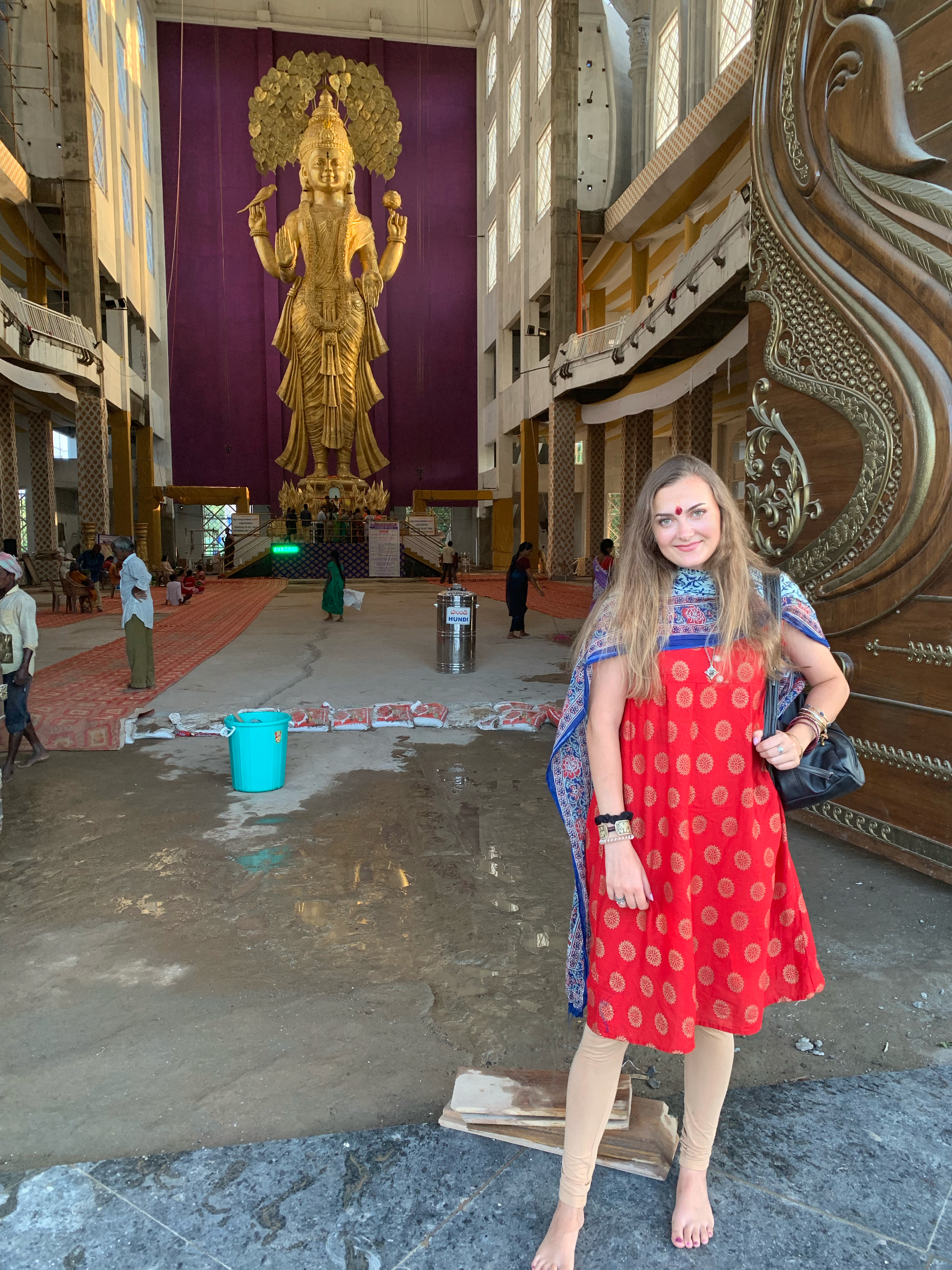
Me standing in front of the goddess Sri Vasavi Panchaloha.
Anyways, moving on to this past week’s events. After
Kymberly and I got back (her from Gujarat and me from Rajahmundry) we both
weren’t feeling too great. I was (and still am) having some sharp sporadic pains
in my torso area, and Kymberly was suffering from minor heat exhaustion.
Although, don’t worry because she’s feeling much better after taking two
restful days to drink water and stay out of the heat. A lot of my problem, I
think, is not drinking enough water and pepto bismol, so I’m going to start on
that pronto. I tried taking a laxative because my abdominal almost feels as if
there’s trapped gas, but after the pain of that experience, count me out! As I
already have to suffer through my moon-cycle every month, I would never
willingly take laxatives again because it feels like terrible cramps.
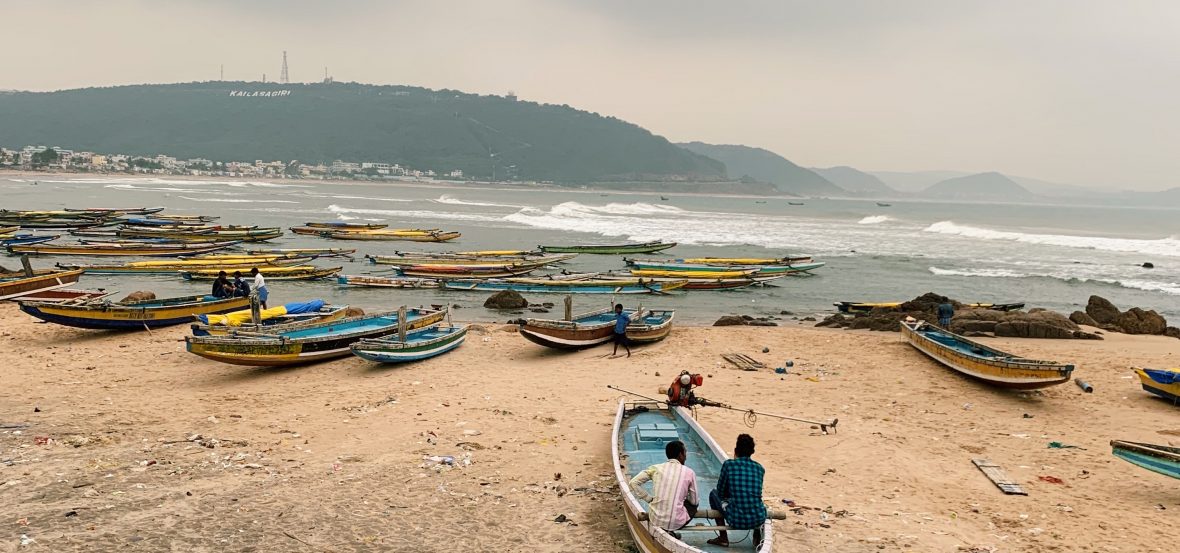
We went to a fisher’s village the other day, once
Kymberly and I felt recouped enough to get out of the hotel room, and
Krishnayya informed us about how these people were more matriarchal than
patriarchal. So essentially, it was my kinda town because women had big mouths
and didn’t take no heat from no man! I always jokingly say how I plan on finding
my Indian prince during this trip so then I’ll be indefinitely transported and
escorted by elephant, so Krishnayya took us here on that whim. He knew my
father loved to fish and essentially said that I could just pick a man off the
streets if I wanted to because of my fishing ties.
We made it to the town and met some family friends of
Krishnayya and Sailaja, and then we found ourselves walking along the shore. Little
did we realize as we walked across the beach towards the fishing boats that it
was a man’s world down there. Very little women found their way to that area,
and it was plainly obvious by the intense stares, yells, and gawking. However, what
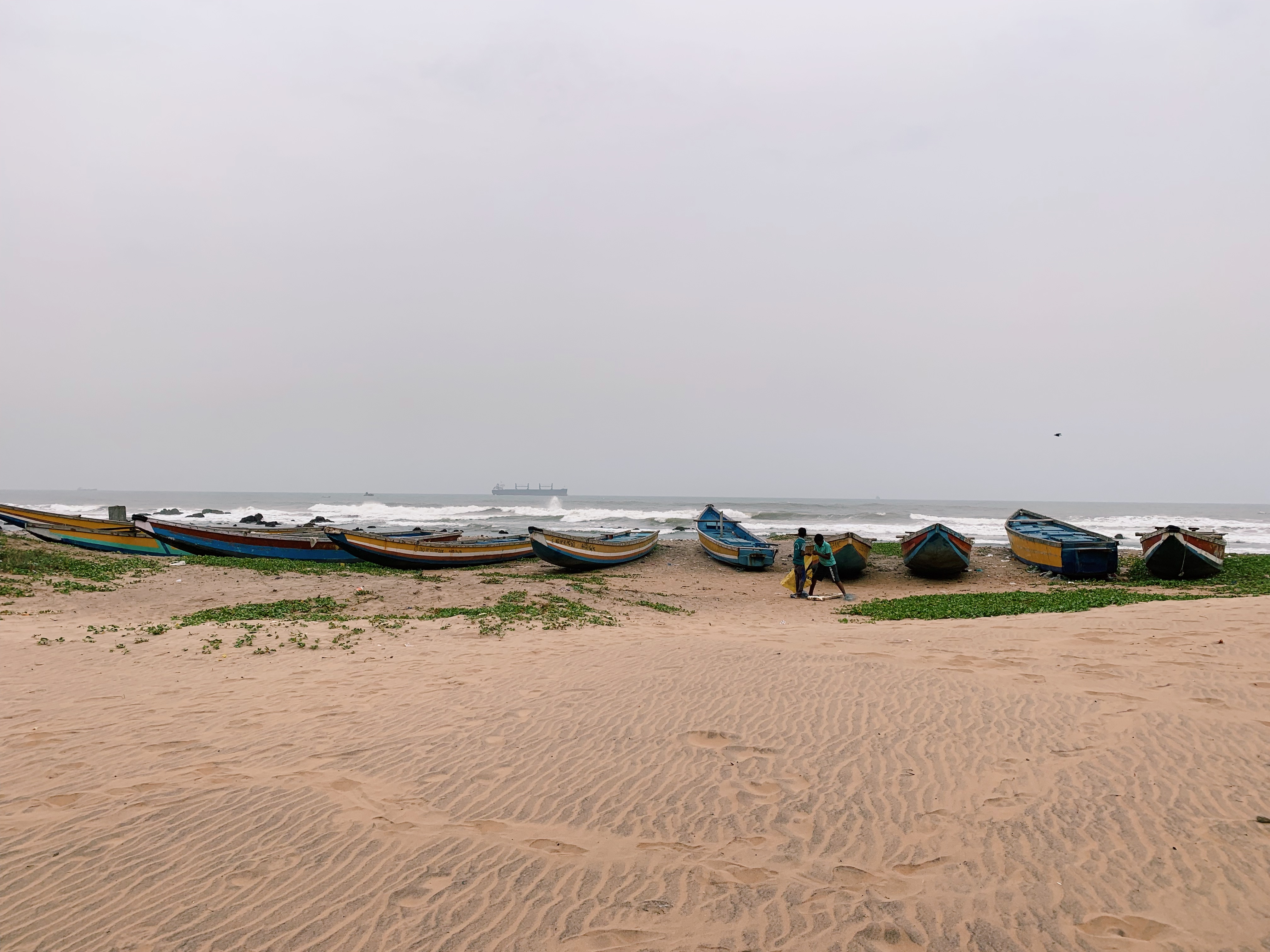
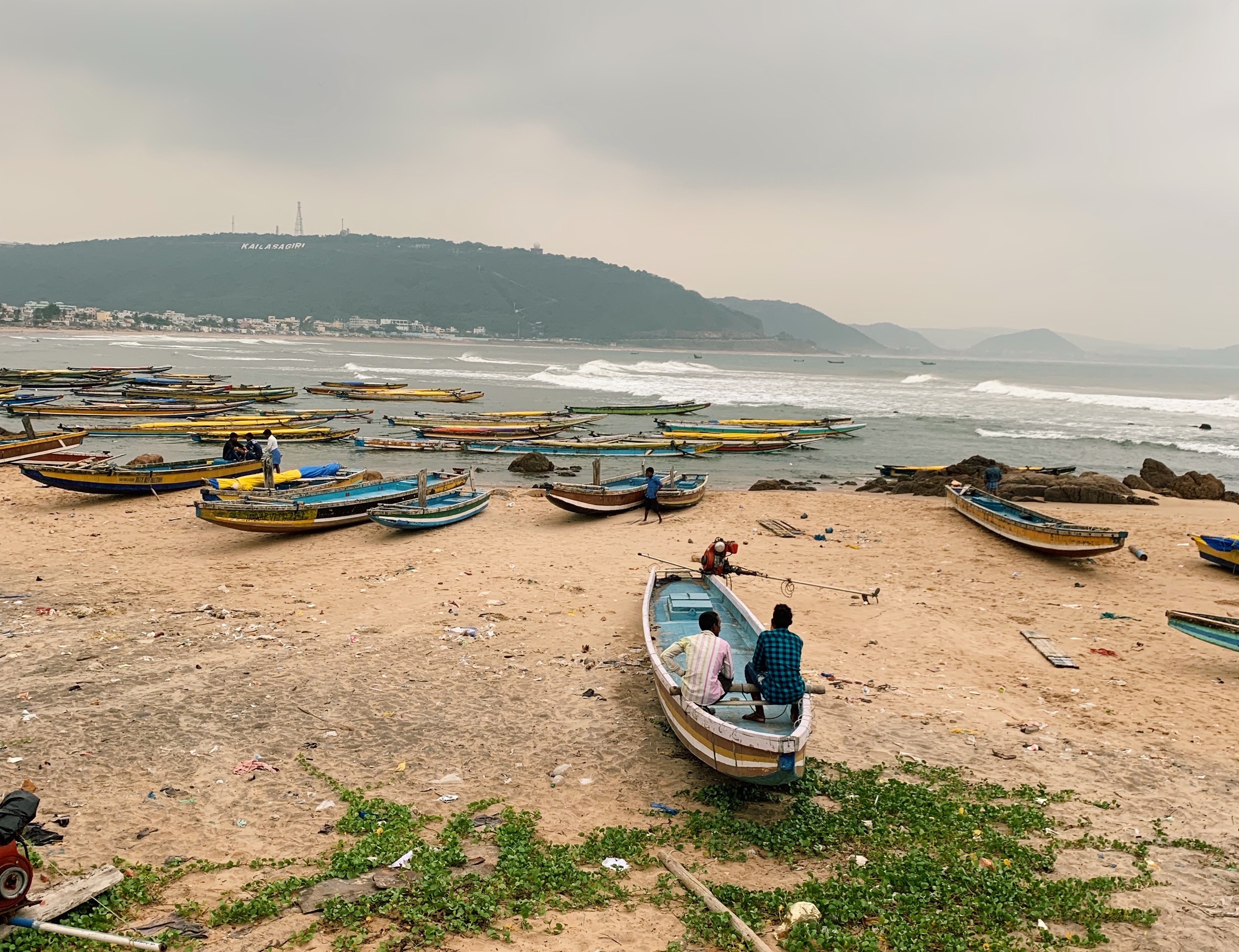
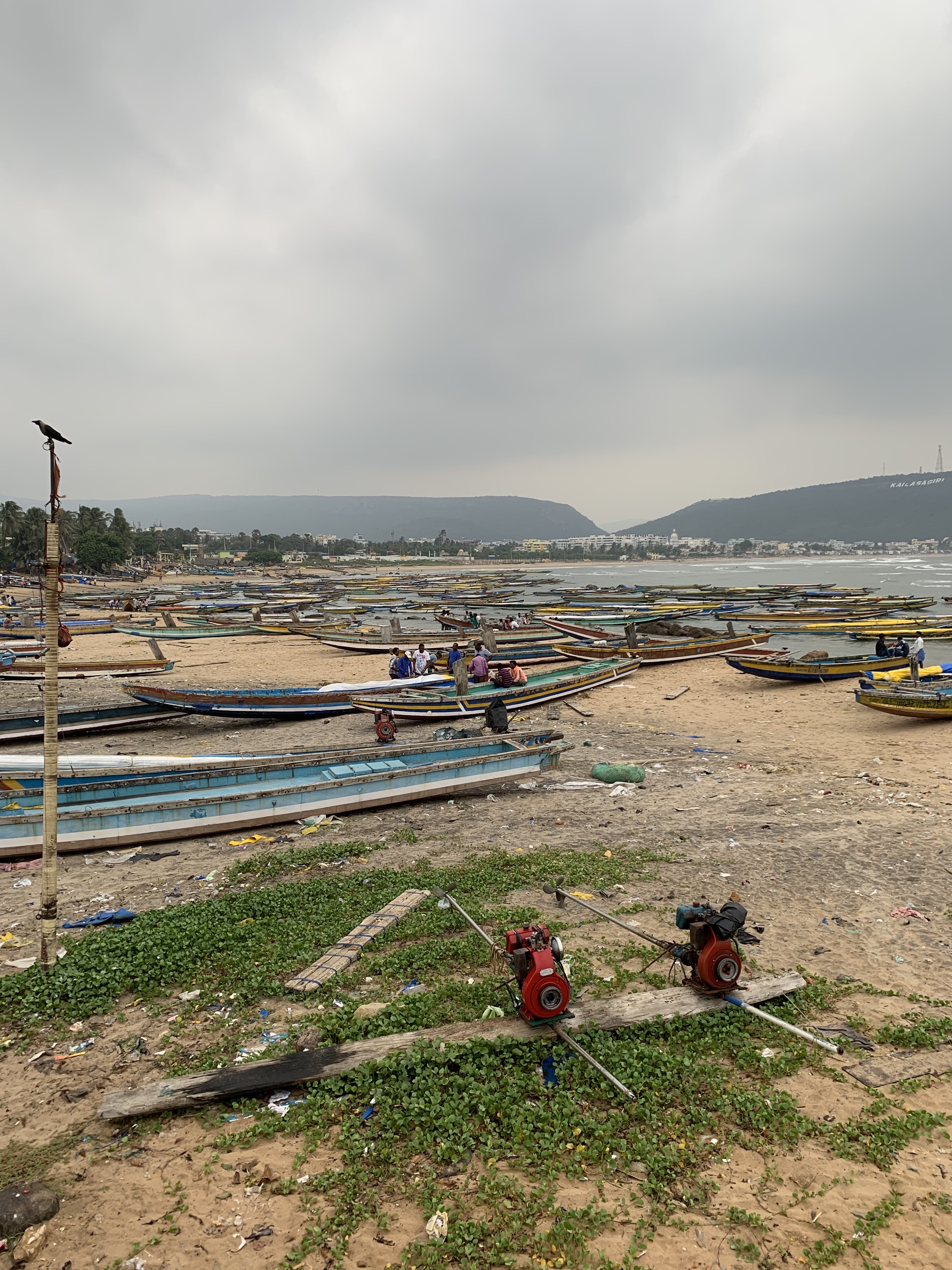
I found ultimately jaw-dropping was the number of boats that were littered
across the shore and sea, they were magnificent. Each boat was painted with a
different combination of colors, like each house on the street. There were
probably over 200 in number, and as we walked further, there were likely more.
It was beautiful, other than needing to avoid stepping in animal waste and
piled up trash every now and then. Our group kept on, and we gradually
approached a little boy squatting, with his pants down, by the ocean. I had to
double-take, but it was then that we both realized that the poop littered across
the sand was not animal waste as I had previously assumed, but human feces.
What a sight. What a revelation. What a way to conclude our day. Good thing
Kymberly had only stepped in it and not me!
Decorated colorful boats.
Kailasagiri Mountain.
Look at those boats! Wow-o-wow!
The next day we visited an ashram, and this was
probably by far one of the more fascinating trips. We were able to avoid going
out in the streets on display for all, and instead talk with someone about
their profession and what they teach in a less public manner. The man we were
privileged to meet was the guru of the ashram himself. Although, I was disappointed
to have learned only once we got there that we were going to speak with him because
I would have prepared some questions! It was nerve-racking to say the least and
I didn’t understand why I was feeling that way, but Krishnayya always has a way
to break the ice with his charismatic exchange and humor. The guru explained
some things about what he does, such as teaching yoga and practicing
meditation. People will come from around the world to study yoga, and the best
place to do it is here, in India. I have no doubt about that!
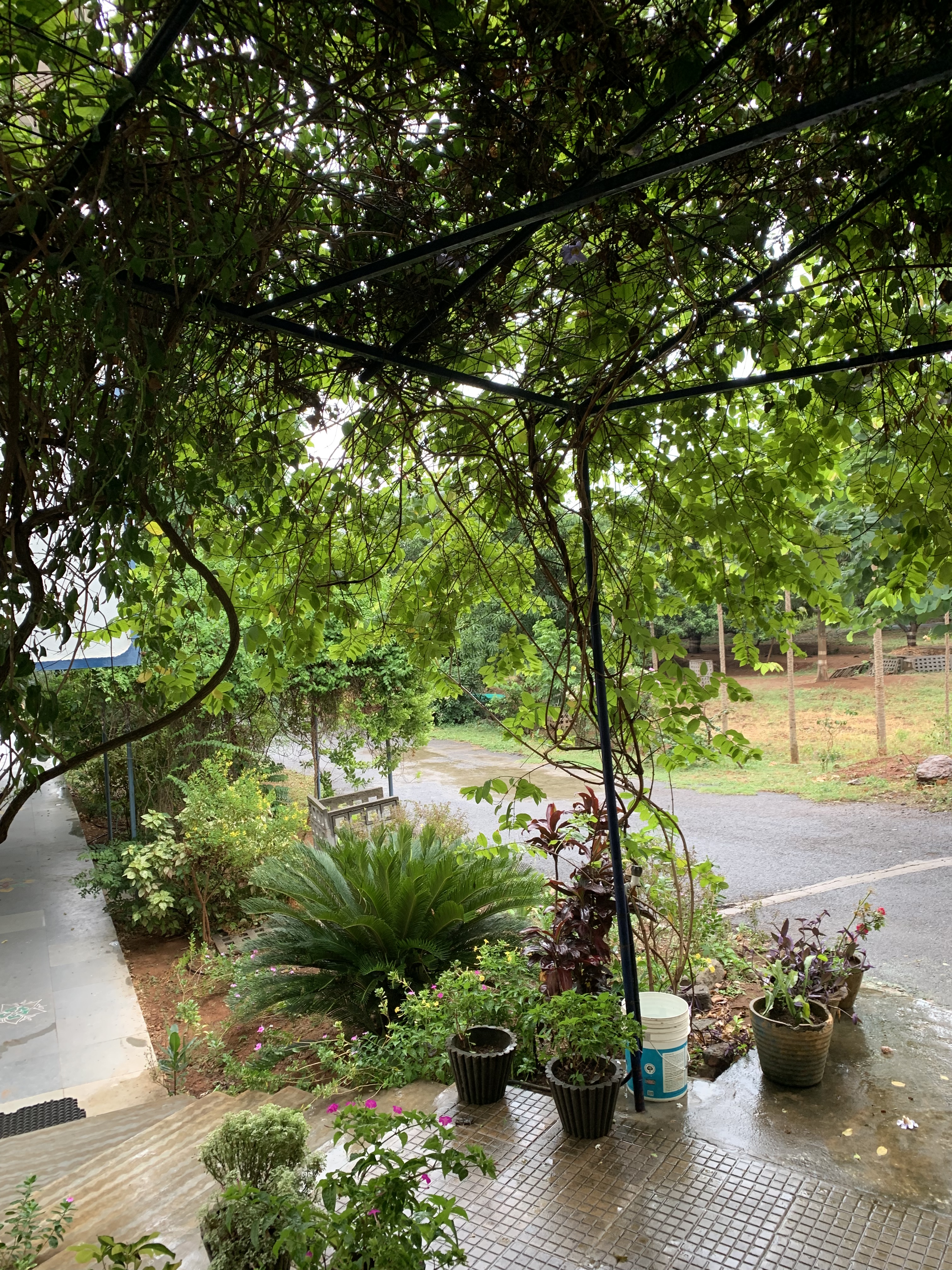
An outlook from the Ashram house to the garden.
I was curious about their perspectives on westernized yoga. Were they favorable of the spread of the knowledge and practice of yoga (getting the word of yoga out to the masses so more people may find interest in the original practice), or is the take on the contemporary western yoga training too mistaken to be truly supported by the guru (if you’re doing it wrong then don’t do it at all)? Some Americanized/westernized versions have lost the true meaning behind the practice; the spirituality. They clarified that its practice has become more of a form of exercise than a honing of oneself. I think they realize that they can’t do anything about its contemporary spread but also don’t condone it. Kymberly proceeded to point out goat yoga and couple’s yoga as the westernized yoga platforms they have in the United States, which is really a lot different from anything here. Yoga must be at a certain temperature, it must be quiet, and it must be inside the ashram. How interesting.
Today is the start of the weekend and I thoroughly look forward to it. For those family and friends reading this, I’m thinking of you and love you dearly, but I’ll be back in four weeks so don’t fret.
Kari
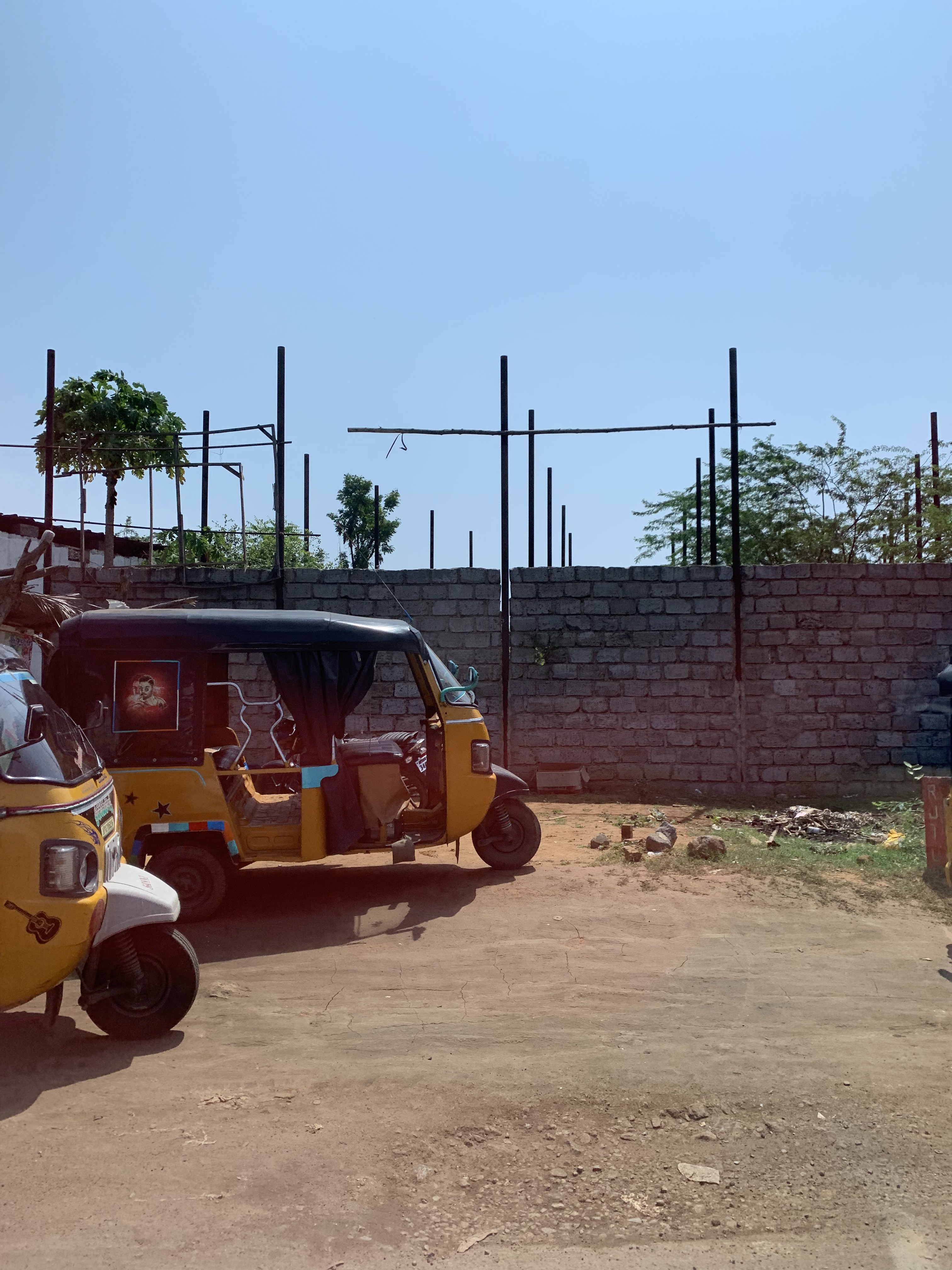
Some autorickshaws.
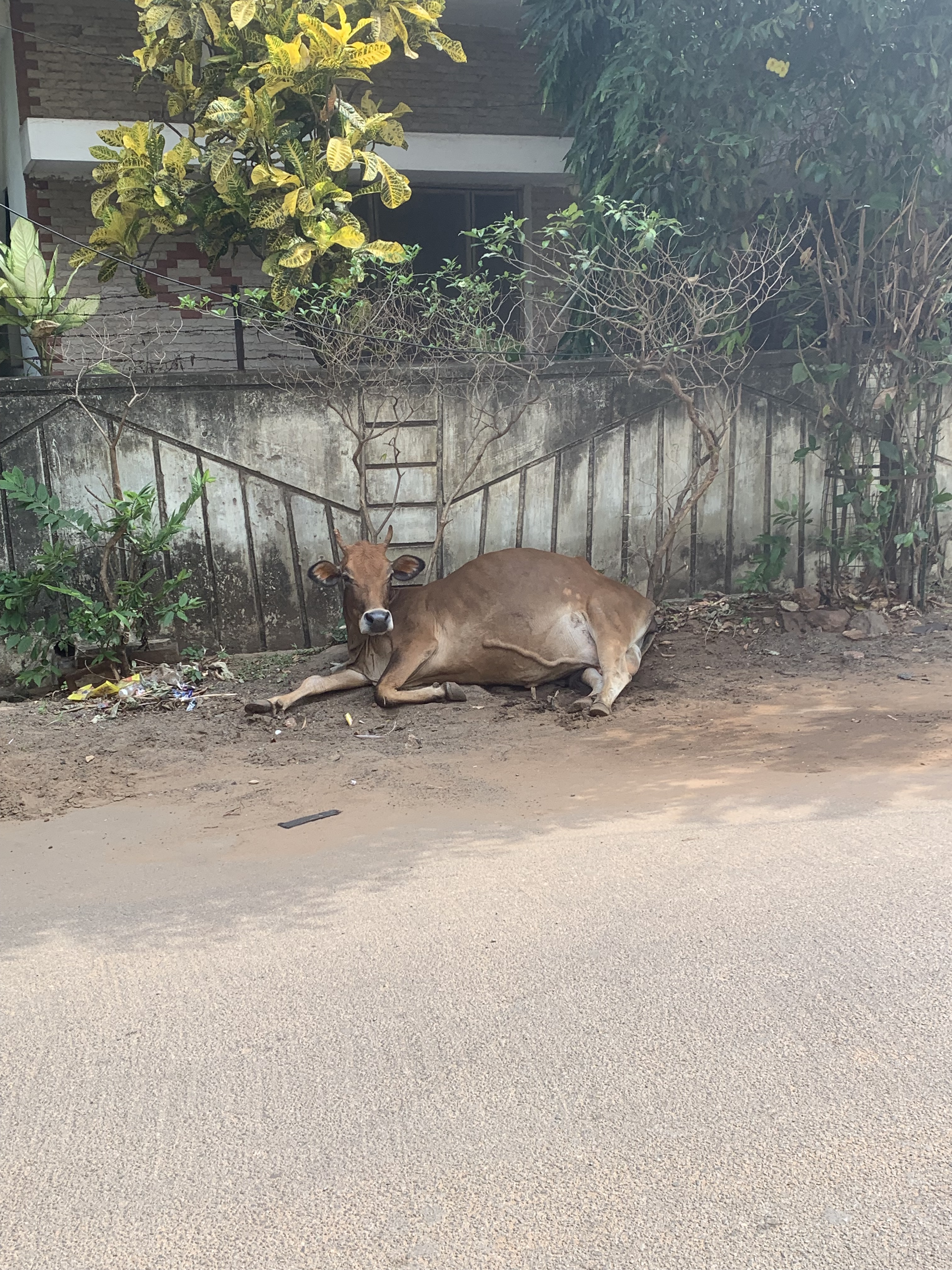
Our neighborhood, friendly cow!
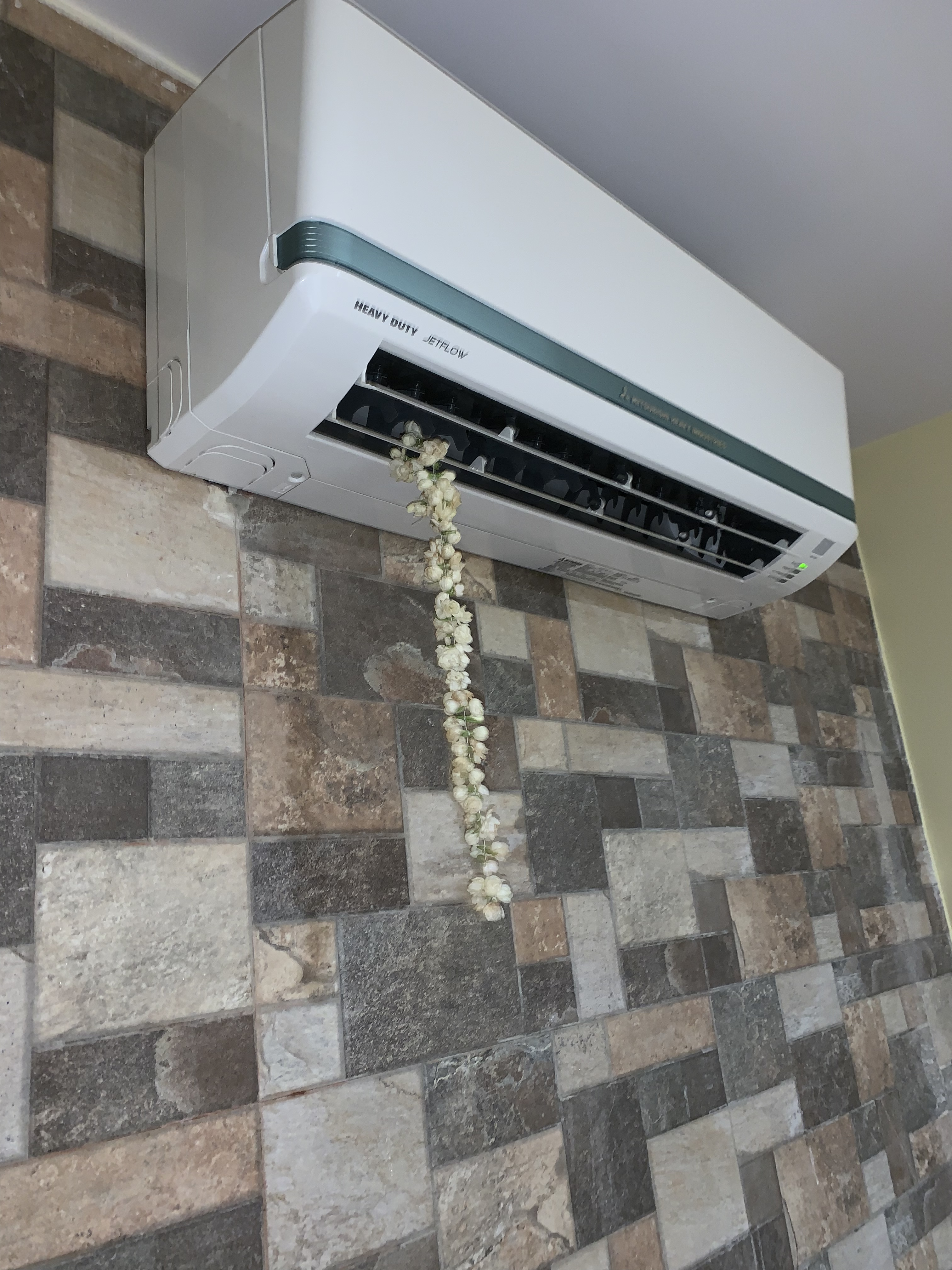
Kym and my homemade air freshener! *Invent the future*
Bear with me as the heading of this blog cannot begin
to encapsulate this trip, but rather functions as a starting off point that I
will eventually change when I feel I’ve found a more suitable title.
I feel more colorful here. It almost seems as if
everything is spontaneous. The driving, the food, the toilets, and whether or
not I’ll have Wi-Fi… it’s all a guessing game. I found out a few days in that I
wouldn’t have service outside of WhatsApp and Wi-Fi, and I think that was my
first culture shock; although, I haven’t really felt completely out of place
just yet. While in India, do as India
does is my philosophy at this point. It’s frustrating, though, because I’ve
wanted to send some pictures to family and friends, yet I can’t unless we’re essentially
solely in Krishnayya’s house, and that’s pretty infrequent between the busy
days we’ve had and the ones to come. Our hotel wi-fi is pretty terrible too, and
I don’t have service unless I’m sitting in the main lobby with a fully charged
laptop (since the people who built this place didn’t think to have outlets there
oddly enough). I know many are interested in hearing about the terrible
horrible no good very bad flight, but I’m going to skip over Kymberly and my
experience with Air India. I’ve not only gone over the event with my professor
and her in vigorous detail, but also such an experience would leave any normal
person bald from the stress of it all. It’s over and done with and we’ve
learned an incredible lesson, especially for me as a first-time flyer.
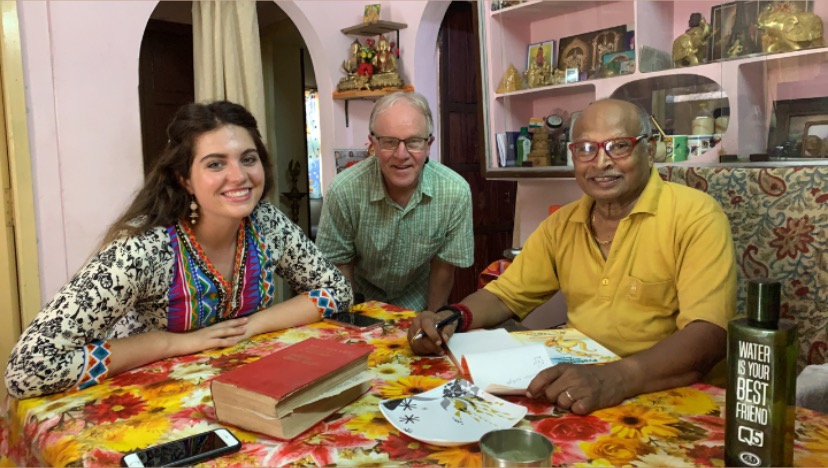
Kym, Prof. Schmitthenner, and Krishnayya
For family and friends reading this, Krishnayya is our
trip “dad” per-say. He has gone above and beyond expectations having organized
the whole trip for us, and he is absolutely wonderful. He was both a professor
here in Vizag and taught some in the United States. In the past he also hosted
a number of BYU students during the summer in the late 80’s and early 90’s to
today. He spoils us, and I honestly don’t know what we’d do without him.
Sailaja is our trip “mom,” who is also Krishnayya’s ‘manager’ of the house. She
basically handles his phone/ emails, serves him meals, does laundry, cleans,
and organizes essentially everything. You get the idea; she’s a masterful woman.
Although she speaks little English, according to Krishnayya she’s got a big
mouth, an even bigger heart, and an incredible amount of patience when it comes
to Kymberly and my shopping. She and Durga cook every meal, breakfast, lunch
and dinner because there are no leftovers here, and I’m thoroughly beyond
impressed by their diligence. Durga is the main chef of the house and has two
small children Mumu and Sidu (their nicknames). I haven’t seen the children
since the first day we arrived in Vizag, but they are SO precious. Kymberly already
plans on squeezing the life out of the little guys and drowning them with
kisses the minute they return.
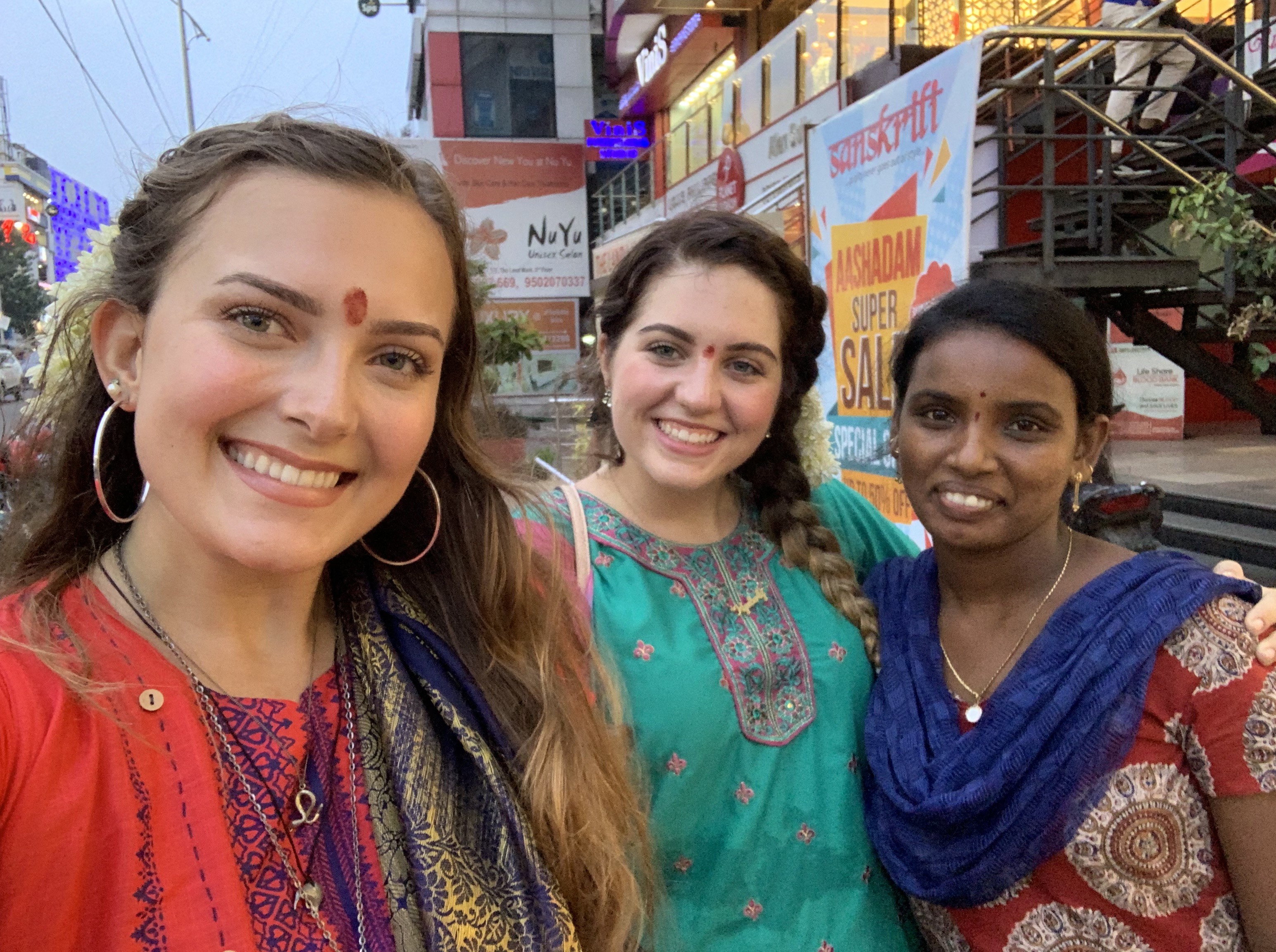
Me, Kym, and Sailaja!
I guess we’ll get into the meat of my experience thus
far… the things I noticed different. I’m going to start with the driving and
I’ll try to explain this the best I can because it was an experience in and of
itself riding in our first Indian Uber! First off, we drive on the left here
versus the right side of the road, so every time we enter a roundabout I’m
completely horrified. There don’t seem to be many rules of the road, or if
there are, then they’re completely ignored. I have been in a car/ autorickshaw
while driving on the wrong side of the road (so here that would be on the
right), on a narrow road, with another car driving the same direction on our
left, and an oncoming car driving towards us directly ahead. This has happened
more than I can count, but oddly enough it’s become exciting, and the
endorphins which I feel while riding a roller-coaster have become similar to
these ones… The “on the brink of death” endorphins, I suppose. There aren’t
many cars here, but rather an almost unnecessary number of motorcycles, more
than I’ve ever seen. Although, I can’t blame them considering that gas is about
76 rupees per liter (which is 304 rupees per gallon), and the equivalent in US
dollars is about 4.50$ per gallon. I would be riding a motorcycle too if I
wanted to save money. The roads can also become extremely narrow, so
motorcycles have more flexibility when it comes to those types of streets in
comparison to cars and autorickshaws.
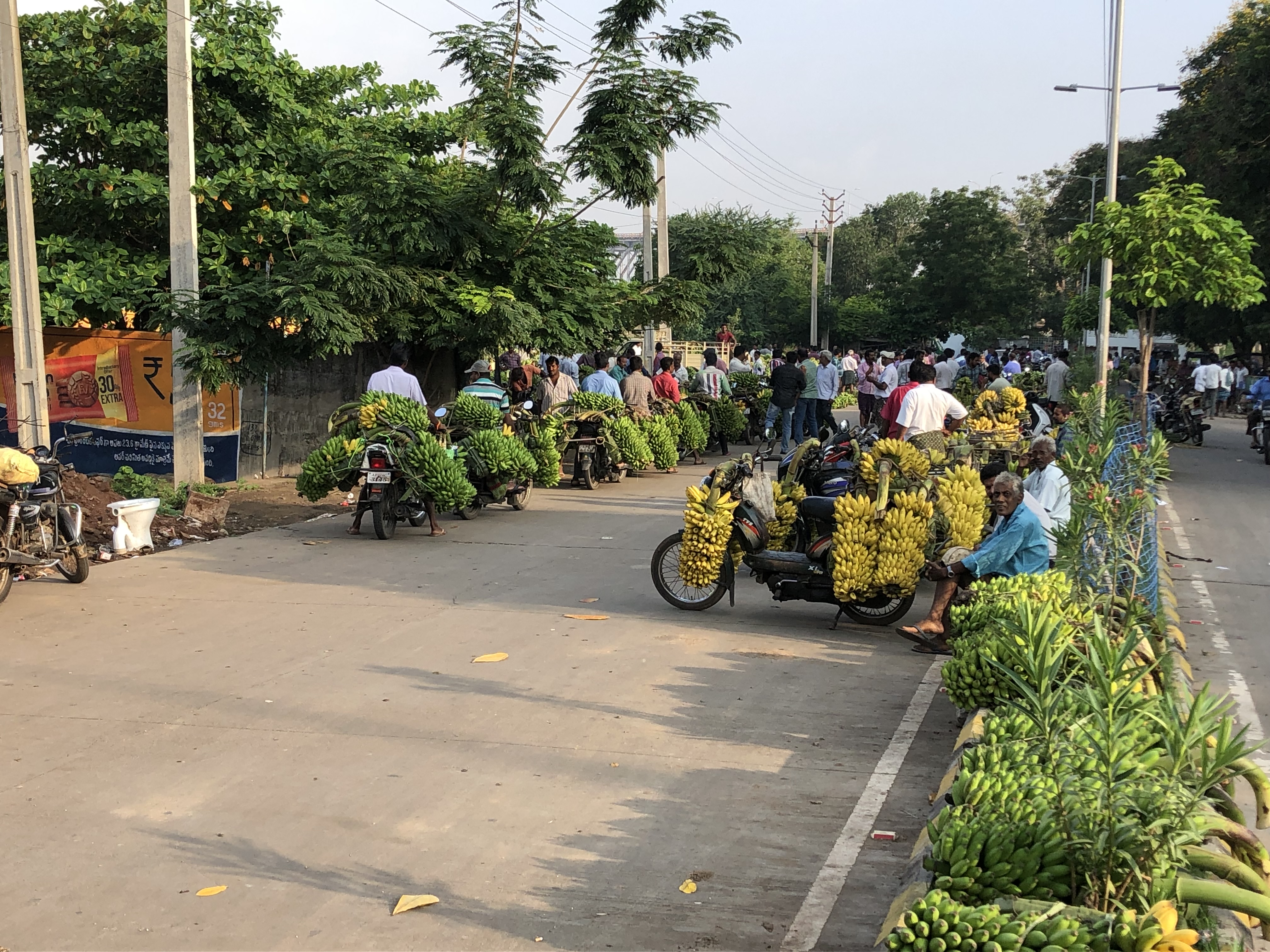
Captured by Prof. Schmitthenner: Loads of bananas on a chain of motorcycles! (it was for a banana market!)
My perception of car honking has changed since I’ve
been here. I think I’ve maybe honked
my car horn three times. I don’t like
doing it because it seems rude and obnoxious, but then I came here and the
first thing we encounter is a bustling harmony of car horns echoing far into
the mountains from the busy city. However, It’s a warning rather than an
obnoxious response to ill-driving. Vehicles honk at motorcycles, cars and
people to make them aware of their presence and so other cars know to watch out
as they pass. No one seems angry or has gotten road rage as far as I’ve seen, and
I surprisingly trust them. To get from one place to another around here, they
really must be awfully aware of themselves and others on the road.
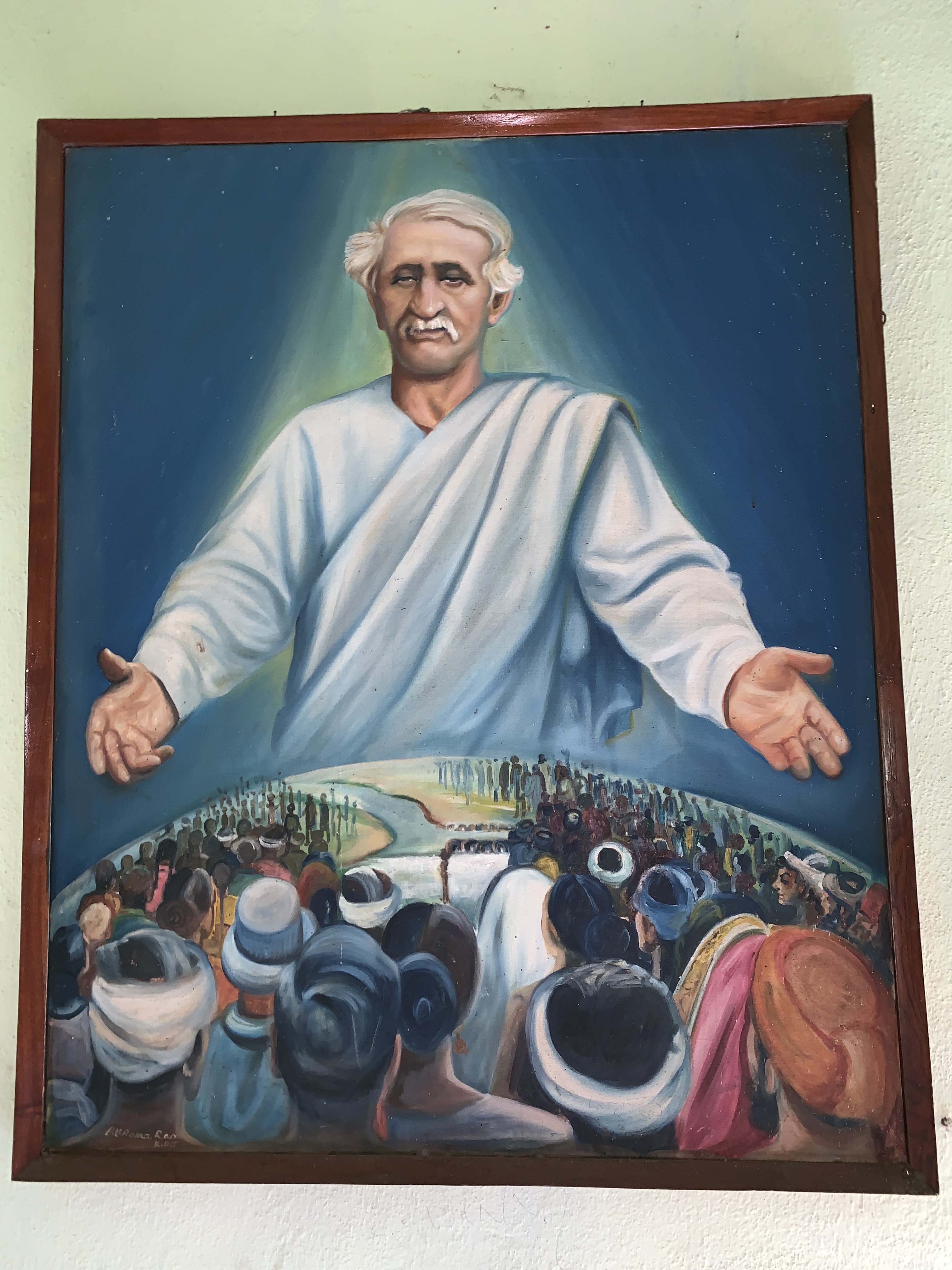
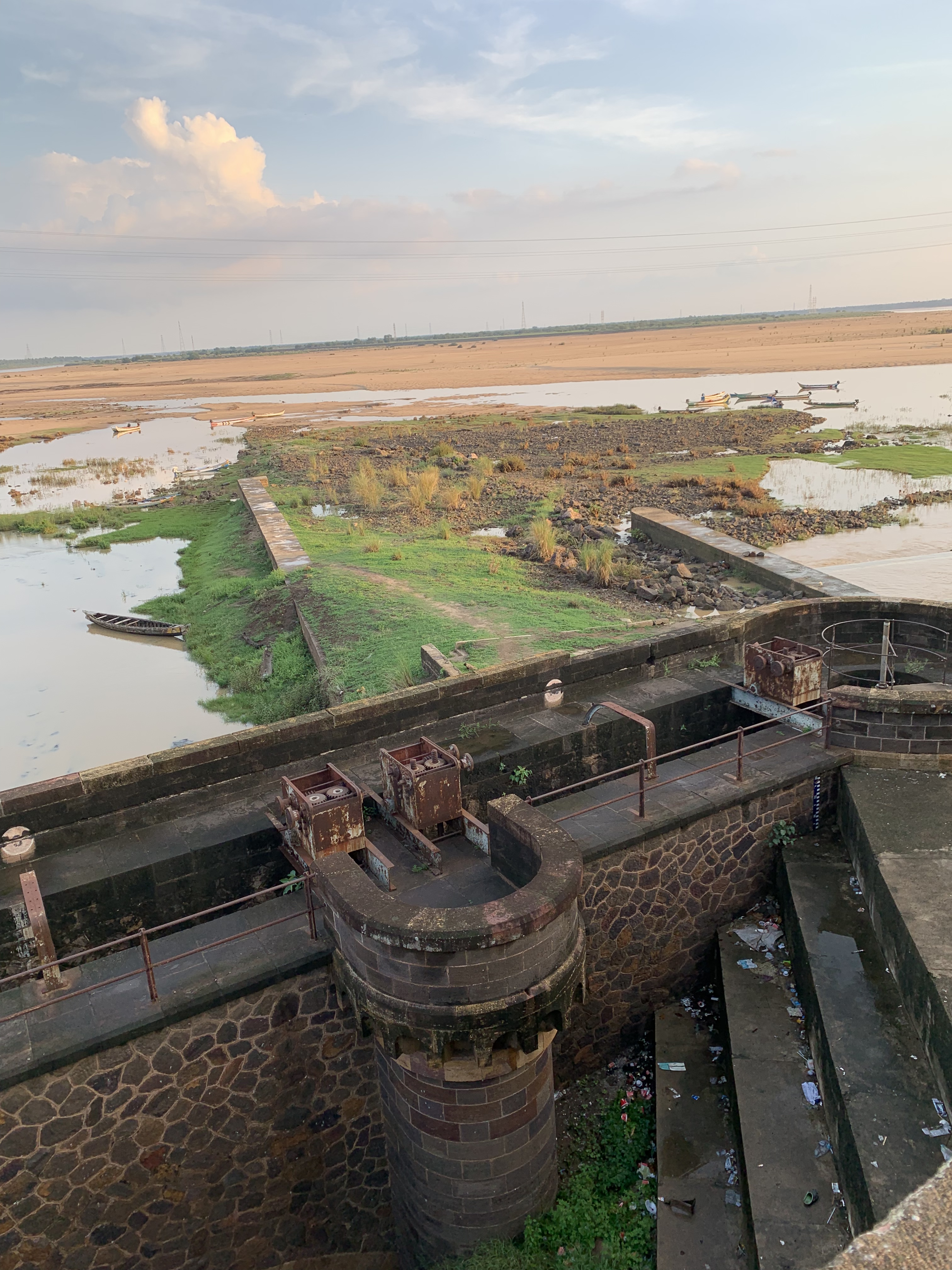
I’m sure my family and friends are reading this and thinking to themselves Kari, I don’t care about the driving. Tell me about the toilets! Honestly, I haven’t had a problem with the toilets. I knew what to expect, and I’ve learned how to poop in a hole. Kymberly and my hotel toilet in Vizag is westernized and has a cute little sprayer that cleans everything to the ‘T.’ However, there was another hotel in a city southwest from Vizag called Rajahmundry (a city in which I’ll talk about in more detail later so prepare for that), and although the room was much larger, the toilet was just a little decorated hole in the ground (that flushes! Who knew?). To preface this, the hotel was one of the first hotels to pop up in the city, so it’s a bit dated. Anyways, we’re visiting the commonplace of Arthur Cotton who revolutionized the irrigation and water system around here, and he has become almost a deity to these people. His work instigated an engineering and technological revolution in these regions that can be seen even today, and they memorialize him for it. His statues can be found next to Gandhi himself; it’s impressive. He’s most well known for his work in implementing a dam across the Godavari River, a river that is an astounding 4 miles wide, and that’s just at the beginning before the river forks into two. The Godavari River is a part of the largest water basin in south India, and Arthur Cotton did wonders for the people there. We even visited his museum where they painted him in such an honorary manner that many Christians would find the likeness of his portrait similar to the depictions of Jesus himself. Arthur led them to prosperity!
Arthur Cotton’s portrait.
Another thing I’ve found myself having to get accustomed to around here are the stares from people. Visakhapatnam and Rajahmundry are not often tourist destinations, so the presence of a tall Norwegian woman in these parts is, to say the least, fairly odd (and when I say tall, I mean I tower over every person, male and female! Only on rare occasions do I see a male that is close to or above my height!). Imagine if I was not only tall, but ALSO light blonde… I’m sure children would cry! When we were in Rajahmundry visiting Arthur Cotton’s dam, I walked past this little girl. As she noticed me I saw her mouth drop, and so did the ice cream in her hand! What had happened was that of a movie scene. Ya know, generally the little girl or boy sees something completely astounding, like the world ending in one of those embarrassingly bad drama-action films (like the movie 2012). So, in the child’s fascination and transfixion of the magnificent event playing out before them, their hand lets go of their ice cream. I laughed when I saw the scene unfold before me, I couldn’t help it. I was that much of a magnificent event that the natural connection between mind and body was severed for just a small instant… because of me.
Now, to dive into the past week’s events: in a nutshell, we’ve been paraded about for political gain, have unendingly been asked for selfies, taken a train, and shopped. Many of the people in this area are not used to seeing people of a different skin color and many young boys and girls have approached us with requests to take a selfie. However, that one selfie is that of a crack in a dam. Once you allow one selfie with one person, then a flood of new requests begin pouring in. I’m even drowning at the thought of it all because we get asked a lot! By the way, I needed to insert the part about taking a train because this was my first time taking one, and it was in India to say the least! India has been a lot of firsts for me… first flight, first country I’ve visited outside of North America, first train ride, and I’m sure the list will continue as we keep on keeping on.
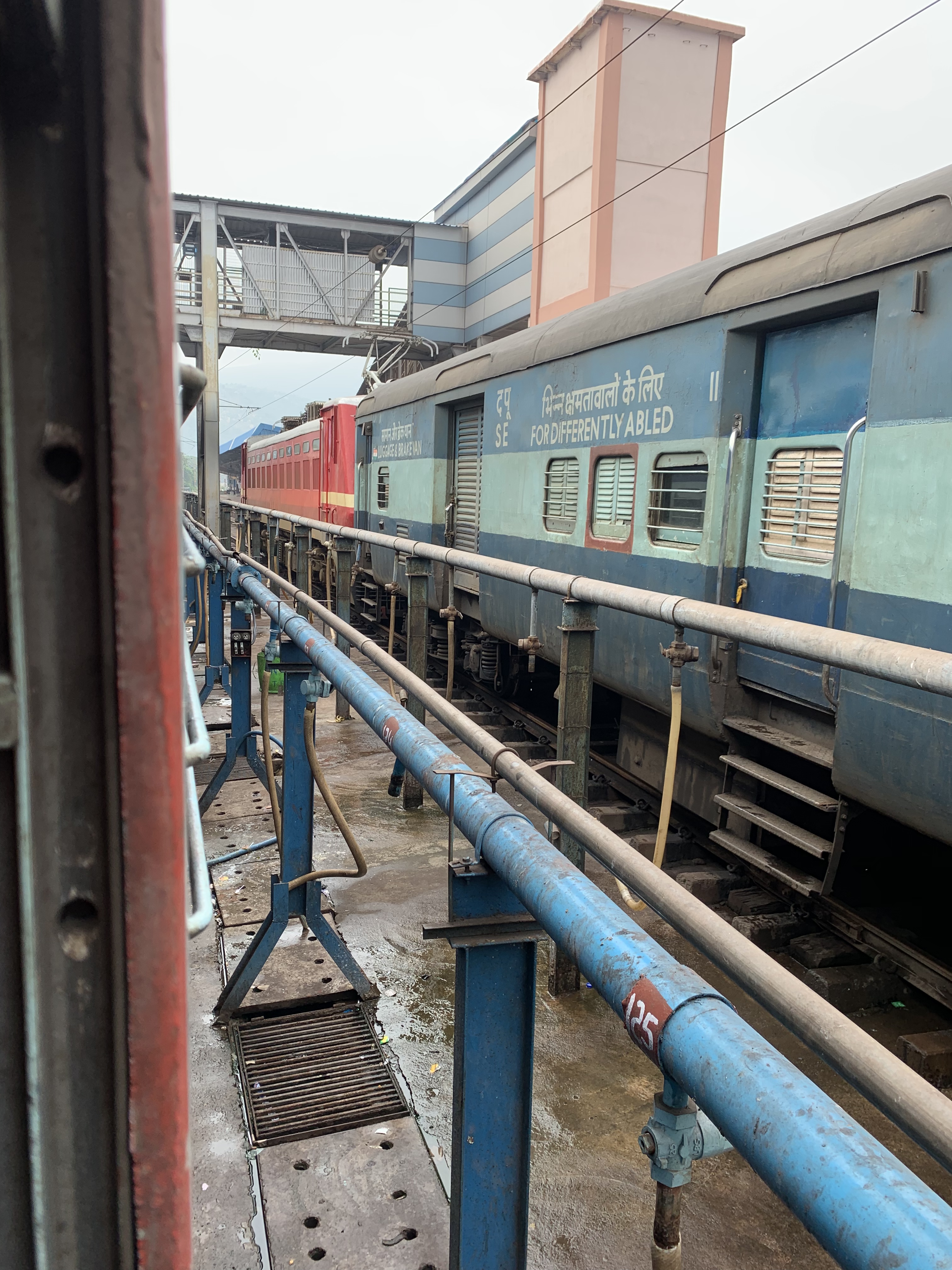
First Train RIde!
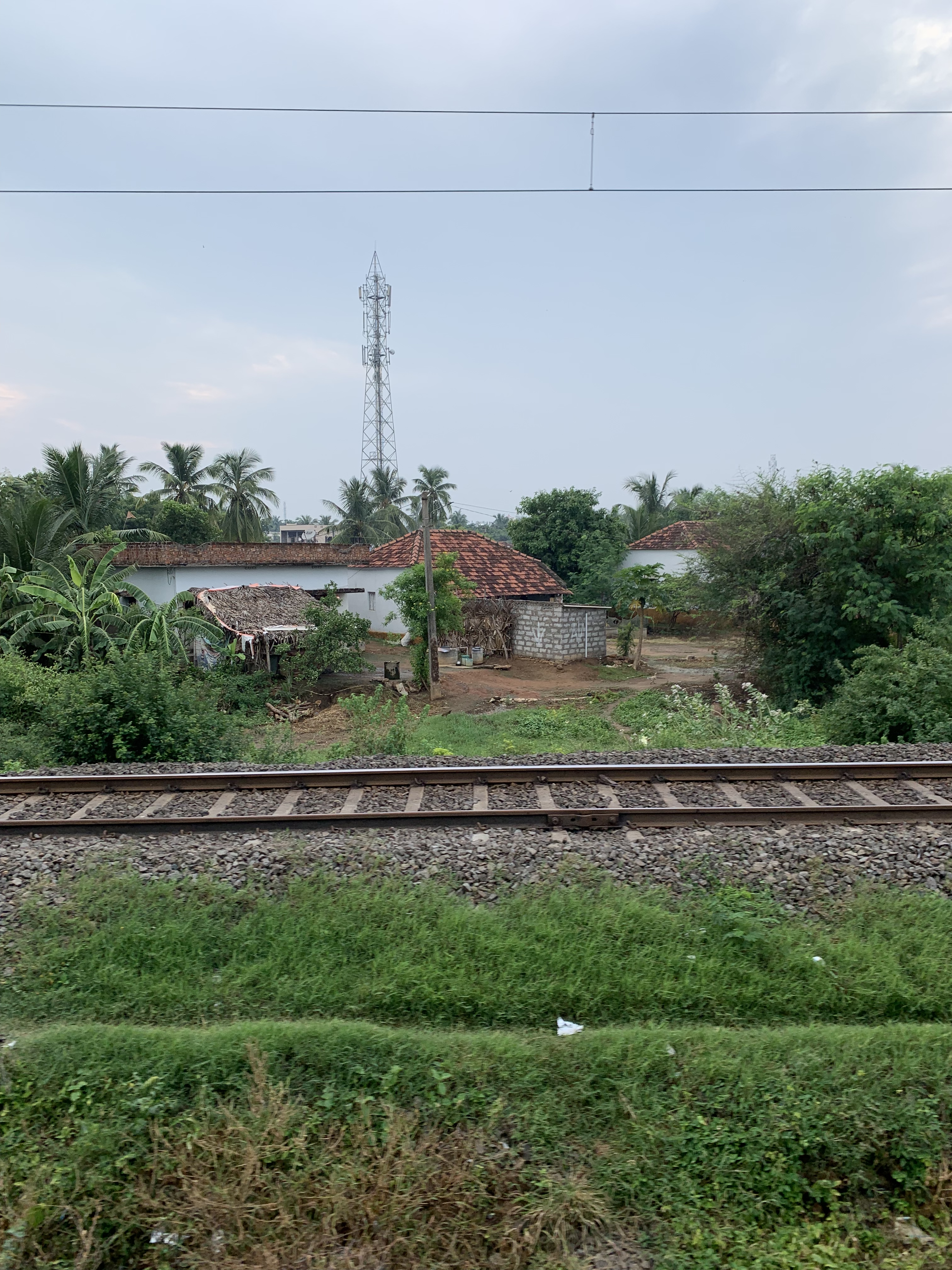
A beautiful moment at a train stop.
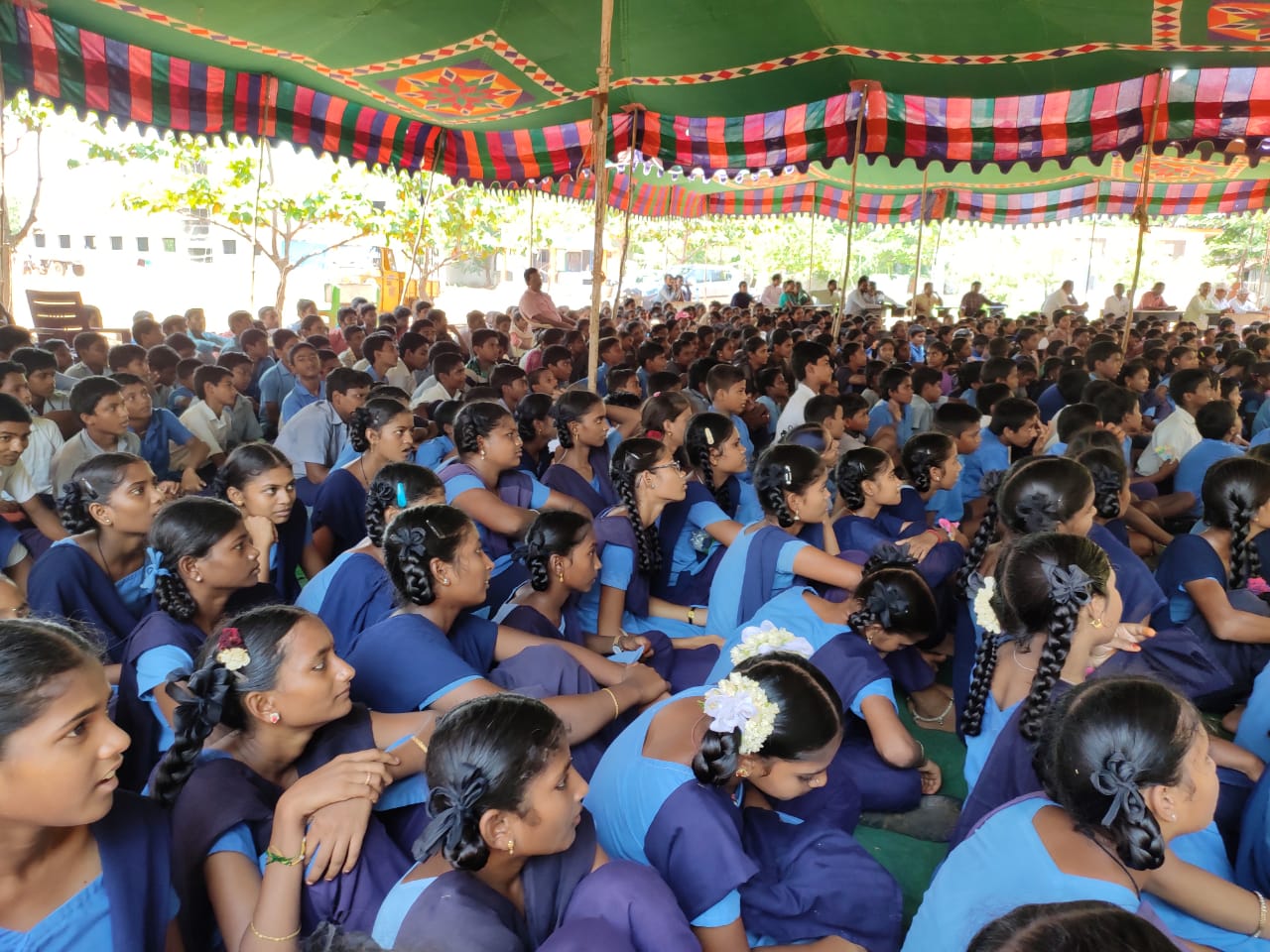
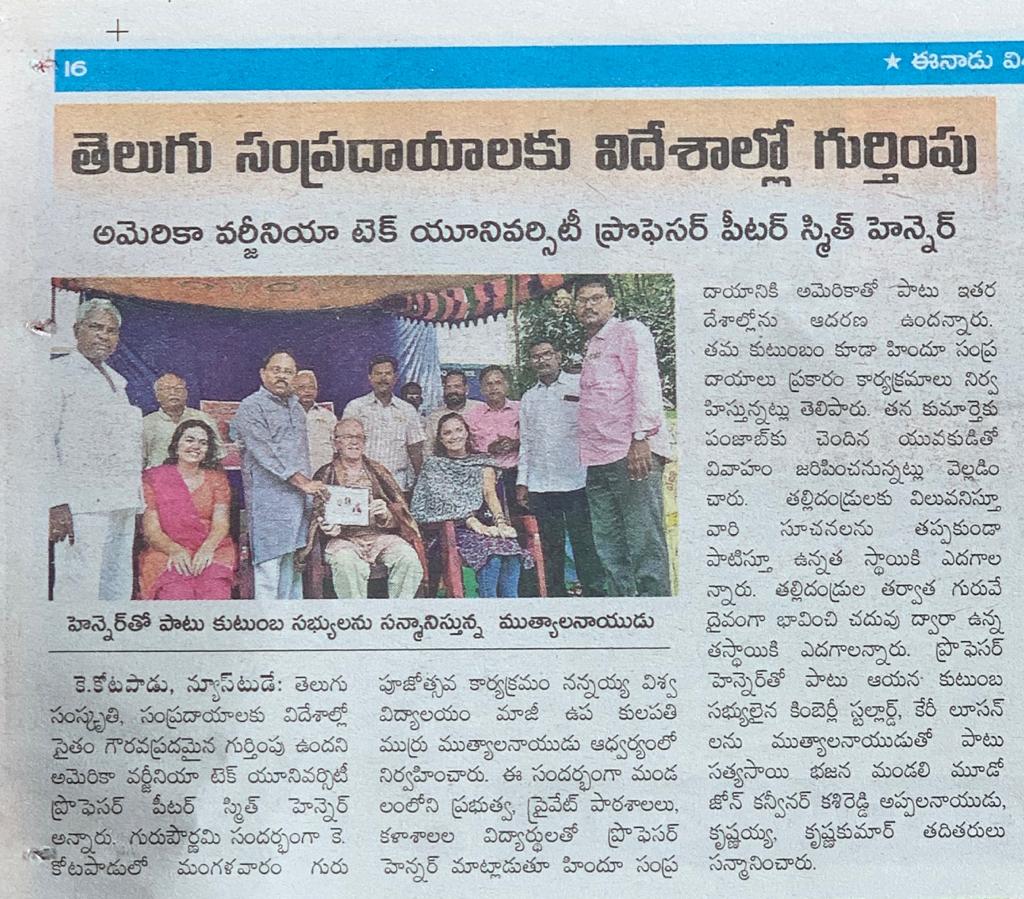
Anyways, I’m sure you’re thinking, what? Paraded about for political gain? How so? Tell me more! Well, your prayers have been answered. This has probably been the most interesting aspect of our trip just yet, and it’s only been a little over a week. We didn’t realize it at first, but all we knew was that we had been asked to speak at an isolated city/village school about forty-five minutes from where we were staying in Visakhapatnam. Professor Schmitthenner was a nervous wreck the night before, unable to sleep, because he was to speak in Telugu to the students (the spoken language in Andhra Pradesh). Not many outsiders know Telugu because it’s a specific language for this region that exists basically solely in this area. So, because of this, the kids were fascinated by the idea that an outsider knew Telugu, and they wanted to hear him speak. The day of, we get picked up in the morning by this man with a mustache, and little do we know that his intentions may have been more than just taking us around to speak to children. Essentially, we found out he wanted to be reelected for a school position in the region (so when I say it was for political gain, it was in the school system), and things pretty much fell into place after we realized that! I do want to put this out there, though, he picked us up, dropped us off, fed us, took us around the town, and it was all paid for! He did try, as much as he could, to treat us well. The cherry on top was meeting the kids because they were absolutely wonderful. From ages five to fifteen, these kids were astounded by our presence, and they even asked for Kymberly and my signature for being the first white people they had ever seen. It was adorable. I’d not felt more welcomed until that point.
The sweeties of K Kotapadu! (about 400 in number)
Here we are in the Newspaper!
Although, before Kymberly and I spoke up about how the intensity of the day might be too much to handle for a second time, we were already signed up for another event. This time Kymberly wouldn’t be there as she made previous plans with her husband’s family in Gujarat in preparation for her second wedding happening in December. Professor and I were now to speak in Rajahmundry to university students rather than middle-high schoolers. Essentially, the man found out we were planning a trip to see the works of Arthur Cotton and quickly booked a session for us to come out to; it was very last minute, but it was happening!
We made it to the train station with time to spare and the ride itself was relaxing, even without A/C. I had a window seat and treated myself to the eloquent writing of the book Eat, Pray, Love, given to me by my Aunt Jan and one that I already can’t put down. For a time, I watched the countryside as we glided across the land from Vizag, a place I was still finding myself and getting used to, to a new place for which I prepped to do the same. After having only been in Vizag for three days at that point and we were already traveling to a new place, I wasn’t sure what to expect when it came to how I was supposed to feel. As we traveled, I can only describe the mountains that surrounded us as these random steep spurts of rock that existed on a flat landscape. I have been accustomed to the Appalachian Mountains. First there are rolling hills, which then transcend into deepening valleys, and then, mountains. That slow progression doesn’t seem to exist here; rather, it’s spontaneous. Krishnayya and prof. told us a story a while back about how the mountains came to be, and this is the legend as I remember, which can also be read in the Ramayana epic:
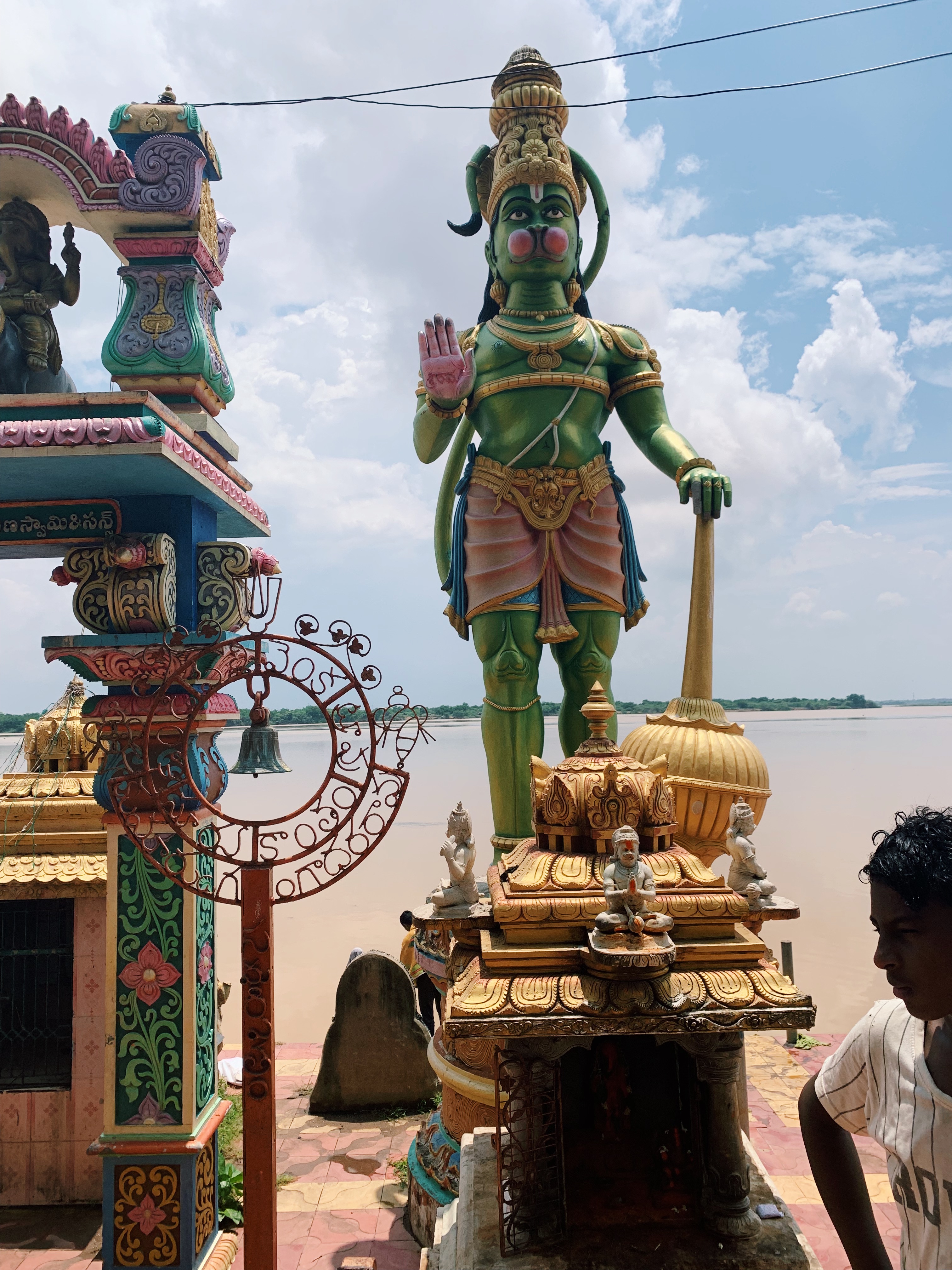
Rama’s brother, Lakshmana, was hurt and nearly killed by the son of a demon after a battle, and he was very close to death. The remedial medicine for his wounds existed as an herb on a particular mountain, mount Mahodaya, in the Himalayas. If he wanted to be saved, then he’d have to eat the herb. Hanuman had the strength and ability to fly to the Himalayas, so he was called upon to fetch the medicine by Rama. However, once he got to the Himalayas, he couldn’t remember the herb that was required for Lakshmana’s treatment. In his pickle, he instead uplifted the entire mountain and brought it back to the place where he began his journey. While Hanuman was carrying the mountain to Rama and his injured brother, parts of it fell off, and those bits and pieces became the eastern and western gods (gods meaning the mountain ranges, according to Krishnayya).
Well,
wouldn’t that make a lot of sense! But I don’t know. Who really
knows?
Hanuman in all his glory! What a statue!
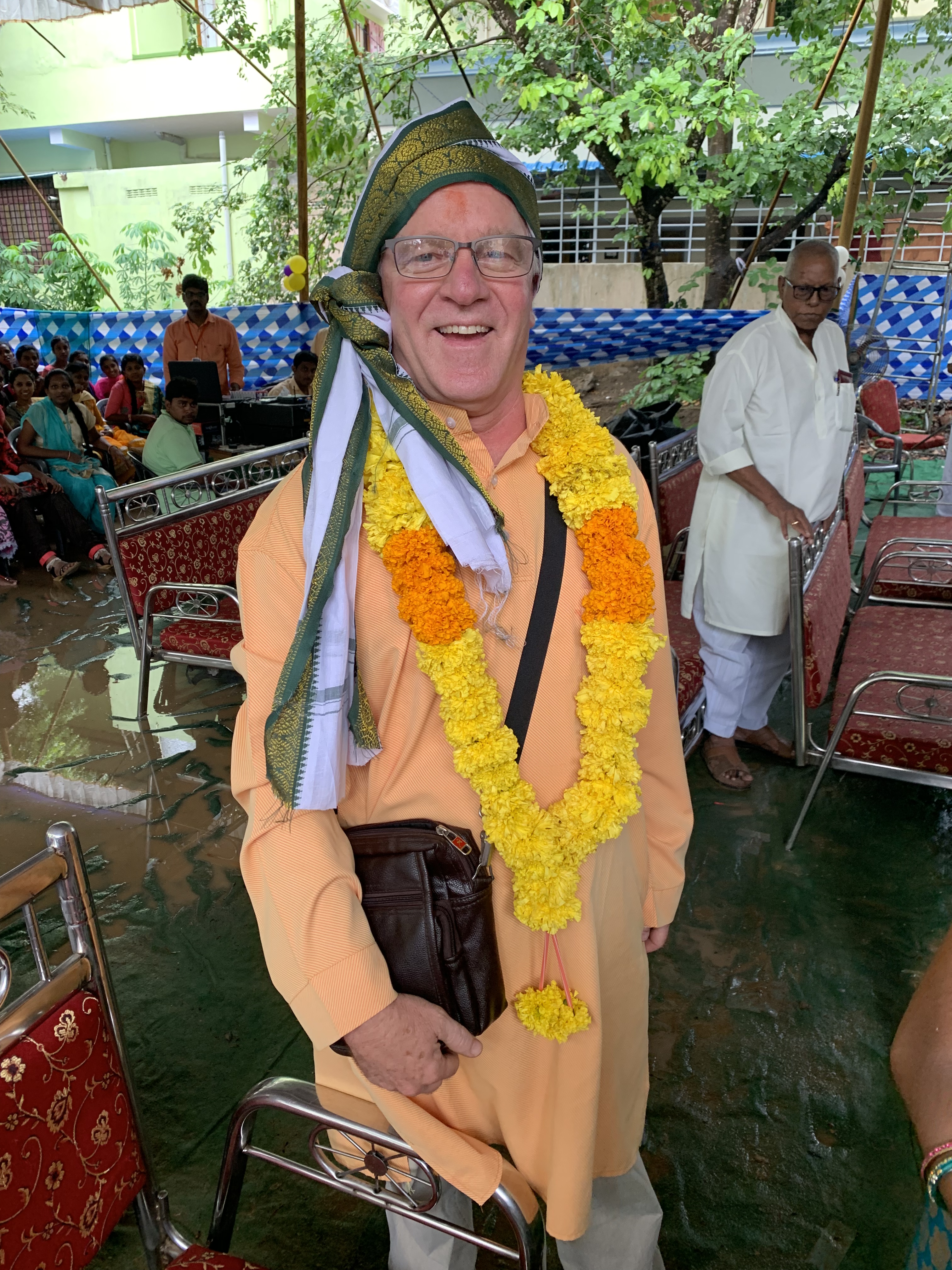
Anyways, we made our way into Rajahmundry, a much smaller city than Vizag, but very heavily populated if you consider the people to area ratio. The roads were a lot bumpier and so were the hotel beds (but I actually slept very comfortably!). The next day, after settling in that night, we were picked up by a man working for the man running for school office. When I say this event was over the top. I mean… We knew to expect a greater number of students; however, when I opened that car door, music began playing to announce our arrival. As Dr. Schmitthenner made his exit, they decorated him with an ornate headband and garland. From there we were very slowly directed to the front of the event (to the honorary seating for special guests… which apparently was us) as a band orchestrated music around us.
Prof. Schmitthenner dressed all posh!
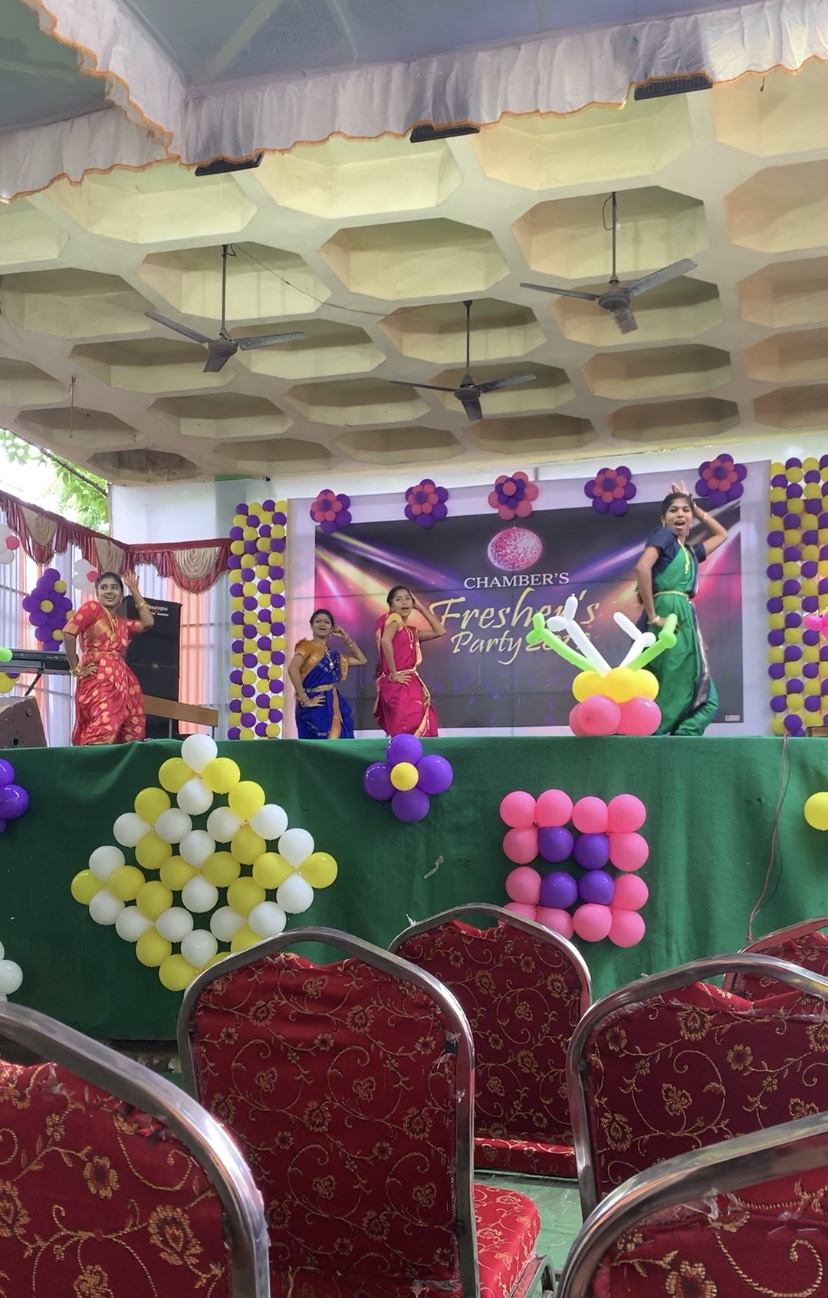
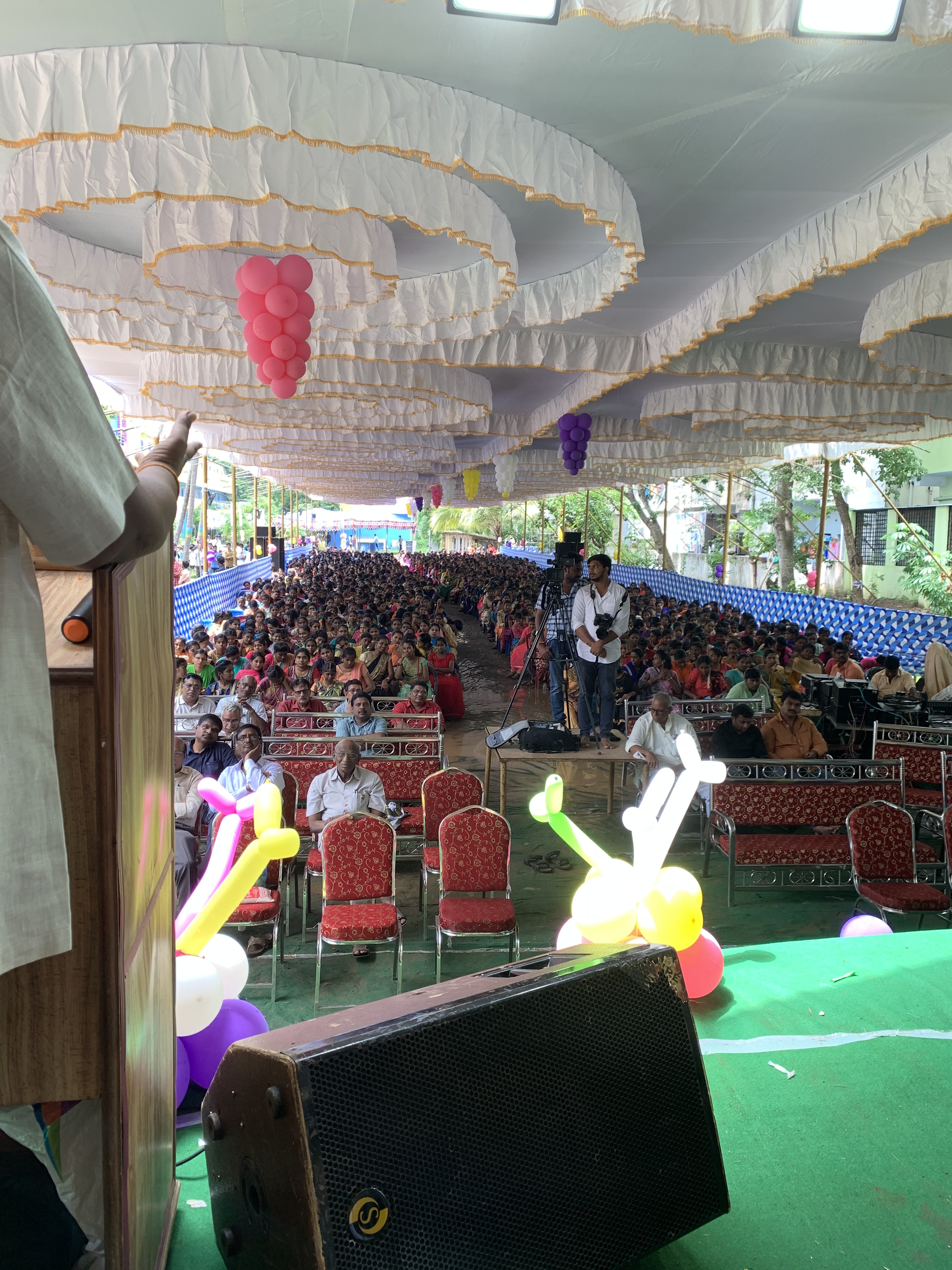
Finally in our places, we adjusted ourselves to get comfortable. Prof. took off his garland and headband since the heat made it too much to bear, and then, I felt it. I felt two-thousand curious eyes on us, and I didn’t need to look back to confirm what I knew; it was apparent. In that moment, I became very suddenly aware of everything I did because each minor, maybe natural, gesture for me may be odd to them, and they studied me for it. Don’t use your left hand to adjust your hair! I thought. It was an odd mix of emotions… nervousness and excited-ness. I’d never been this important before to such an impressive number of people, and I can’t say that I completely disliked my fifteen minutes of fame. It was a weird feeling. We sat and awaited our names to be called up on stage, but when the woman with the microphone spoke, I couldn’t understand nor hear my name. Students in paint walked across the stage, their placement exactly distanced from each other, and that’s when both prof. and I knew we were in for a ride. There were performers!
A snapshot of one of the performances.
We were blown away. Not only by the apparent choreographed set, but the stacked on stacked subwoofers completely knocked us out of our chairs. I could actually feel my eardrums pulsating with every dropped beat. Following what seemed like the umpteenth performance (don’t get me wrong, these kids were phenomenal, and they had very clearly put so much time and effort into each show) we finally were called up on stage. We were ready to leave at that point because the heat almost unbearable, and the speeches by each honorary member on stage were what seemed like 30 minutes long. My fifteen minutes of fame were over and dried up at this point, so I found myself anxiously awaiting my turn to speak so we could skidoodle out of there. When it was finally my time, although I’m pretty sure no one understood a lick of what I said, shortly after me, Prof. was given the mic. He quickly went back and forth between Telugu and English, and immediately following his speech, they awarded him with a plaque. At the first available chance we darted out of there, both agreeing that this was too much, and we were ready to be in the comfort of some A/C.
The audience from the stage!
Since then I have seen an immesurable number of
monkeys (though I know not to get too close because they like to take phones
and food, seen via. YouTube), temples (I may have accidentally offended the gods
at one point, but then I apologized, and they blessed my family), statues
(there are statues memorializing people everywhere! It’s impressive!), and surprised
faces (that I’m here!). It’s been great so far. I have had some minor indigestion
and things of that nature since I’m still getting accustomed to the food, but
what can you expect?
I hope you all have stayed with me thus far. Until next
time, and with love,
Kari
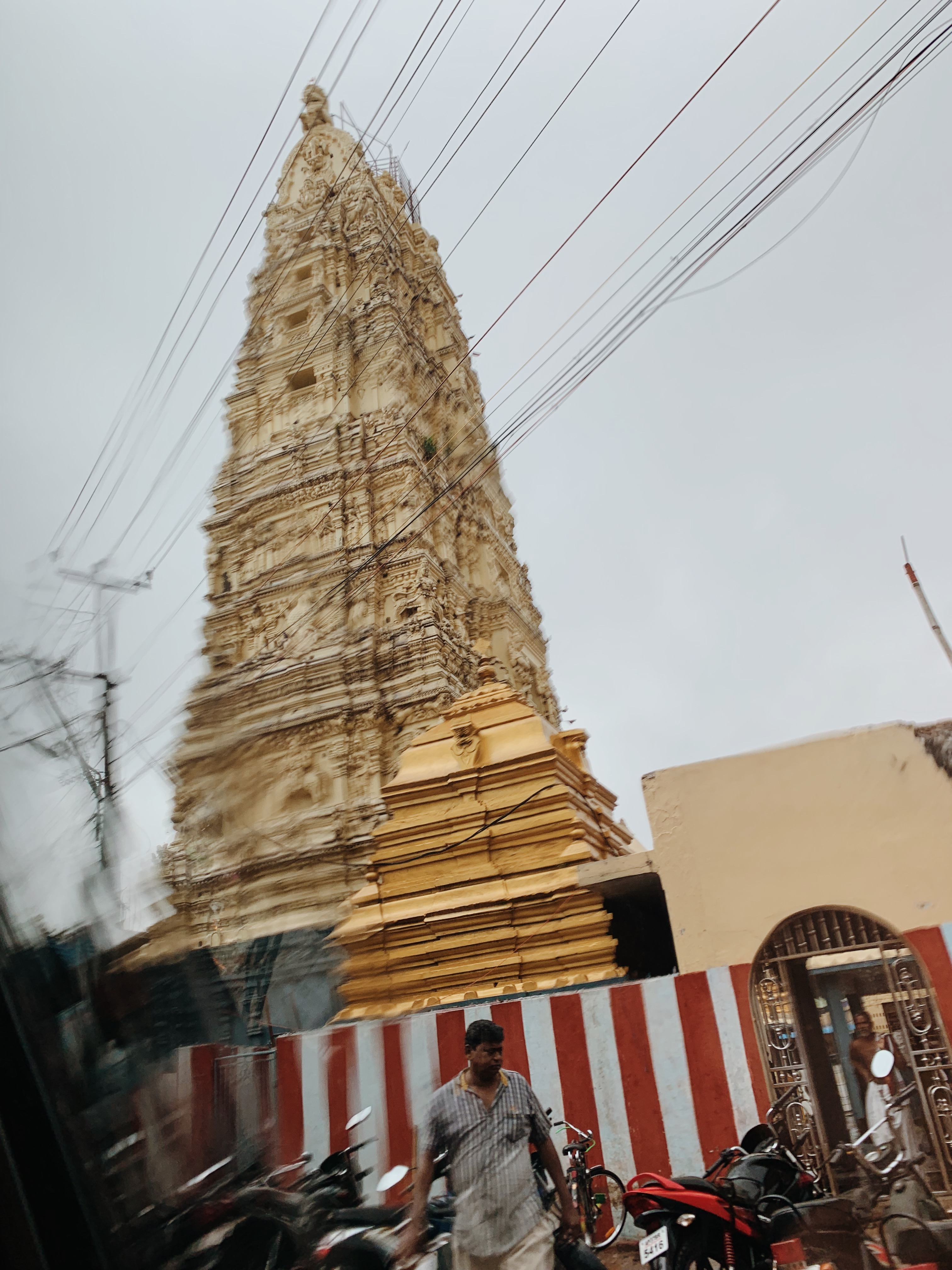
One of the many temples we’ve visited!
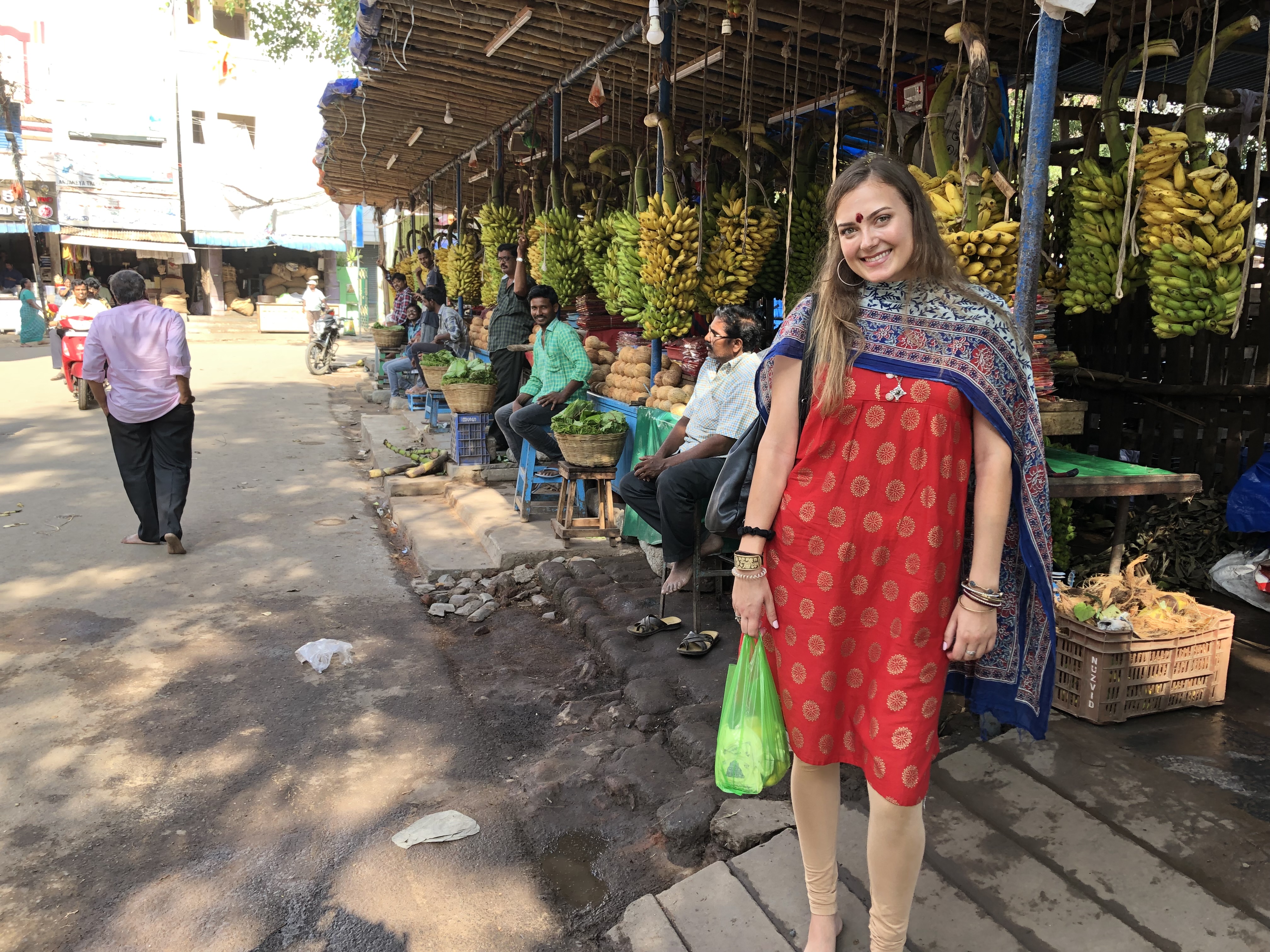
A Banana Market!
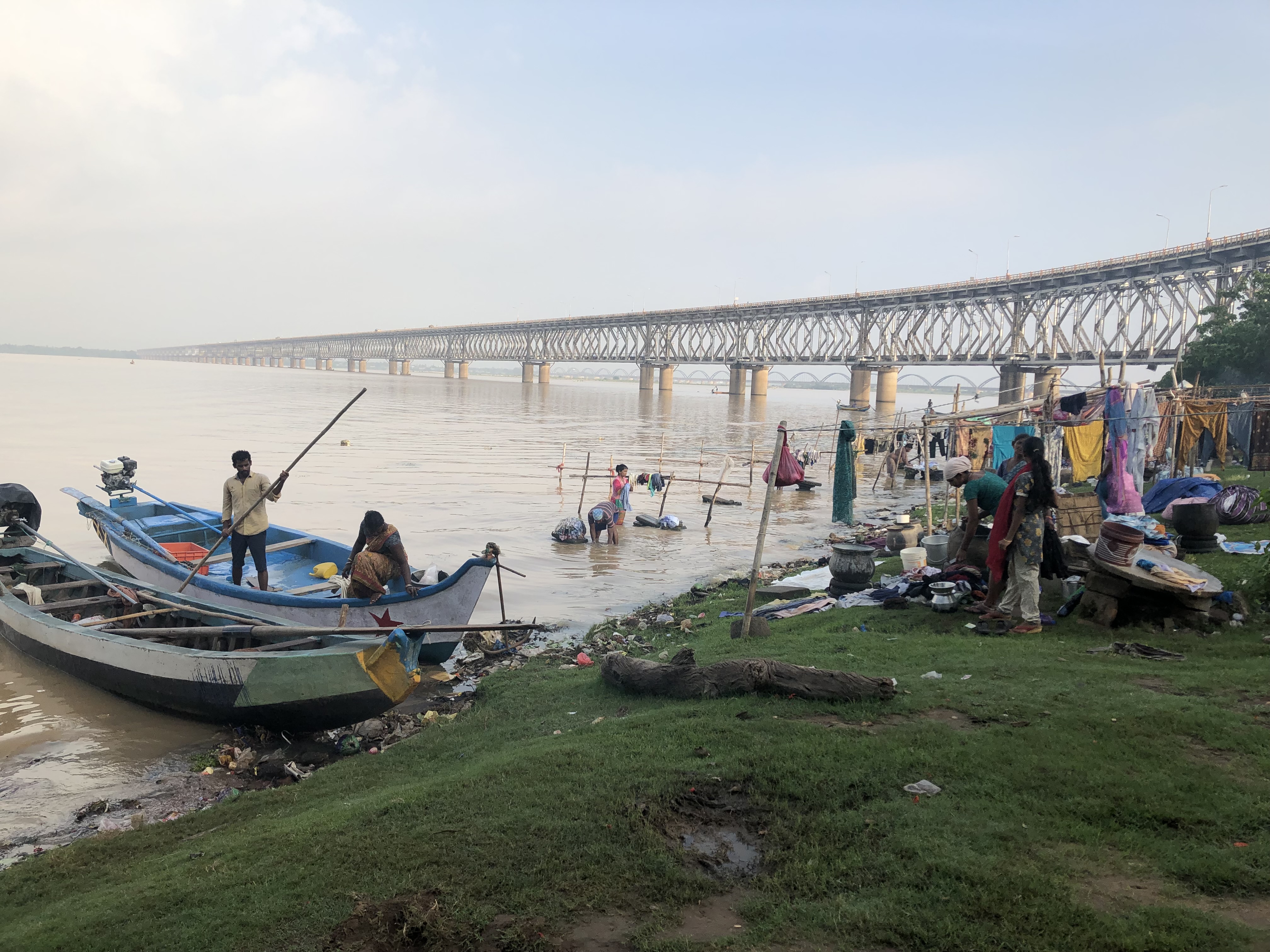
A picturesque moment captured by Prof. Schmitthenner himself of the Godavari River.
Arthur Cotton’s original, but decommissioned dam! (They built a new one behind it!)

 The Real India: Dubbed in Telugu