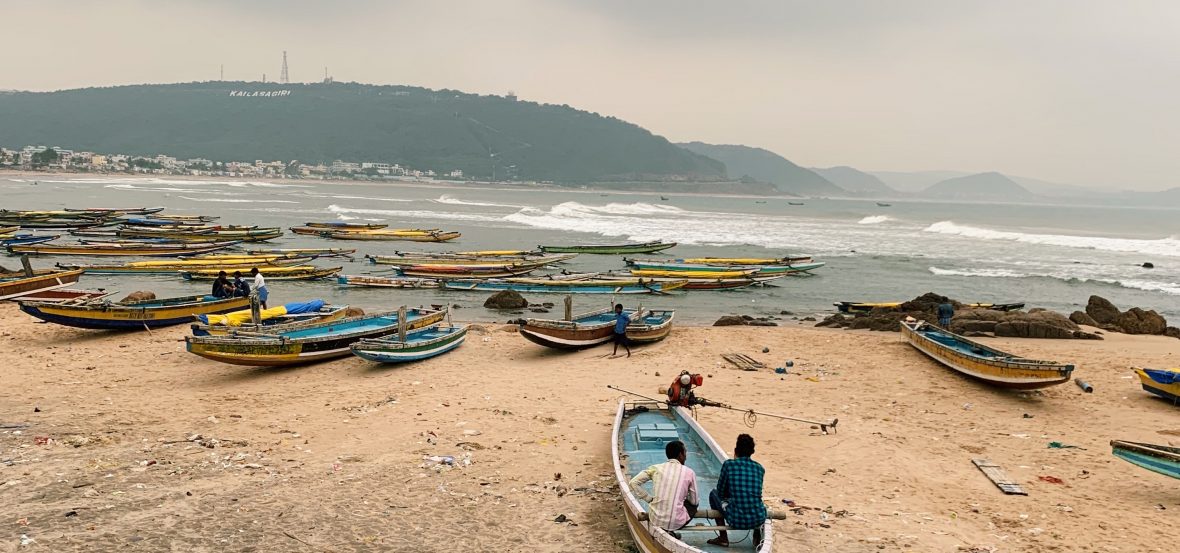
Time is really going by fast now. The first few weeks of jitters have shaken off and now we’re living this day-to-day life in India. Our routines have changed to something more regular, which generally goes as follows: wake up around 9 am, then until noon we do homework and/or read, then we walk to Krishnayya’s for lunch around one, then either go on an excursion or go back to the hotel to do more homework/nap, then dinner at 8, and then back to the hotel for relaxation and bed. Throw in the occasional day trip and there you have it!
We’ve traveled much the past week or so, almost so much that I can’t even begin to explain nor recall. My senses feel like a brimmed cup of coffee. Coffee because I’m very energized by the thought of being here, but also brimmed because we’ve taken in so much at this point that it feels as if everything new is just flowing over the top; it’s so full that no more can fit! Don’t get me wrong, though, because what I mean is that trying to quantify the knowledge and appreciation we could get from being here is just, simply, not possible; we’re skimming the surface. I don’t think anyone could really, truly, ever know everything there is to know about living in India as an outsider because generalizations are so readily available to tack onto the thought of something that’s different. It happens everywhere, and I say vice versa for someone coming from India to the United States. For example: Kymberly and I were walking down the street one day and were asked for a selfie. We politely declined, but in response (because they were so dumbfounded that we denied them) they proclaimed, “Taking selfies is your culture!” How horrifying. We’re a country known for selfie taking? Although, if I’ve seen anything while being here, the pot is calling the kettle black!
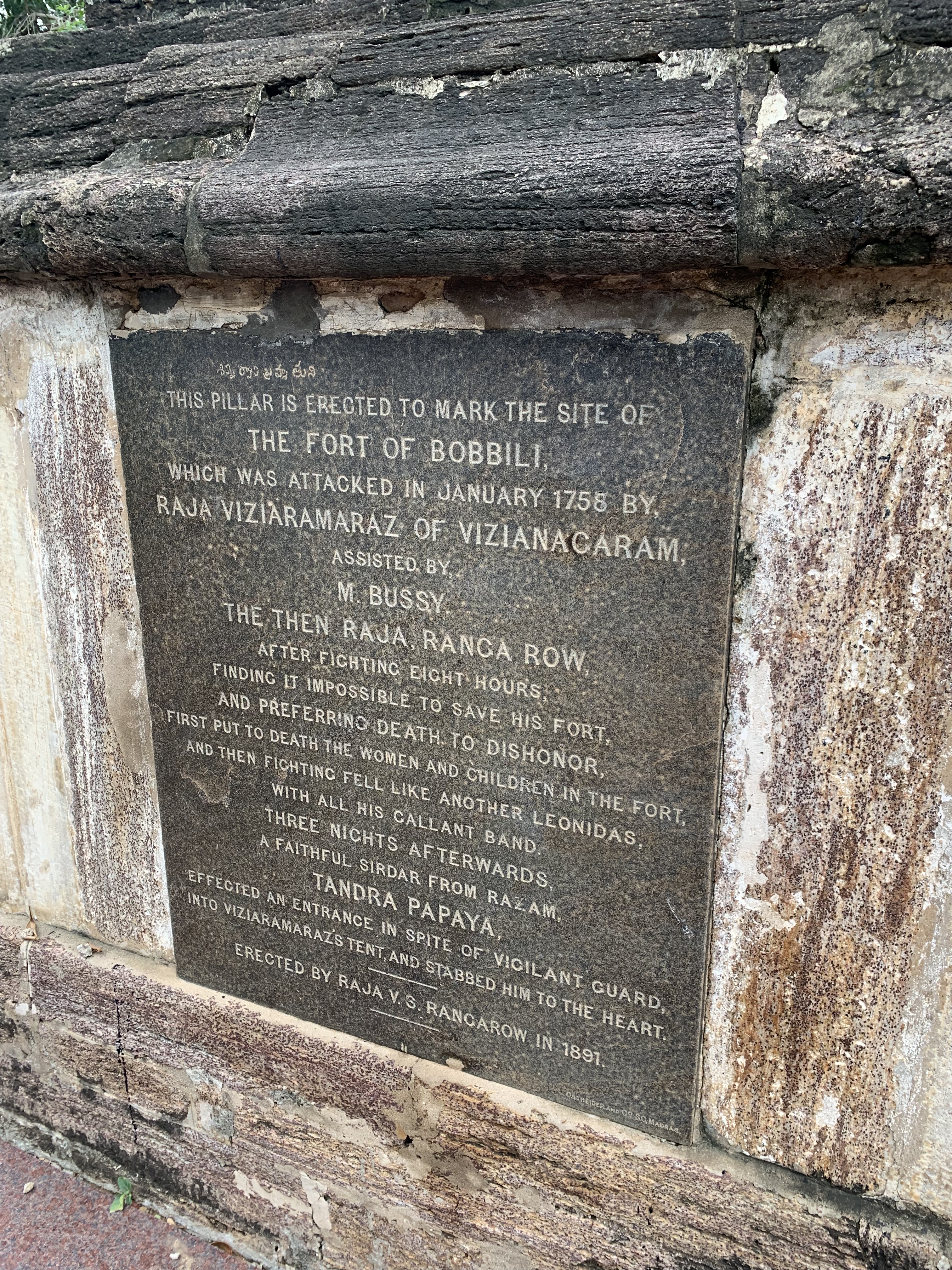
Now to catch you all up on the past week’s events because there’s been a number of adventures we’ve been on thus far. Bobbili and Vijayanagaram were two of the cities we found ourselves exploring one day. The significance of these places themselves were that each city was an abode of palaces and princes. They each had their own dominion of people and method of ruling and thrived separately until the war between the Rajas of Vijayanagaram and Bobbili in 1757.
With the help of Dr. Swamy (an astrologist and physician from the region who took time out of his day to show us around his home town) and Wikipedia, I’ve gathered the story as follows: Vijayanagaram’s princely state had conceded to the expanding French activities in the region in the 1750’s; however, when the governor general of the French colony visited Rajahmundry, there were differences with Vijayanagaram and Bobbili’s ruler. This sparked the battle of Bobbili in 1757 where both the French army and the army of Vijayanagaram marched towards the Bobbili fort. Bobbili was no match for the combined forces marching towards them, but they put up a brave fight. Once Bobbili’s ruler realized that his army could not keep the enemy from infiltrating the fort, he sought to protect the women and children from being at the mercy of the enemy. So with this in mind, he ordered them all to be sacrificed, and then afterwards his wife committed suicide. His wife’s brother, Paparayudu, heard of the mass sacrifice and rushed to the fort only to find his family soaked in a pool of their own blood. Until that point, he had no idea of the attack since the letter his sister had sent to him as a warning had been intercepted by the French. Paparayudu knew he would get his revenge, and while Vijayanagaram’s ruler was basking in their glory and camping in tents nearby, he found his way in. Paparayudu and a few comrades snuck into the tent where Vijayanagaram’s ruler was sleeping. It is said that Paparayudu began chanting the song of their clan “Puli, Puli… Bobbili Puli” (Tiger, Tiger… The Tiger of Bobbili) while detailing the vicious acts done to his family and his clan by their army. After his monologue, Paparayudu stabbed Vijayanagaram’s ruler repeatedly, killing him, and then they killed themselves for they had no way to escape the entire army that had awaken in the commotion.
What a lighthearted and warming story! On top of the fascinating legend behind the princely clans, we stepped foot in each of the palaces that have now been turned into museums to commemorate the people who lived there. Each palace had decorated family trees on display and brilliant portraits, but immediately the thing that caught me off-guard was how much the Bobbili’s exercised hunting. Bobbili was our second stop, and as we climbed the winding staircase with boar heads and deer antlers littered along the walls, we were led to a room completely covered from floor to ceiling with spears, guns, and other such paraphernalia. If you know anything about Hinduism and being of the Brahmin caste, it’s considered ludicrous to touch meat, eggs, and sometimes even dairy. Sacrifice is uncivilized. Even the McDonalds around here have separate kitchens, one for vegetarians and one for not. I do want to point out, though, that just like any religion, there are the people who interpret such ideals very strictly and those who do not!
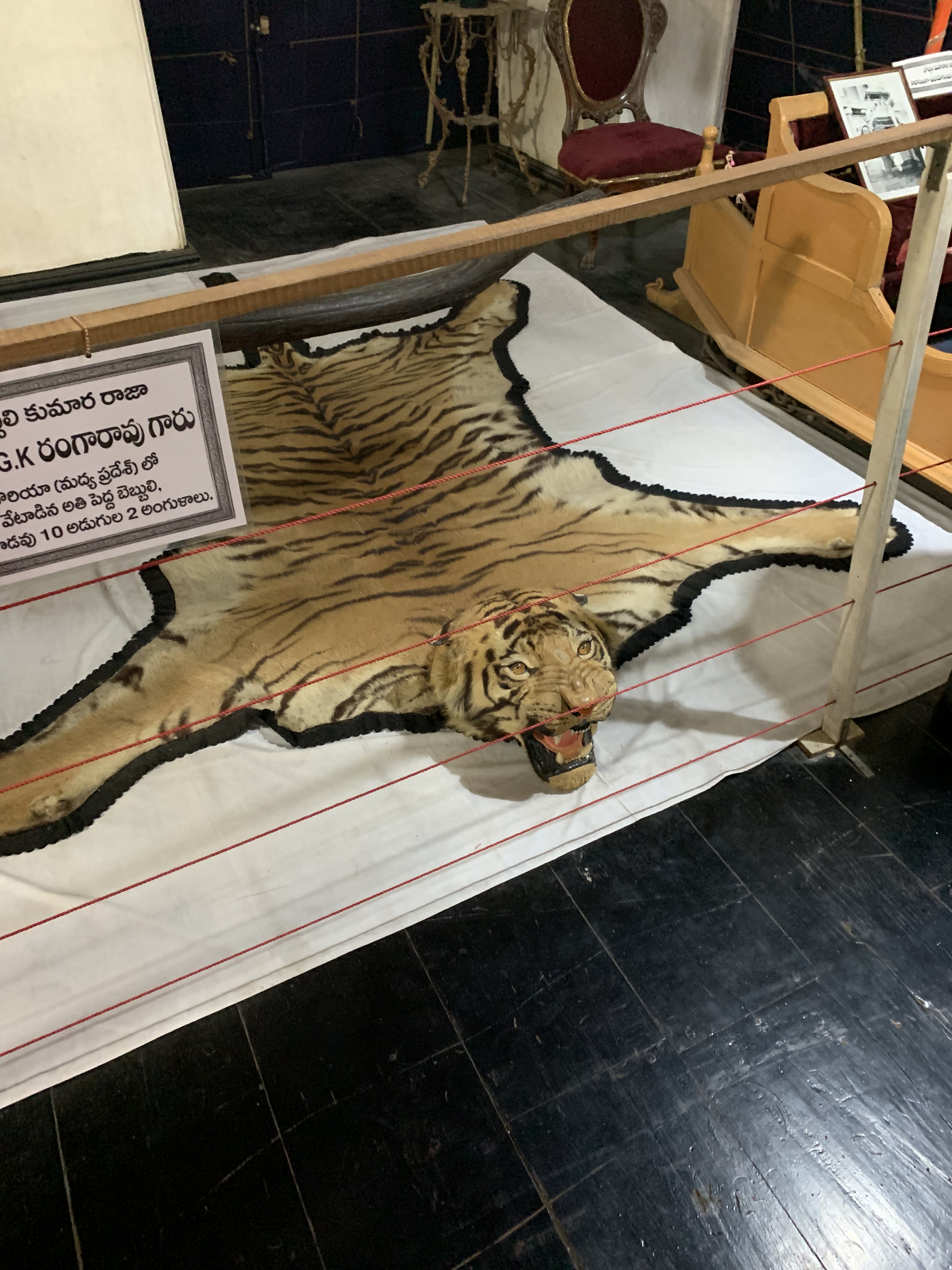
Anyways, we had discussed in class last semester that animal sacrifices and rituals were a part of the Brahmin caste for a time, and only recently (recently, such as within the last 200 years) had they transitioned to complete vegetarianism. So, I found this interesting to see in person because many brahmins probably wouldn’t acknowledge that part of their past. Even Kymberly’s husband, a Brahmin, didn’t believe it! It was also especially interesting because one of the family royal decedents had a billboard cutout of himself walking with a tiger (because Bobbili is a derivative of the name tiger) and on the sign it read something along the lines of “He shoots not with his gun, but with his camera.” How cheesy.
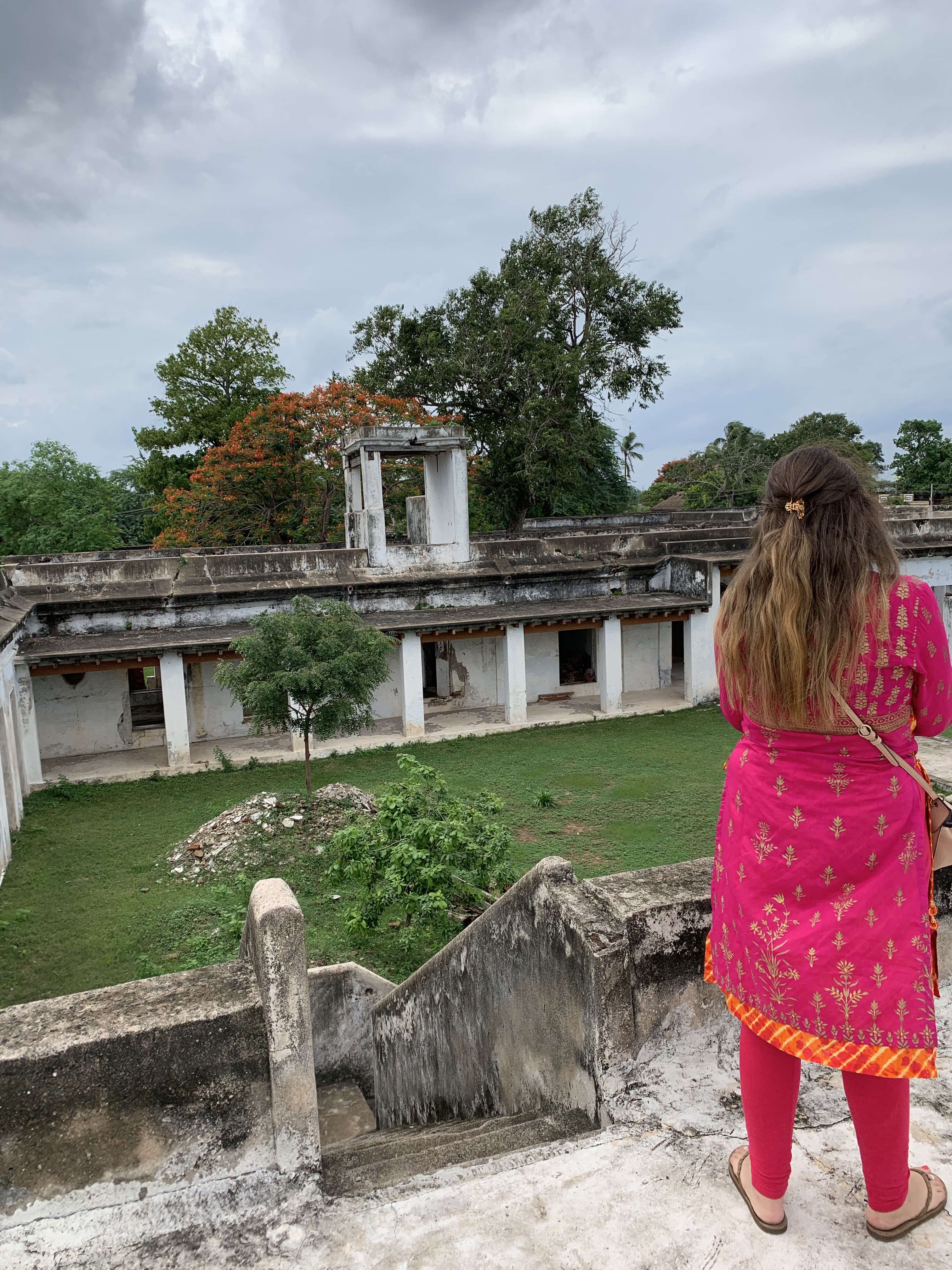
The next stop on our list that day was The Bobbili Guesthouse. This guesthouse was built by the Rajas of Bobbili in the 19th century, and after World War 2 it was decommissioned. After that, the place became a historical site in India. The fort complex encompasses 10 acres, and has a very impressive entrance gate in an Indo-Saracenic architectural style. It is thought that they built the guesthouse with high domes and mantapas to avoid intensified involvement by their Islamic occupiers at the time of its erection. The guesthouse survived many different occupancies and is now a beautiful historical site which we’re grateful to have had to privilege to step foot in. On top of that, the weather was absolutely perfect, and Kymberly and I felt the need to take some pictures, of course.
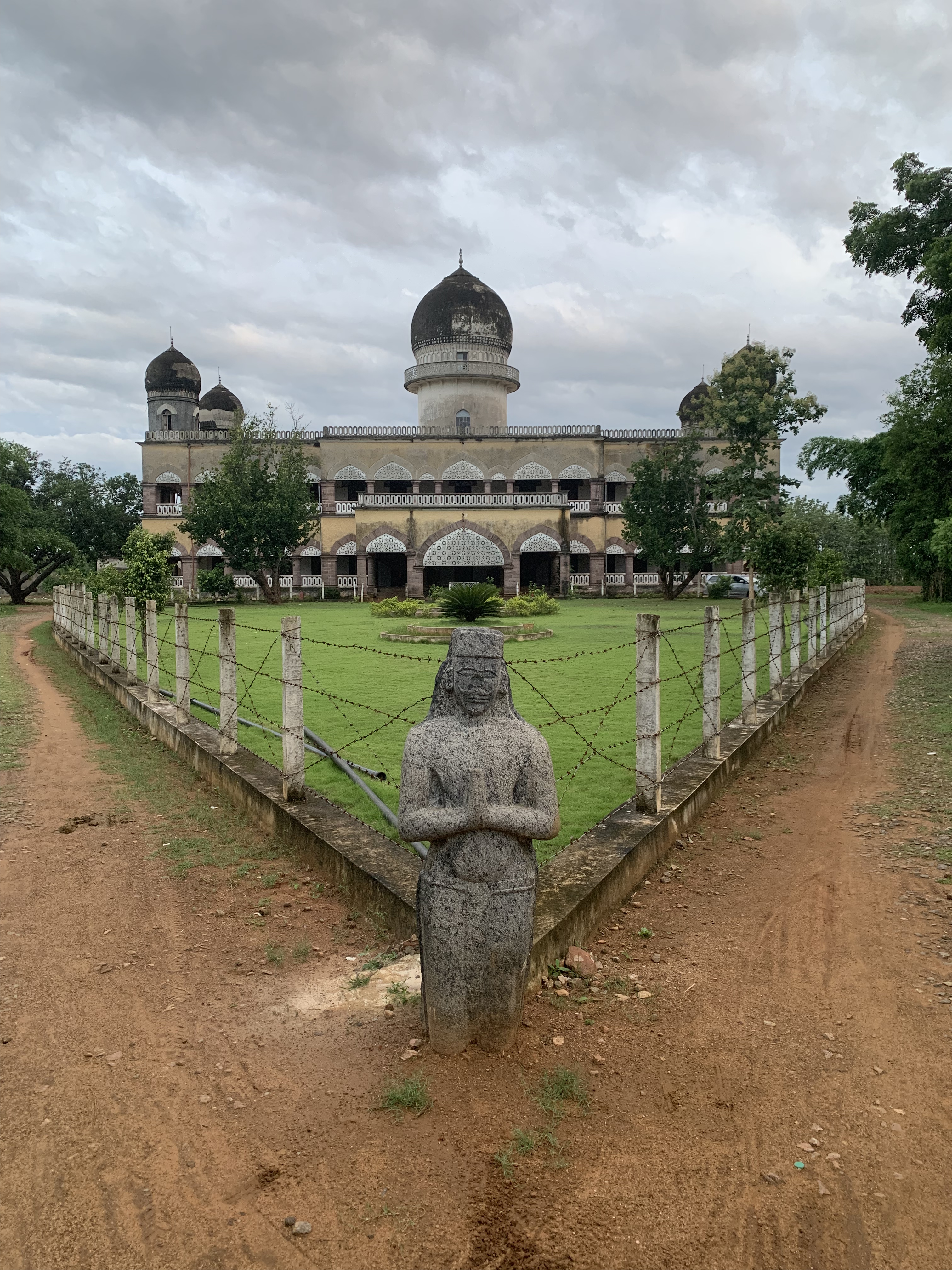
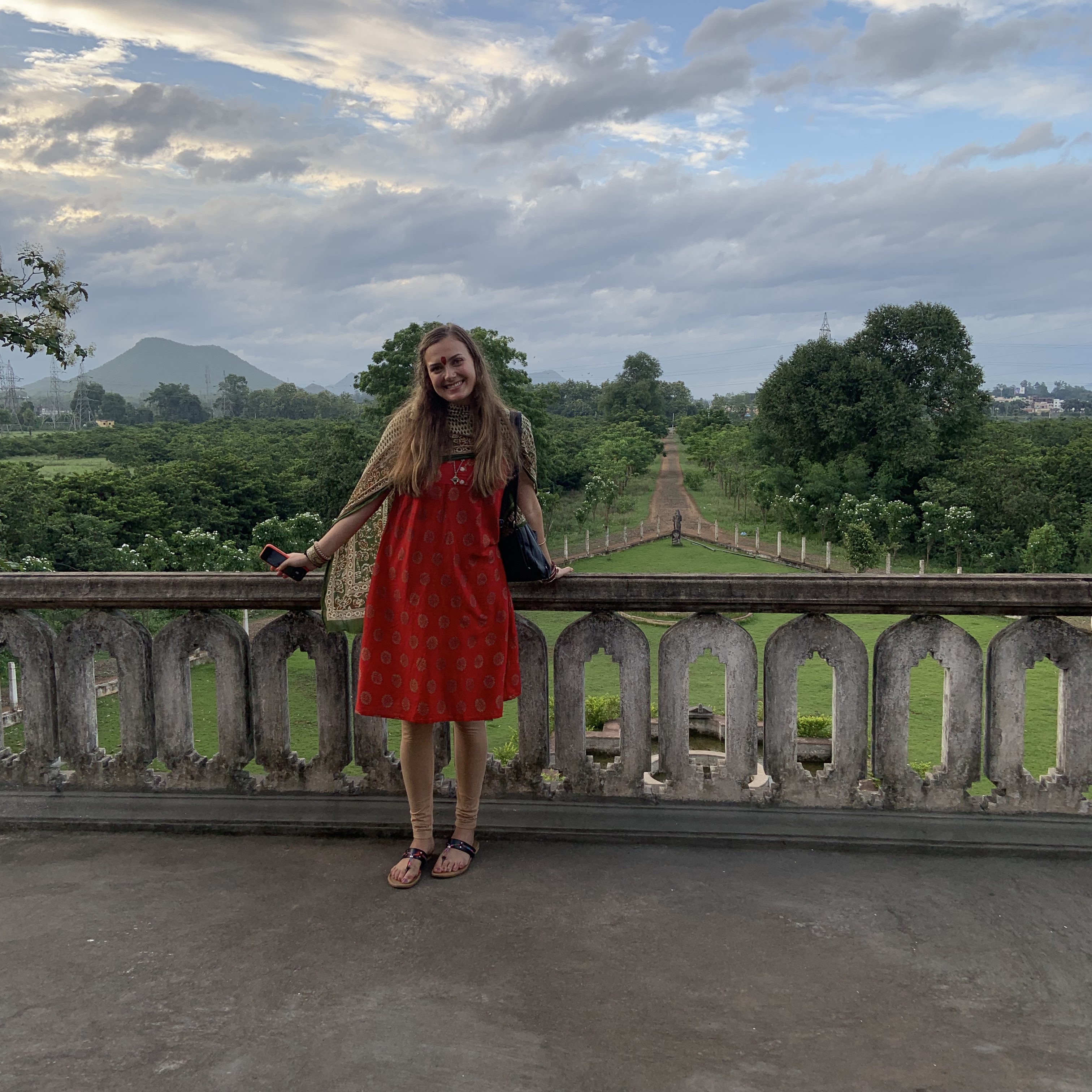
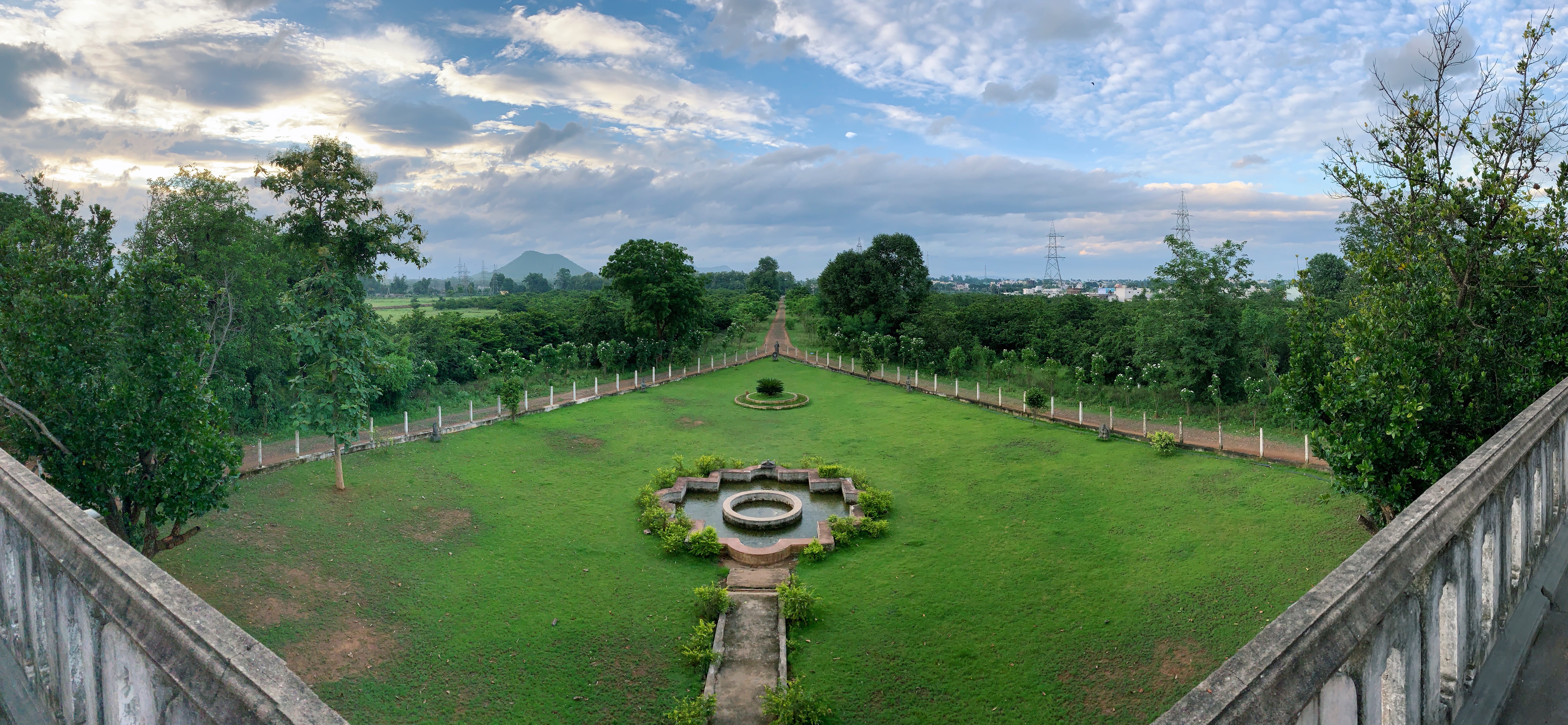
Another capture from the Guesthouse.
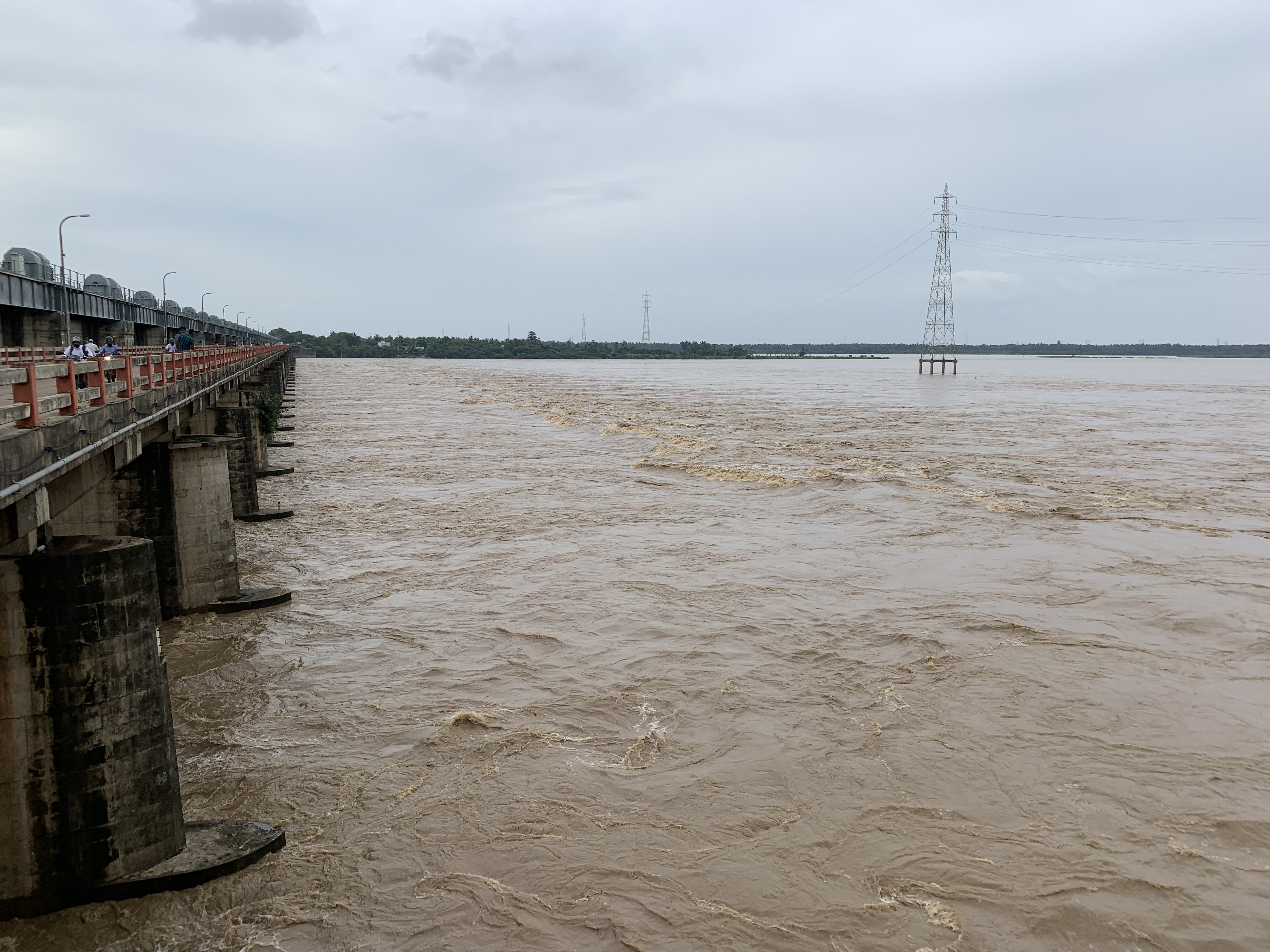
The next adventure we went on was a few days later. Usually after a long trip like the one we had, it takes about a day or two for us to rejuvenate. I’m pretty sure after every car trip my body aches longer each time! Once we had the energy to take another long excursion (for four days!), we boarded a train again to Rajahmundry, but this time with Kymberly and an AC coach to take us all the way. Following the four-hour train ride into the city, the very next morning we began another four-hour trek to Machilipatnam for a daytrip. On the drive from Rajahmundry to our next destination, we crossed Arthur Cotton’s barrage for the second time. It had drastically changed from before as the monsoon rains had just begun to come in, and the Godavari River was completely flooded. The river had probably risen close to, or maybe even above, three feet! It was breathtaking as we watched the rushing waters carry with it fallen tree trunks and large debris more swiftly than I could run.
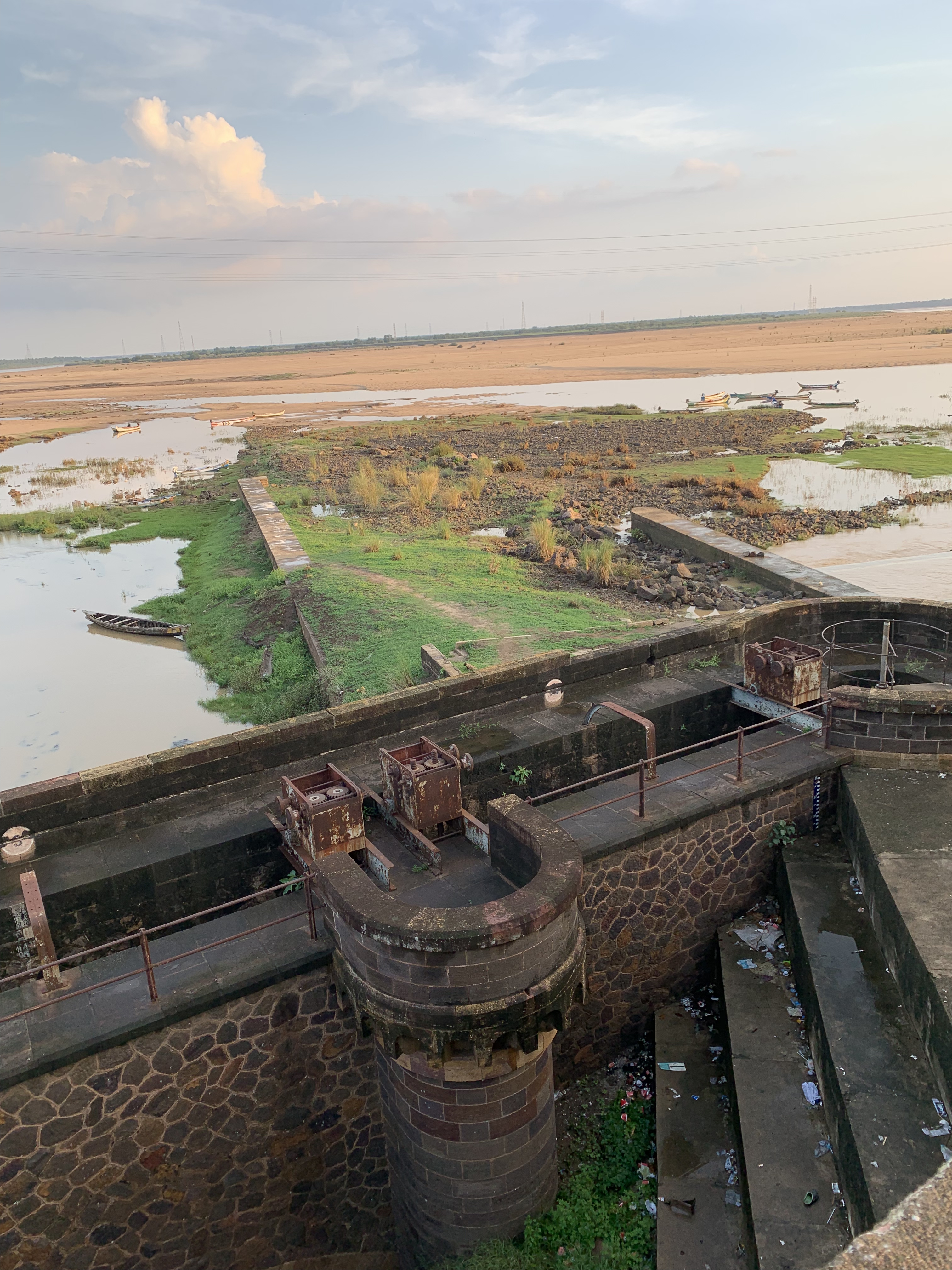
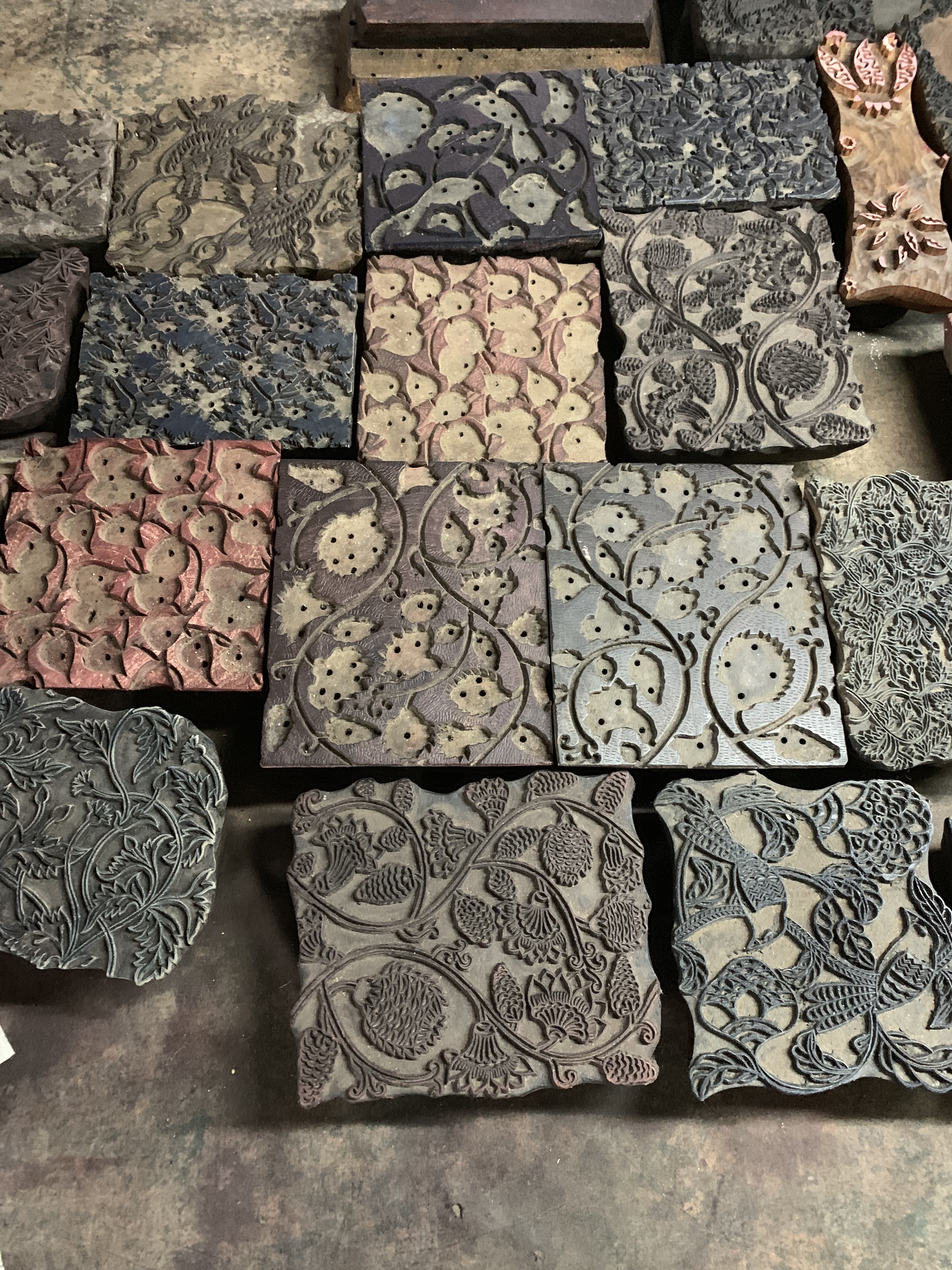
Once we arrived in the city, we spent some time in an old Dutch fortress/ trading post that took reign during the time Machilipatnam was the most important port on the eastern coast of India. However, during the European occupation, the port fell to nothing. It once was a place where merchants from all over the world congregated, even the ancient Greek found it important enough to write about and map out, but sadly it became desolate after European colonization. Whether or not its downfall was a direct result of the Europeans, we might never know, but many argue over its impact on the region. Today Machilipatnam has only a few remnants of its former glory, such as the Dutch fort ruins. However, the region is still very well known for their style of Kalamkari work. This type of work involves vegetable dyed block-painting of material and textile for which its precision, carefulness and sensitivity echoes throughout their fabric, and the state of Andhra Pradesh!
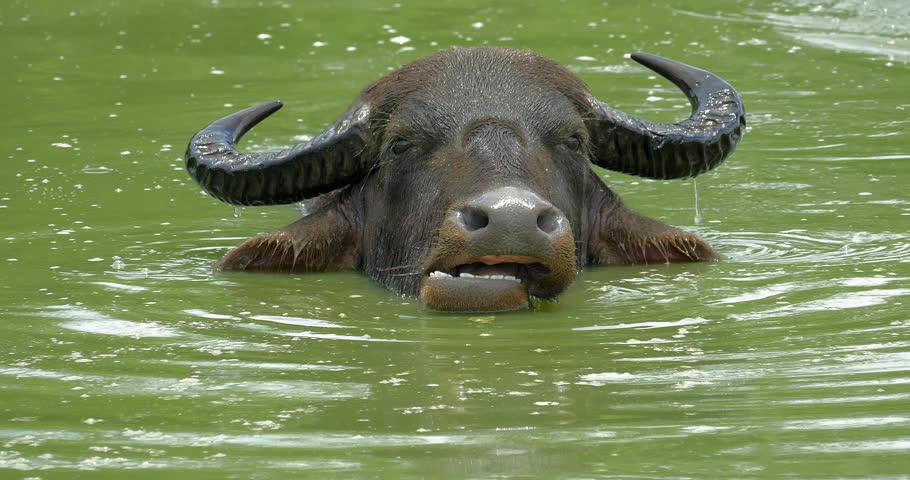
We found ourselves beyond deep in textiles that day. Imagine a water buffalo swimming in a canal after the monsoon rains have just come in, and their heads are just barely peering above the water as they paddle to shore to find safe footing. Although, those buffalo are called water buffalo for a reason, and that sole reason is their delight in being submerged in water. Many times throughout the trip Prof. Schmitthenner asked us, “Have you ever seen a water buffalo in water?” I hadn’t, but one day I finally did (as we were driving on one of our day excursions), and something about the sighting resonated within me because it was obvious they felt pure content-ness. In that moment, so did I for just having spotted them. So anyways, THAT was Kymberly and me in textiles that day. We could barely stick our heads above the mounds of beautiful ornate cloth, and we were loving it. The four-hour venture was worth the back pain of the drive because Kymberly and I could have easily spent hours picking out various rugs, clothes, bags, and napkins. If you thought it, they had it. Prof. and KrishnayyaGaru had to essentially yank us out from the mounds of materials to get us to leave.
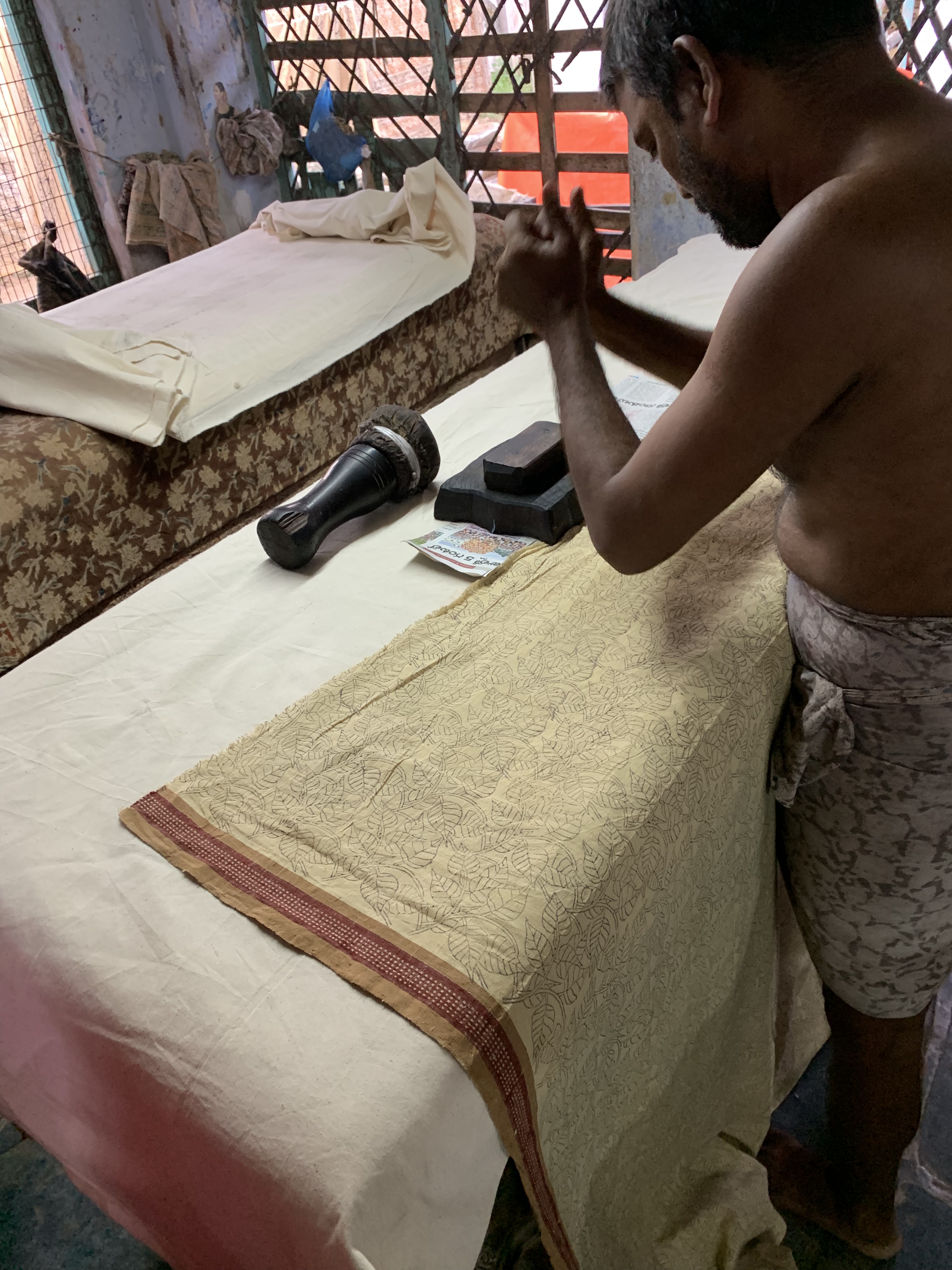
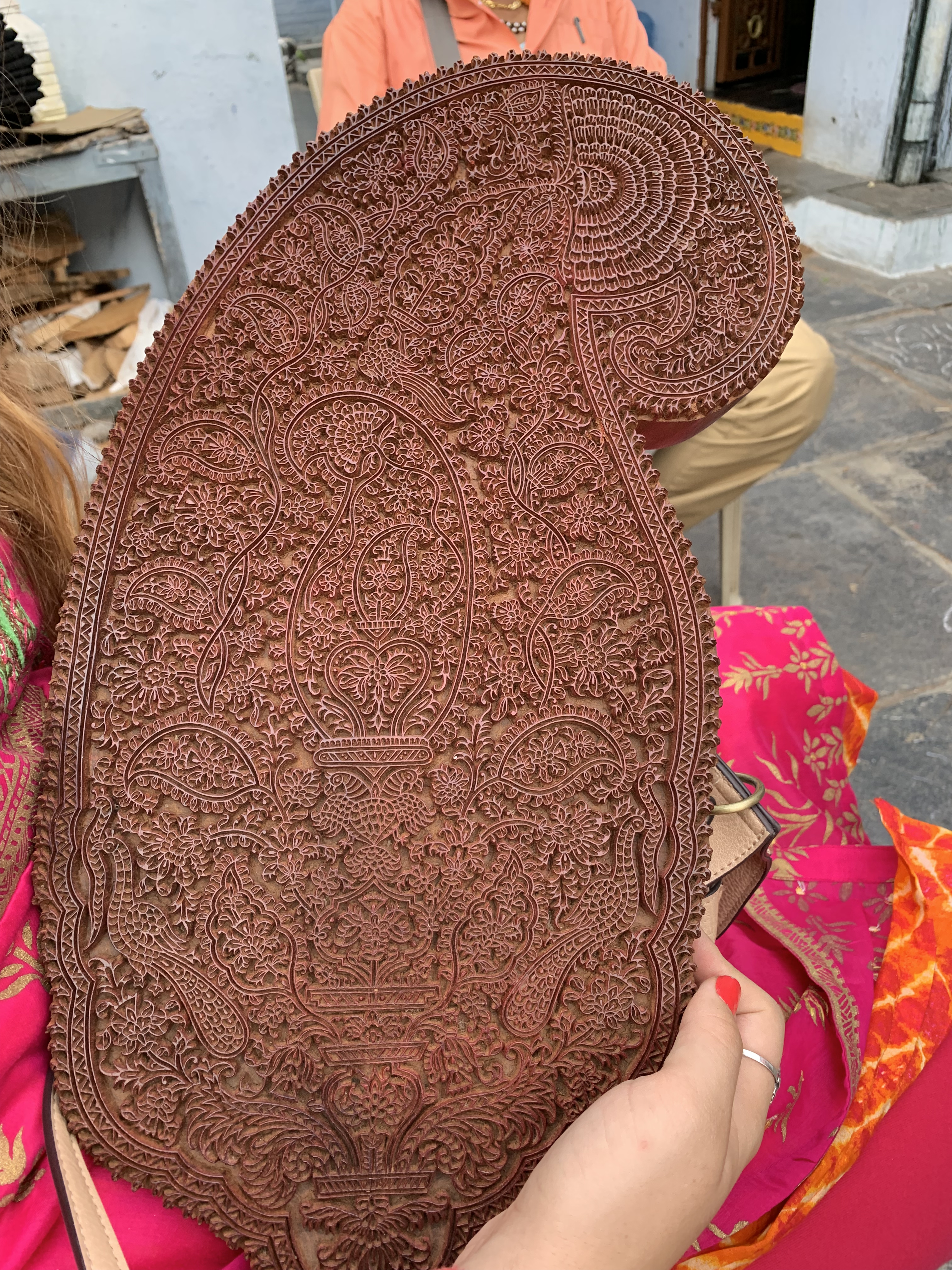
Although, the most captivating part of the trip was seeing the process of making the designs and the ornate cloth first hand. Interestingly enough, the store itself was not even a five-minute walk from where they not only hand carved the wooden blocks used to print the fabric, but it was also incredibly close to where they vegetable dyed them as well. We watched the steady process as a man softly and precisely placed each block (stamped with dye) on the fabric of the saree. Once he was content with its placement, he struck the block to set in the dye with his hands at first, and then with a heavy piece of wood to serve the purpose of a hammer. We then navigated our way to where they hand-carved the block printing. This work was so strikingly detailed that both Kymberly and I couldn’t keep our jaws closed when we saw the sweat, blood and tears that went into its meticulousness. By the end of the day it was clear that nothing in the United States could compare to the beautiful and traditional, hand-painted and block-printed cotton textile artwork we witnessed. What a marvel!
Of course, who would I be if I didn’t catch a sickness on the trip? Because immediately after that excursion I ended up with a four day long fever of 100.5. However, don’t fret. I’m all better now.
Best,
Kari

 The Real India: Dubbed in Telugu